
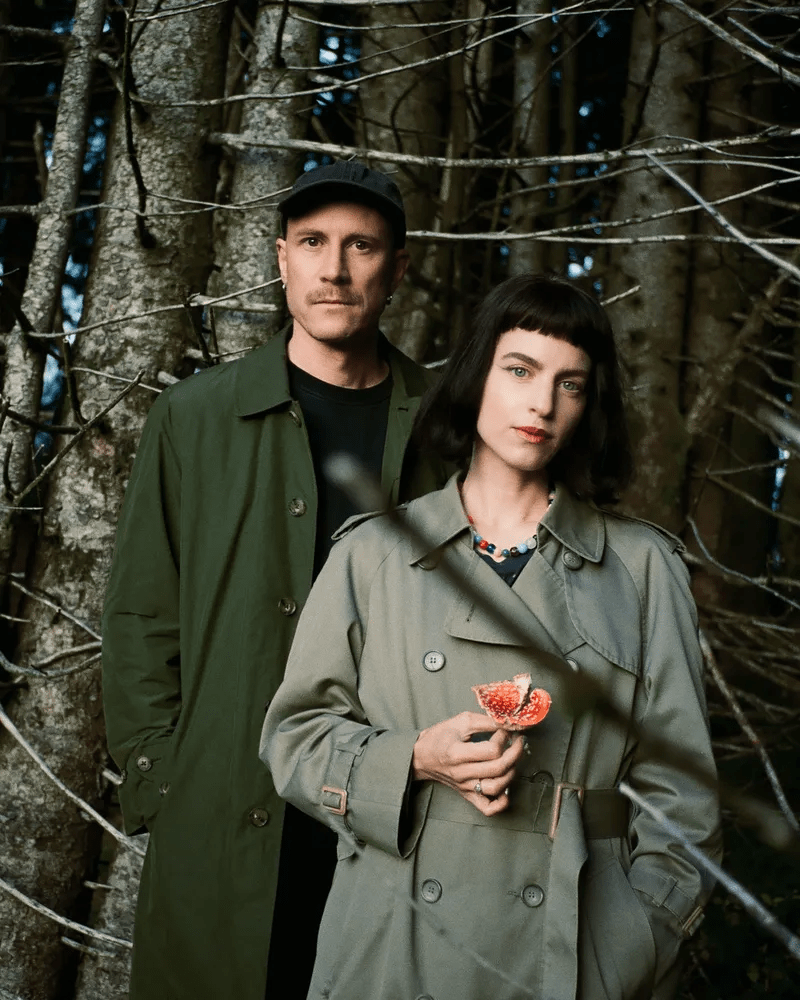
“Evil father’s hands” opens the song and returns at the close, and the repetition isn’t structural convenience. It’s the song’s argument: some things don’t get processed into something else. They stay named, present, returned to. Swiss duo Svenja Künzler and Dominic Rubli built “Evil Father’s Hand” around that refusal to move on, and the slowcore production holds the lyric in suspension rather than carrying it anywhere.
The word that recurs almost as often as the title is “wait,” and it accumulates meaning across the verses without resolving into patience or hope. “Wait until someday” offers a future that the lyric never delivers on. “Wait now” addresses someone mid-harm. The waiting is the condition, not the path out of it. “Your tears in vain” arrives twice, flatly, without softening.
What keeps the song from becoming purely bleak is the specificity of the imagery: floating light as you stare, struck in the air, feeling lost everywhere. The body under harm is rendered with the precision of someone describing a physical sensation from memory rather than imagination. The home-recorded quality of the album, self-produced in 2025 and then mixed by Ben Chrisman (Chelsea Wolfe) and mastered by Alan Douches, gives the track a texture that sits between intimacy and distance. The production is unpolished in deliberate ways, as Künzler and Rubli have described, and against a lyric this exposed that roughness serves as something close to honesty about the limits of what craft can do with this material.
“Takes a rare kind of light / to overcome the night” closes the song without claiming that light has arrived. It names what’s required and leaves the rest open. For a debut single, that restraint is its own kind of statement.


Leave a Reply