
The two Outsideness album titles form a complete sentence between them. …From What? asked where a collaboration this strange had come from. …Then After? asks what happens once it exists and keeps going. That’s a tidy piece of naming, but it also describes exactly what this second record does structurally: it keeps the first album’s question open rather than answering it, letting every song stay unsettled about what it’s allowed to become.
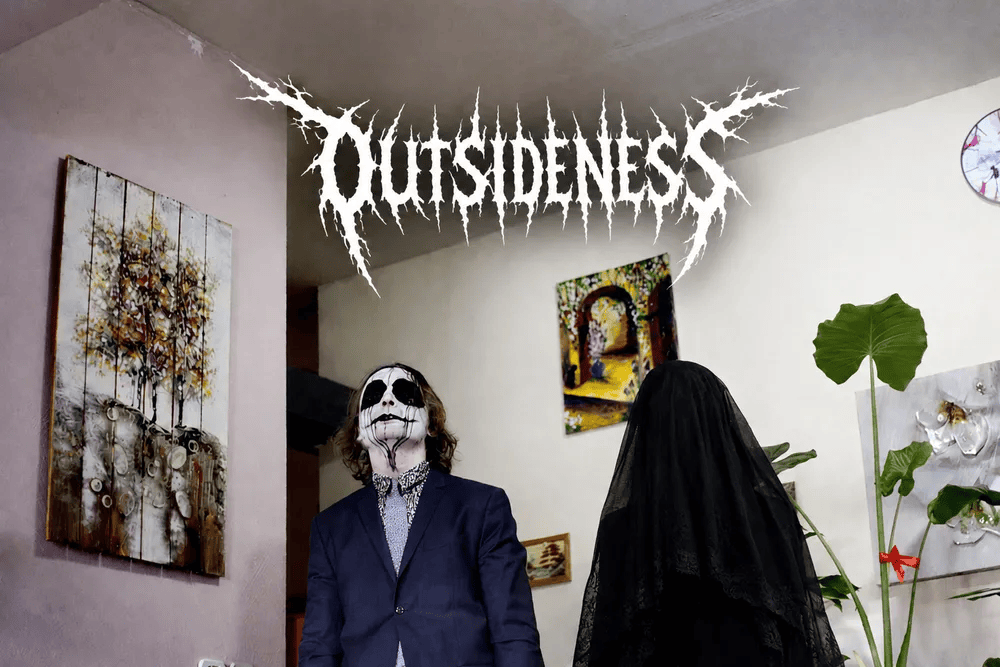
Freidrich$ built a reputation on brevity, working in short, unusual, sample-driven bursts of outsider R&B that sounded like pop music arrived at by accident rather than by design. Azalias’ voice is the thing that let that vocabulary survive contact with a full album’s worth of room to expand. Where the debut established the project’s language, largely through restraint, this one hands that same language considerably more space and dares it not to collapse. Acoustic parts give way to electronic percussion mid-song, intimate vocal takes get swallowed by arrangements that swell up around them without warning, and songs that open sounding like conventional pop or R&B tracks routinely mutate into something else entirely before they’re finished making their first argument. The record treats genre as raw material it’s allowed to discard, combine, or abandon depending on what the moment needs, rather than a destination any given song is obligated to reach.
That instability is the whole point rather than a side effect of ambition outrunning discipline. A song here gets to keep deciding what kind of song it is all the way through, rather than settling that question before it starts. “La Jetée” makes that philosophy explicit just by its title, borrowed from Chris Marker’s 1962 experimental film built almost entirely from still photographs, a movie about a man pulled backward and forward through his own memory after catastrophe reshapes the world he knew. Placed on a record whose whole premise is refusing to stay fixed in one place, genre, mood, or structural shape, that reference reads like a mission statement smuggled into a tracklist rather than a passing nod. “Haunt,” two tracks earlier, works a similar angle from the opposite direction, a title built around presence that shouldn’t still be there, which tracks with an album where older sounds and structures keep bleeding into newer ones without fully leaving.
Ten songs make up the record, and the promotional framing around it singles out eight of them by name as evidence of how far the project’s vocabulary has stretched, “Alright,” “Freedom,” “Even to Me,” “Container,” “Haunt,” “Got Me,” “La Jetée,” and “Dance,” leaving “Water” and “Hold” to close the sequence outside that specific illustrative list. Whether or not that’s a deliberate distinction, the effect of ending on those two titles, after eight tracks framed around expansion and instability, suggests a record that spends its runtime testing how far it can stretch before settling, by its final two songs, into something closer to steadiness.
What keeps that instability from reading as scattered is Azalias herself, described as capable of sitting restrained and conversational on one track before turning enormous on the next, which gives Freidrich$’s production room to get stranger without losing an emotional throughline underneath it. That’s a difficult balance for a collaborative project to strike on a sophomore record specifically, the same tension that sinks plenty of second albums: expand too far and the connective tissue that made the first record recognizable disappears, stay too close to the original formula and the expansion never actually happens. Outsideness is positioning …Then After? as neither trap, larger and more elaborate than the debut, while insisting its rough edges and intimate scale remain fully intact underneath all that added scope.
The clearest evidence for that claim is the band’s own description of the project’s ambitions rather than any single moment on the record: an album more ambitious than its predecessor that somehow also plays as more direct, arrangements that grow bigger while the core performances stay close and unguarded. That’s a hard needle to thread on paper. Whether …Then After? actually threads it depends on hearing what happens when a song like “Container” or “Got Me” decides, mid-runtime, to become something its opening bars never promised. But the theory behind the record, genre treated as material rather than identity, is a sturdier foundation for a second album than most bands manage to build eighteen months into a new project.
…Then After? is available August 19th.


Leave a Reply