
Eleven albums in, Jon-Olov Woxlin has made a record entirely by himself. Vocals, guitars, electric bass, viola, recording, mixing, mastering, all of it credited to one name working alone in Gothenburg. That’s a real shift from the record before this one, which pulled in three outside musicians to fill out its kitchen-recorded arrangements. The Mountains of My Home pulls in the opposite direction, closing the circle rather than widening it, and adding viola to his own toolkit in the process, an instrument that hasn’t shown up in his credits before.
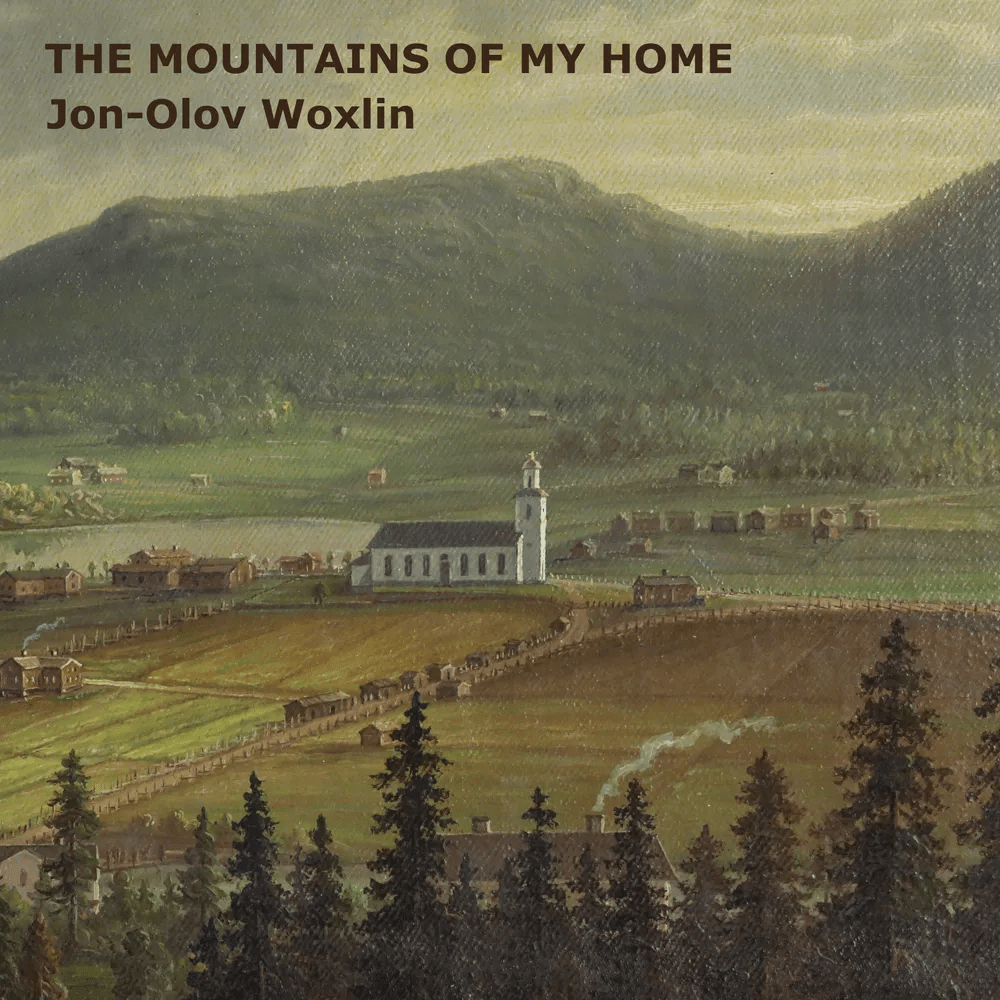
Woxlin has been candid about how he sees his own voice on this record, describing himself as a songwriter who likes to sing rather than a singer by trade. That’s a meaningful distinction to make out loud on an eleventh album, and it shapes how the whole project should be read. A songwriter’s record puts the words and the structure first and asks the voice to carry them rather than perform them, a choice that runs against the instinct most artists this many albums deep would have to polish their delivery into something more conventionally impressive. Whether that restraint reads as honest or simply cautious probably depends on the listener, but it stands as a real artistic position that Woxlin has chosen to name outright.
The tracklist itself does some of the album’s storytelling before a single song plays. “The Ballad of J.S.” opens the record, and “Musical Offering” shows up later in the sequence, a title that’s also the name of one of J.S. Bach’s own compositions. Whether or not that’s the same J.S. the opening ballad is named for, the pairing suggests a songwriter interested in classical reference points sitting inside a genre that doesn’t usually reach for them. “Talkin’ Johnny Cash” leans on a different tradition entirely, the talkin’ blues format that runs back through Woody Guthrie and into the folk tradition Woxlin has spent a career working inside of, an American form built specifically for storytelling over strict melody. “Resurrection of Hebe” pulls in Greek mythology, Hebe being the goddess of youth, a strange guest to find wandering through an album otherwise titled like a road atlas of American genre tropes, “Bronson Town,” “The Mountains of My Home,” “They’re Marching to the City.”
That tension, classical and mythological reference points dropped into a record built from country, folk, and blues, tracks with something true about Woxlin’s whole career. He’s a Swedish songwriter working in an unmistakably American musical language, and the titles on this record suggest he’s not interested in disguising the distance between where the genre was born and where he’s actually recording it. A song like “Talkin’ Johnny Cash” names its debt outright rather than absorbing the influence quietly, and that kind of directness fits an artist who’s already told his audience exactly how he thinks about his own singing.
Thirteen songs is a real commitment for a fully solo record, one person responsible for every instrument and every vocal take across the whole runtime, with nowhere for a second musician to cover a gap or change the room’s energy. That’s a demanding structure to sustain, and it puts real weight on the songwriting itself to keep thirteen tracks from settling into a single register. Woxlin has spent ten albums building the tools to make that bet, and The Mountains of My Home is him choosing, deliberately, to make it alone.
The Mountains of My Home is available now.
 B-Side Guys
Leave a Reply