
Russ started recording the day the news got worse. That’s the premise of 147 Days, the debut full-length from his Austin-based project Dead Strong, and it’s audible in the record’s construction. This isn’t an album about a political moment written after the fact and polished into commentary. It’s a log kept in real time, eleven entries tracked during the first hundred days of an administration, mixed and finished as the events kept happening. The DIY seams show, and they’re the point.
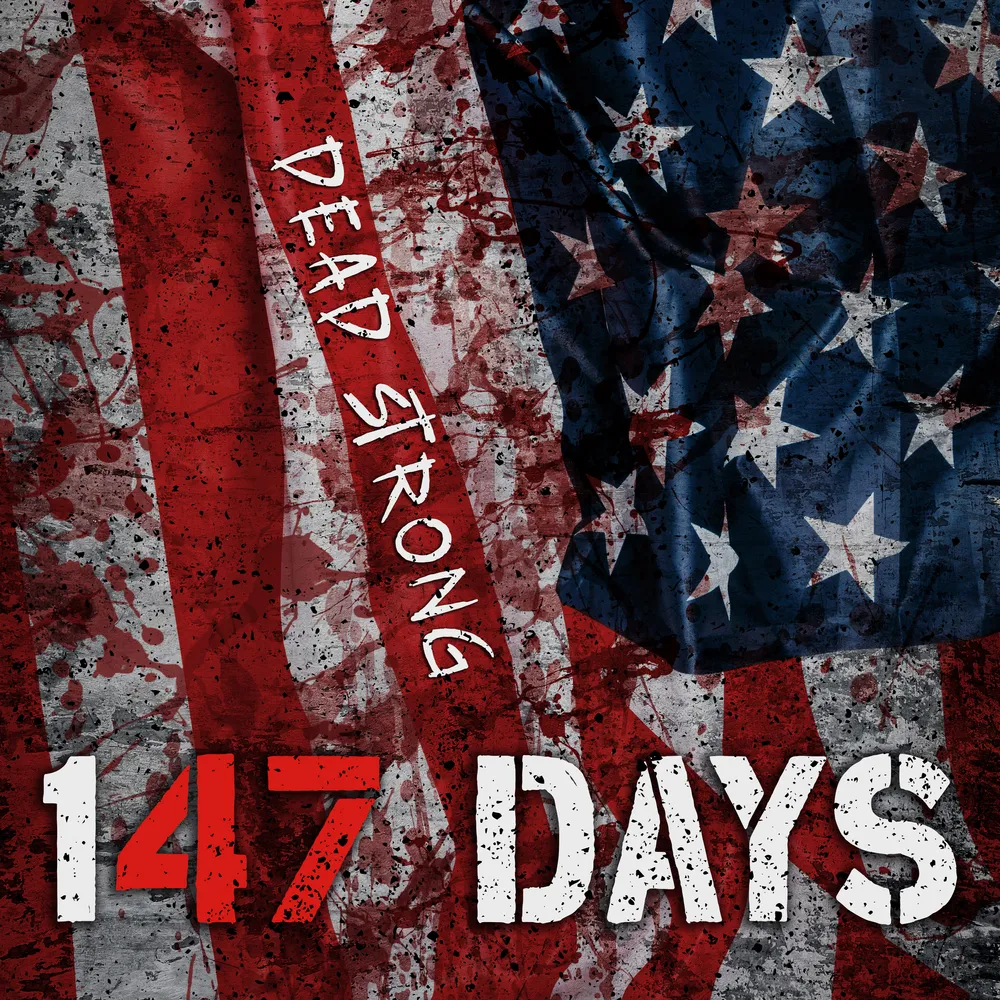
The record opens with “Elongate,” a character study that puts the listener inside the head of a tech billionaire drunk on his own influence, and it sets the template for the record’s sharpest weapon: first-person ventriloquism aimed at power. Rather than describe the target from a safe distance, Russ climbs inside the voice and lets it indict itself, stacking image after image of self-driving cars hitting bystanders and market swings treated as personal victories. “I Elongate,” the hook repeats, gleeful and grotesque, turning a surname into a verb for unchecked ego. It’s a bratty, high-velocity opener built on chugging power chords and a chorus designed to be shouted back by a room, and it works because the character never breaks. The satire doesn’t wink at the listener. It commits, and that commitment is what separates the song from a cheap punchline.
That commitment carries through “Brain Wormer in Chief,” maybe the record’s strangest swing, narrated by a parasite that treats a public health official’s mind as its own personal apartment. The premise sounds like a joke until the verses start naming real policy fallout: fluoridation conspiracies, vaccine skepticism, measles outbreaks. Russ finds a way to make body horror function as political reporting, and the chorus, screamed rather than sung, gives the track the physical urgency melodic punk needs to earn its aggression.
Two songs pull the record out of caricature and into something quieter. “Love in a Time of Intolerance” is written from inside a family under threat rather than about one, and the specificity matters. This isn’t an abstract plea for tolerance. It’s a household bracing against book bans and rainbow flags torn down the street, a couple choosing to keep building a life anyway. “Our family’s our battle cry” lands with more weight than any of the record’s louder provocations because it’s the one place where the stakes are personal rather than symbolic. “Raising Rebels” extends that same domestic lens across three generations, tracing a family’s political inheritance from grandparents who fell for old lies to kids being taught to spot new ones. The line “you can’t spell hatred without red hat” is a cheap trick on paper, and Russ knows it, using the joke as a release valve inside a song that’s otherwise doing serious generational math.
“Save the Fetus” and “It’s All Her Fault” are the record’s angriest tracks, and they’re built like indictments rather than songs, naming legislators and dollar figures against a backdrop of bodily harm. The former tracks a specific medical horror, doctors legally paralyzed while a patient’s infection spreads, and refuses to soften the outcome for the sake of listenability. The latter personifies the planet as a body under assault and names the senators cashing checks to keep it that way, a structural choice that turns an abstract issue into something closer to a crime scene report. “Architects of Erasure” widens that lens further, moving from courtroom to border camp to bureaucratic memo, and the chant-like chorus structure gives the track a physicality that plain protest lyrics rarely achieve. These three songs ask the most of a listener, and they’re not trying to be comfortable. They’re trying to be accurate.
“Self-Mutilation Nation” is the record’s riskiest idea, a satire voiced entirely by someone cheering their own losses so long as the other side loses more. It’s uncomfortable by design, a character sketch of self-harm dressed as ideology, and it only works because Russ commits to the voice with the same discipline he brought to “Elongate.” Then “KHH” flips the record’s whole method, dropping the satire and delivering a straight call to solidarity, work, and mutual aid as forms of resistance. After nine tracks of impersonating the people doing the damage, hearing the record’s actual position stated plainly gives the song real force.
The title track closes things out as a stand-up routine wearing a punk arrangement, a rapid-fire monologue stitched from the record’s whole hundred-day timeline: tariffs, deportations, a healed gunshot wound played for absurdist comedy, a chorus that just repeats “I’m the host, I’m the biggest star.” It’s the loosest, funniest song here, and ending on it is a smart choice. After nine songs spent inside other people’s heads and one spent stating a belief plainly, closing with something closer to open mockery lets the record end on its own terms.
At under thirty-two minutes across eleven tracks, 147 Days never slows down long enough to let its anger curdle into monotony, alternating character studies with direct address and never repeating the same trick twice. Melodic punk has a long tradition of writing protest music in real time. Russ just picked an especially fast-moving hundred days to do it in.
147 Days is available now via Dead Strong.


Leave a Reply