
Stu Larsen hasn’t had a home in almost two decades. That fact is the context for everything Solitude is, and for the particular discipline the album required. Where most artists retreat to a single studio for a record, Larsen spent 2024 writing one song per month across twelve countries, completely alone, in locations chosen specifically for their isolation. New Zealand, Tasmania, Queensland, Indonesia, Scotland, England, Austria, Germany, Italy, Canada, the United States, and finally Patagonia in Argentina: each place produced one song and one performance video, the geography doing the emotional work that a producer usually would.
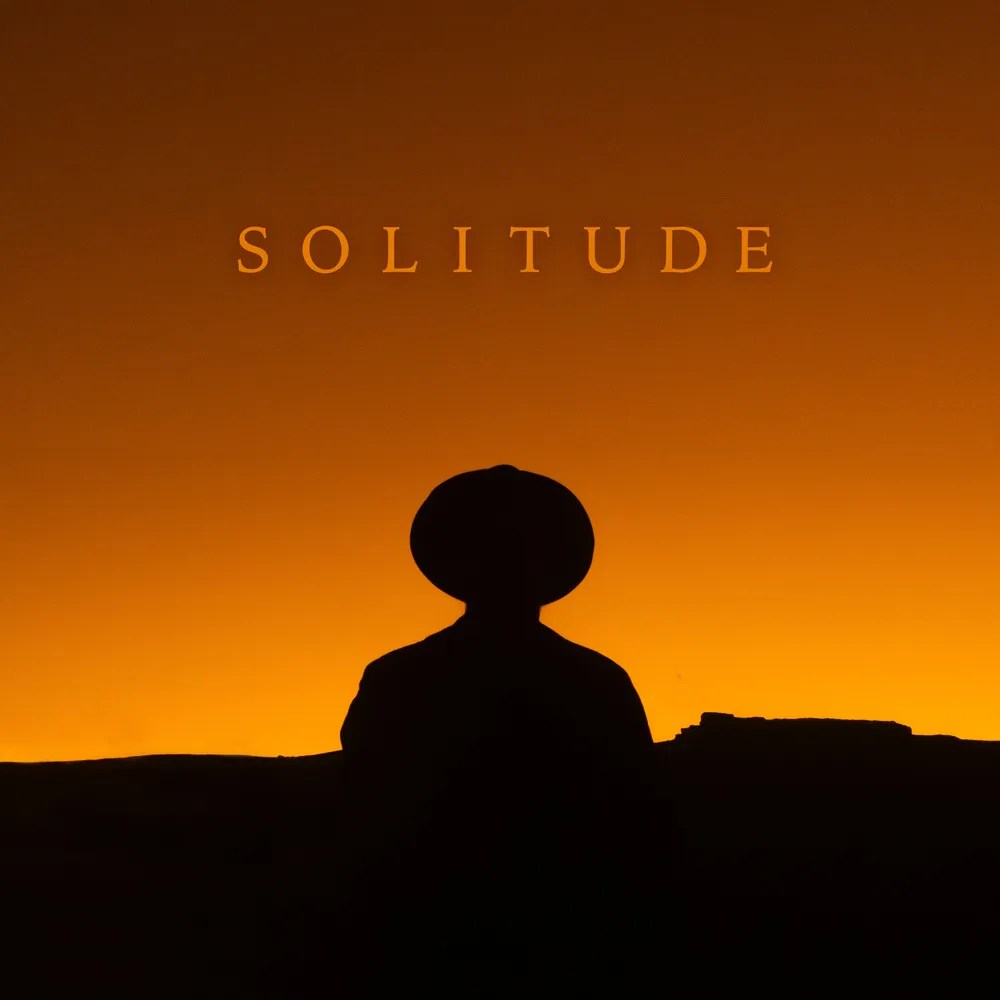
The album follows three previous full-lengths: Vagabond in 2014, Resolute in 2017, and Marigold in 2020, the last of which American Songwriter compared to Jackson Browne’s most wounded material. Solitude is in conversation with that catalogue but pushing further into a particular question about disconnection. Larsen spent years accumulating hundreds of millions of streams on tracks like “Thirteen Sad Farewells” and “San Francisco,” building an audience that found him because his songs arrived from genuine restlessness. This album is the most deliberate version of that restlessness yet.
“Misty Morning” opens things in January’s New Zealand, a tiny one-bedroom cottage surrounded by mountains beside a river. The song is about a relationship that seemed to be becoming something and then didn’t, the beginning and the end arriving almost simultaneously. Lightly strummed chords carry a head-nodding groove, and Larsen leans into his higher register on the hook, “I don’t wanna be your lover anyway, and if you could read my mind, you’d know that I just lied.” The honesty of that line does the work of three verses: the denial and the admission folded into the same breath.
“Xanadu,” written in Tasmania, serves as a natural sequel. The relationship from “Misty Morning” has clarified into what it isn’t, and fluttering finger-picked guitar carries the understanding. Larsen mentions the huntsman spiders in his accommodation with the kind of fond specificity that only comes from time actually spent somewhere, waking up to one on the ceiling above him. The detail gives the album a texture that pure travel-as-abstraction albums rarely achieve. These songs came from specific rooms in specific weather.
“Shelter” shifts the record’s emotional orientation outward. Piano ebbs and flows across a song dedicated to friends and family who were going through difficult things in 2023, an encouragement to keep going rather than succumb. The album is largely solitary in its concerns, but “Shelter” reminds you that solitude chosen is very different from isolation imposed on someone who needs support.
“I’ll Be Your Hallelujah” is the album’s most expansive moment, running just under seven minutes as piano builds into the embrace of a choir. The scale feels earned rather than indulgent given the intimacy of everything surrounding it. It’s the kind of track that justifies an album’s length, arriving at a point where the accumulated quietness of the preceding songs has prepared the listener for something larger.
“If I Get It Right,” written in Tuscany and described by Larsen as his favorite month of the project, carries loose electric guitar above a steady drumbeat with soulful harmonica. “All I wanna know is, am I really who I say? I think I know the answer, but I got more questions like, ‘What is the true right way?’” is the album’s most direct accounting of the self-examination that solitude tends to produce. The landscape of Tuscany is audible in the song’s warmth without being announced.
Then comes “Eden,” written in Patagonia with wild horses outside the cabin and a snow-capped volcano and a nearby river, and it closes the record with a stillness that the whole journey has been moving toward. “There are bridges that I’ve burned. There are teachings that I have learned. Still, time flies like a bird in the wind.” Larsen says of this song that if it were the last track on the last album he ever released, he’d be okay with that, and it lands with the weight of someone who genuinely means it rather than someone performing acceptance. The harmonica, sparse piano, and acoustic guitar leave the arrangement wide open, as if there’s room in it for whatever comes next.
Larsen’s consistent argument throughout is that disconnection is something you have to push through before something beautiful can happen on the other side. Solitude doesn’t romanticize that difficulty. The huntsman spiders are in there. The relationships that don’t become what you hoped are in there. What the album offers is not the fantasy of escape but the actual experience of someone who spent a year doing it, month by month, country by country, one song at a time.
Solitude is available now.


Leave a Reply