
Cloud Studies formed in South London in 2024 and have spent their first year establishing that the shoegaze and dreampop they make is interested in where those genres can go, rather than where they’ve been. Their self-titled debut EP, four tracks and fifteen minutes on Happy Robot Records, makes that ambition concrete. The band, built around Adam Cresswell on vocals, bass, and synths, Martin J Langthorne and Michael Malley on guitars and synth, with Natalie Guest on drums, Kirstin Isolde Lavender on second vocals, and Adrian Taylor contributing additional and lead guitar, recorded across three studios in Liverpool, Leeds, and London, and the distances between those rooms don’t show. The EP sounds like a single, coherent world.
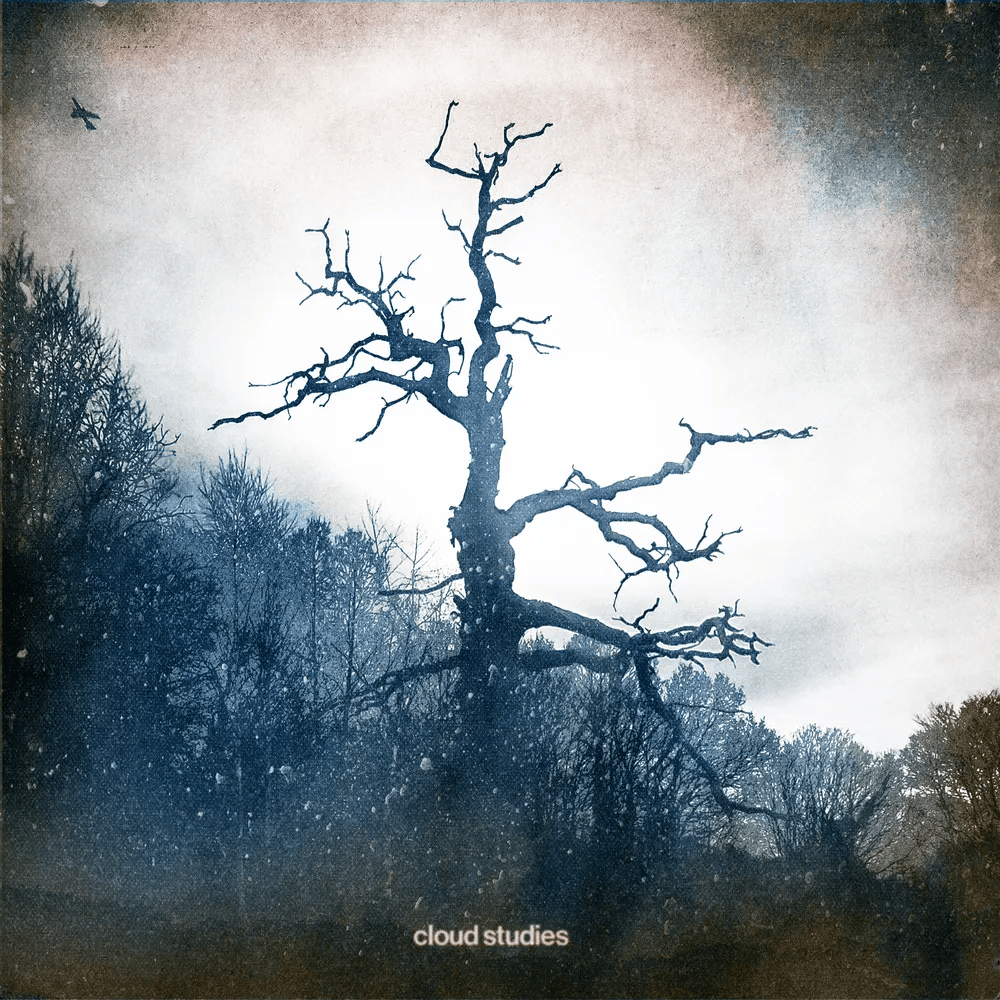
“Cloud Cartography (Extended)” opens the record as a reimagining of one of the band’s defining early singles, the original track expanded into something skyward and slow-burning. Cresswell first wrote the song after visiting the Derryveagh Mountains in Ireland, and the metaphor at its core, two humans trying to map clouds, shapes the whole EP’s sensibility: the attempt to fix something perpetually in motion, the gap between the map and the territory. The extended version builds through chiming guitars and layered textures into a wall of melodic sound that earns its length by moving through distinct phases rather than simply extending what was already there.
“Dreams About” follows as the EP’s most immediately accessible track. Shimmering guitars and melodic arpeggios pull toward classic indiepop, the uplifting quality genuine rather than manufactured. The subject is escape from daily drudgery through prescription drugs, which is a more specific and more honest way of approaching the escapism that runs through dreampop as a genre than most bands in this space manage. The brightness of the arrangement and the specificity of the lyrical premise create a productive tension that keeps the song from floating away into pure pleasantness.
“Avenue” brings the EP’s political dimension into focus, touching on indietronica as it moves through environmental change, loss, and renewal. It’s the most quietly meditative track on the record, shaped less by the kind of dramatic builds that bookend it and more by a steady, reflective quality that suits its subject. Nature as a political subject in music frequently tips into either didacticism or vague gesture; “Avenue” avoids both by staying grounded in the specific textures of loss rather than the abstraction of cause.
“Hiding Place” closes the EP by going somewhere none of the preceding tracks prepared you for. The band describes their darker post-punk territory as gothgaze, and the track delivers on that coinage. The psychology of stalking explored through blasts of noise and sustained unease is a genuine tonal departure from the shimmering guitars that opened the record, and the contrast works because the EP has spent its first three tracks building a world beautiful enough that its violation feels meaningful. The Cure and Joy Division references that hover around the band’s sound are most audible here, but the track earns those comparisons rather than simply invoking them.
Fifteen minutes is a precise amount of time. Cloud Studies use all of it deliberately, moving from skyward drift to indiepop brightness to environmental meditation to genuine unease without any transition feeling forced. The Analogue Trash blog called their early singles some of the best shoegaze the UK has to offer, and this debut EP makes a stronger case than any single could. Four songs, four different faces of the same sensibility, a band already pushing at the edges of what they’ve built.
Cloud Studies is available June 12 via Happy Robot Records (Digital) and The Weird Beard (Physical).


Leave a Reply