
Tiff Randol has spent years building IAMEVE into something that resists easy categorization. The project’s work has landed in Percy Jackson: Sea of Monsters, Ray Donovan, and Love Island, earned recognition at HollyShorts and the Japan Media Arts Festival, and drawn comparisons to Alice following Ziggy Stardust down the rabbit hole. That breadth of placement makes sense for music described as cinematic electronic, a form that can hold intimacy and scale simultaneously, that moves between the mythic and the personal without losing either. Legacy, Randol’s new album, is the fullest realization of that form yet.
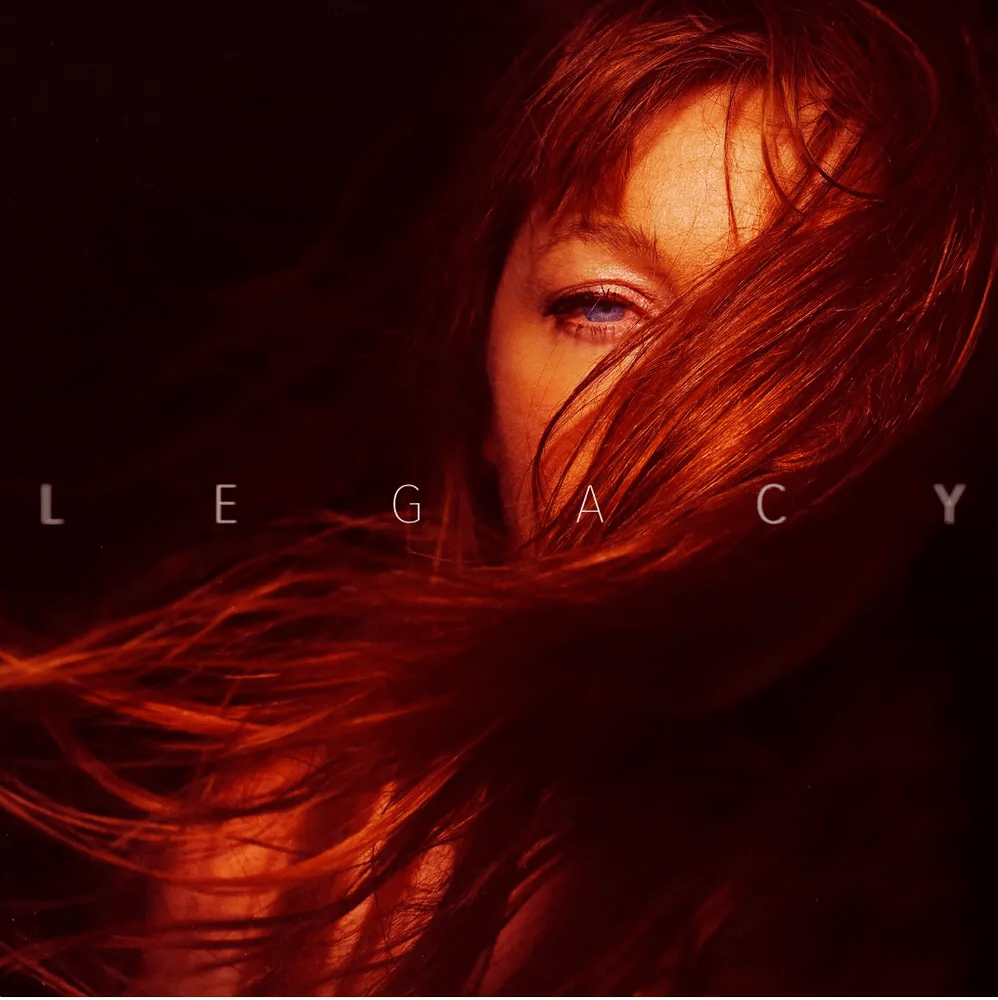
Written and produced by Randol, the record asks a central question across eight tracks and thirty minutes: what do we inherit, what do we rewrite, and what ultimately endures? Transformation is the album’s governing concern, personal, relational, societal, and archetypal, and the production moves between those registers with the fluency of someone who has spent years learning how cinematic arrangement creates emotional meaning. Choral layering, analog synthesis, guitars performed by David Green, additional drums by Khai Zhen Yap, and expansive orchestration produced by Randol herself build an architecture that can accommodate both the vast and the intimate within the same song.
“Mercy” opens the album, and the title carries the weight it always does in a record about what survives destruction. “Cold Bones” and “Be Steady” follow, each title suggesting a different posture toward the forces the album is reckoning with, the cold stillness of what remains after damage, and the instruction to hold ground in the face of it. Randol’s co-writer, Tom Leonard, contributes to several of these tracks alongside Green and Yap, and the production, mixed by Mark Merlino and Gabor Udvarhelyi and mastered by Luiz Tornaghi, keeps the arrangements serving the emotional logic of each song.
“Atomic” is where the album’s lyrical voice becomes most explicit. “Is this our truth? Is this how it ends? / all the little things we shouldn’t hold in” opens a song about love at the threshold of its own destruction, the chorus arriving with “I’m gonna make you stay here / not gonna let you go / let you know that you’re so beautiful when you lose control.” The title word arrives in the final section as both description and question, “does it feel atomic?” the love and the explosion occupying the same space. “Anything for the flood / anything for the war / anything for our love” sits at the song’s center as a statement of willingness that refuses to distinguish between catastrophe and devotion.
“Desire” and “Light It On Fire” continue the album’s interrogation of what burns and what endures, the titles themselves forming a sequence that traces the arc from wanting through conflagration.
“Stardust Apocalypse,” the album’s lead single, was the first release and remains one of its most expansive moments. Produced by David Christophere alongside Randol with synths performed by Christophere, the track opens with lumber crashing down, a sky falling, an afterglow rising through the circle of life. “When the seeds that we’ve sown in the darkness grow white, and the stillness of time breathes in ecstasy lighting up the black sky bright like a holy night” is the album’s most overtly mythic lyric, the destruction and the regeneration held together in a single image. The chorus resolves it into cosmology: “it’s all stardust, like a big bang through the universe / the everything nothing.” American Songwriter’s description of IAMEVE’s work as epic songs that ooze with spacey surrealism lands accurately here. The song moves from war to silence to beauty swept to the ground, the voice waking from sleep no longer afraid, which is where destruction and rebirth finally converge.
Closer “My Head My Heart My Hands” ends the album by naming the three instruments of embodied human action, the sequence moving from cognition to feeling to physical doing. It’s a fitting close for a record about what we carry forward: not just thought or emotion but the actual work of building something after the inheriting, rewriting, and enduring have played out.
Legacy is the kind of record that rewards the attentiveness its production demands. Randol has built each IAMEVE release as its own world, conceptually driven and emotionally specific, and this album is the most fully realized of those worlds yet. The question it asks about what endures doesn’t arrive at a tidy answer. It arrives at stardust, which is both the end of things and the material from which everything else begins.
Legacy is available May 15, 2026.


Leave a Reply