
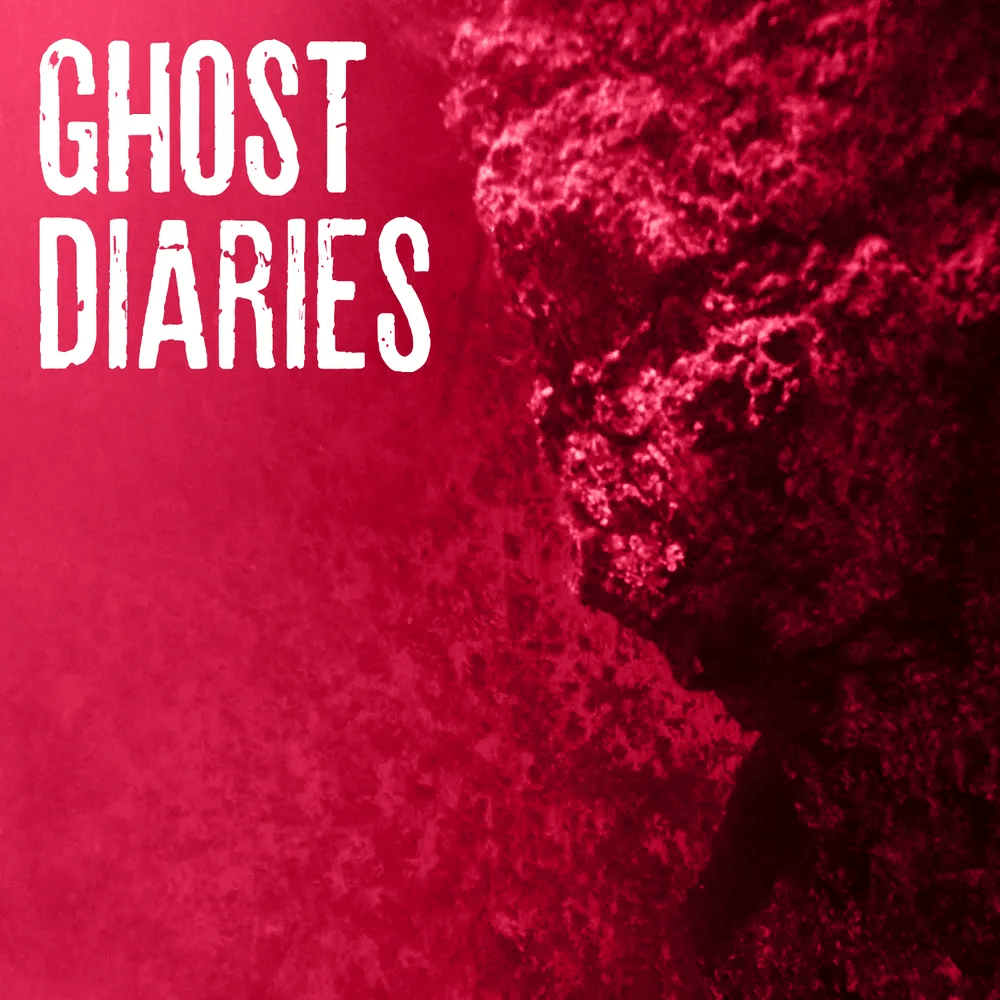
Ghost Diaries describe themselves as a soundtrack to a life spent with no easy way out, and their self-titled debut earns that description without strain. The Vienna-based five-piece, drawing members from four different countries, makes dark alternative rock with post-punk tension underneath it and a slow-burning emotional weight that accumulates across ten tracks. This is not music that wants to be liked immediately. It wants to be understood eventually, which is a different and more demanding ambition.
“Berlin” opens the album with rain and domestic dread, a woman coming home to “butcher’s hands lying in wait,” letters that don’t make sense, stares from all sides. The chorus gives the imagery a cinematic sweep: “all the while the rain is falling / there’s a fire in your eyes.” The second verse turns the lens outward to generational damage, a mother’s failure handed down to eternity, a woman becoming a small town girl while someone else provides his alibi, sitting at home with the kids. The song frames the entire album’s concerns in its first four minutes: trapped lives, violence that lives in the ordinary, the rain that keeps falling regardless.
“Science” shifts register entirely and is one of the record’s most striking pieces of writing. The narrator requests that their body be donated to science after death, not out of altruism but out of a kind of exhausted detachment: “piece by piece, catalogued and stored in sterile boxes / I wouldn’t care at all.” The feet too small for proper shoes, the eyes like stones turning inside out, cremation dismissed as overrated, with no interest in a shady spot beside a cypress tree. It’s a song about wanting to matter in the only way that feels reliable after everything else has failed.
“Begging You” brings the album’s most explicitly desperate emotional register, a narrator watching someone slip away and asking not to drown on their own. “I’d rather be in someone’s corner / and throwing it all in / keep it with me / this sensation of connection / don’t take it from me.” The language is blunt, and the feeling is real, the kind of lyric that doesn’t try to be elegant because elegance would be the wrong response to what it’s describing.
“Black” is one of the album’s most structurally ambitious tracks, moving between a figure stumbling through fog toward some end and a woman who “comes in the afternoons / every time it could be the last.” The two threads weave without quite resolving, the bare walls and bright neon lights framing what’s left of a life. “Hold On Tight” takes that ambiguity further, a man with fifty years behind a decision standing near a track, stepping closer as the song builds toward an ending the lyrics approach but don’t name directly. It’s the album’s most controlled use of implication, the briefcase gripped tight as the steps become more confident toward whatever he has decided.
“Die Trying” steps back from that specific dread into something more defiant: “I would rather die, die trying / scaling all the walls in the world.” The repeated insistence that all journeys end somewhere and somehow this one will too carries a fatalism that the defiance doesn’t quite dispel, which is the tension the song lives in. “Mind Over Matter” explores the difficulty of giving your heart away when it keeps getting harder every day, the wet place in the North, and the afterthought quality of feeling lost without anyone looking.
“Too Close” is the album’s most socially directed track, aimed at a traitor whose dreams are too small, whose betrayal is somehow beloved by those who profit from it. “How much does it take to keep a man alive” sits in the chorus with the quality of a question that doesn’t expect an answer. “Ordinary Man” turns that outward critique inward, a fool who kept believing it was going to be fine, blinded by the lies he told himself that he is not ordinary. The recognition that he is, lands without drama, which makes it land harder.
Closer “Stay” ends the album with an invitation that carries the same ambivalence as everything preceding it: “stay just stay for a while / stay just stay for the crash.” Staying for the crash is not a consolation. It’s an honest account of what staying sometimes means, the willingness to be present for the worst of it because the alternative is leaving, which has its own cost. Ghost Diaries close their debut not on resolution but on presence, which is where the album’s emotional logic has been pointing from the first bars of rain falling in Berlin.
Ghost Diaries is available now.


Leave a Reply