
Matt Smith releases his twentieth album on New Year’s Day 2026, the ellipses and lowercase title announcing discomfort immediately. …this is not ok… doesn’t pretend things are fine. The Austin-based artist spent mid-2025 watching the political landscape deteriorate, processing anger about authoritarianism and division while simultaneously grieving his parents’ deaths. Rather than let the rage fester or fuel further fracture, he channeled everything into nine songs that blend roots, soul, folk, jazz, and rock. The result confronts ugliness honestly while refusing to become what it critiques—music born from fury that still believes in empathy and common ground.
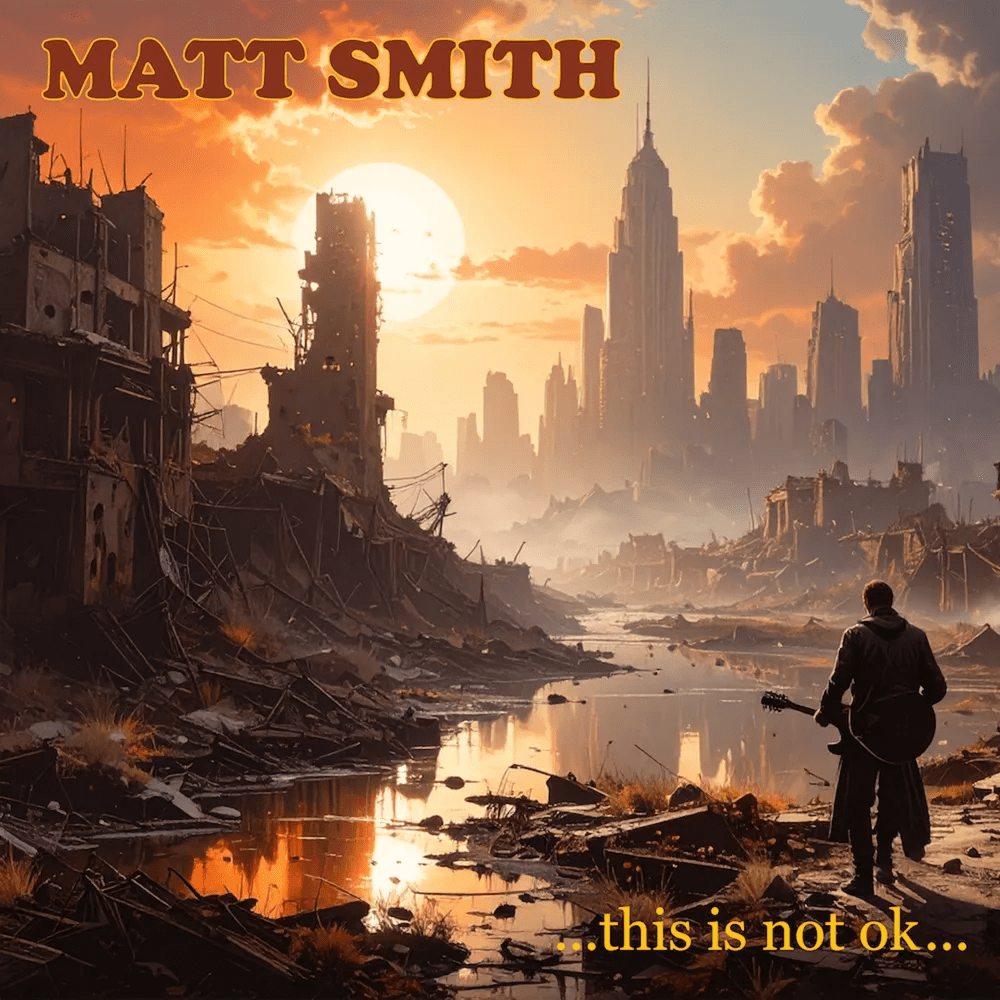
Smith has spent three decades as a self-employed professional musician, every job connected directly to music. As co-founder and Executive Director of Six String Ranch, the residential studio and school in Austin, he’s mentored hundreds of songwriters and instrumentalists. That teaching philosophy surfaces throughout the album—express what you feel, but do it responsibly. Don’t add to the division you’re documenting. The challenge becomes making protest music that doesn’t simply preach to the converted or deepen existing trenches.
“World Is a Wheel” opens with Memphis soul and Texas blues, establishing the thesis: “There are no sides on a circle / No walls to hide and conceal / and the world will keep on turning / Another spin upon the wheel.” The imagery works—circles have no sides to choose, conflicts exist, but so does continuity, the world keeps spinning regardless of human divisions. Smith’s guitar work here demonstrates the prowess critics have praised across his catalog, the fretboard melodicism and high-energy riffing serving the song rather than dominating it. The production, handled by Smith at Six String Ranch with Bill Kaman, maintains clarity while achieving warmth.
“Cry for America” delivers the album’s most direct political statement, mourning what the country has become while refusing to abandon hope. “Oh beautiful for halcyon skies / My soul cries out for thee / A purple mix of red and blue / From sea to shining sea.” The purple metaphor recurs—red and blue make purple, the mixing necessary for mountain majesties to appear. Smith critiques the turn away from welcoming “the huddled masses / Yearning to breathe free” while asserting “I still believe in thee.” The grief feels genuine, the protest rooted in love for what the country claimed to represent rather than hatred for political opponents.
“Orphans” shifts to an intimate meditation on aging and loss. “If you’re living your life and you’re doing it right / Then we all end up as orphans.” The universality of parental loss, the field of days gone by where heroes have passed—Smith connects personal grief to shared human experience. His parents’ deaths inform the writing here, the specific loss opening into broader reflection on memory and continuity. “Let their memory live within you / And your memory will live on within them too” offers comfort without false resolution.
“Level Ground” continues processing loss through Saharan dust metaphor and empty chairs. “The one person left who I knew truly cared / Is not there / All that’s left are just pictures / and your empty chair.” The refrain “I am not ok / This is not ok” echoes the album title, Smith refusing to perform recovery before it’s real. The steep ups and downs prevent finding level ground, the climbing and falling and running to keep from crawling, all documented with uncomfortable honesty. The production here allows space for the vulnerability, Smith’s trademark smoky vocal carrying the weight.
“I’ll Never Fall in Love Again” examines romantic patterns and self-sabotage with noir-tinged arrangements. The casualty of not owning his part, the table for one, the years flying by—Smith catalogs familiar failures without self-pity. “A Life in Love” follows with harder-earned wisdom about long-term commitment. “Love takes some learning / About expectations / That can rock the foundations / How we thought love would go.” The acknowledgment that “One of us is left behind the wall / But it’s better to have loved in life / Than to never love at all” accepts mortality’s inevitability while affirming the choice to love anyway.
“Outside My Fence” returns to political territory through an isolationist parable. The beautiful, tall wall, the paradise protected inside, the last to die when everything burns down—Smith dramatizes the fortress mentality with enough detail to make it real. But the final verse breaks the facade: “My mind is spinning like a wheel / Numb to the emptiness I feel / Life has no meaning when you have no / Reason left to live.” Isolation destroys what it claims to protect. The world spinning like a wheel connects back to the opening track—you can build walls, but the circle keeps turning.

“Bad Man” drops the metaphor entirely, searing anger directed at the “megalomaniacal wanna be dictator” Smith references in his statement. “He ain’t got no heart / He ain’t got no soul / Where others feel love / There’s a big black hole.” The directness risks didacticism, but Smith earns it through specificity. The lust for wealth, need for power, seeing only himself in the mirror, gathering easily manipulated minions—these aren’t abstractions but documented patterns. “History is never kind / to evil men with evil minds” functions as a warning and a hope simultaneously.
“From the Ashes” closes with resilient optimism, the title and refrain promising renewal. “Singed and shaken / Worn and dirty / We will rise.” After eight tracks documenting everything broken, Smith ends with the assertion that resistance continues. “Free from oppression / Free from lies / We will rise” carries the weight of someone who’s genuinely angry, refusing to surrender to despair. The production builds appropriately, the full band sound supporting the communal nature of the promise—not “I” but “we.”
Across twenty albums and thirty-plus years, Smith has addressed love, mortality, spirituality, immigration, addiction, narcissism—the universal and the contemporary woven together. Critics call him “a well-kept secret” making “smart indie rock with a dirty country soul,” blending “blues with jazz, classic rock overdrive.” …this is not ok… demonstrates why the secret deserves wider exposure. Smith processes legitimate anger without becoming the division he critiques, makes political music that maintains artistic integrity, confronts ugliness while affirming the possibility of healing. His mission remains bringing people together through music. Even when everything’s broken, especially then, the circle keeps turning. The album documents one artist refusing to let anger curdle into contempt, choosing instead to voice feelings responsibly and trust that others might do the same. Not ok, clearly. But still fighting for better.
…this is not ok… is available now on 6 String Ranch Records.
 B-Side Guys
Leave a Reply