
Grief masquerades in curious disguises. On “Matilda,” the standout track from Housewife’s newly released EP ‘Girl of the Hour,’ Canadian artist Brighid Fry transmutes the seemingly trivial—a stolen bicycle—into a disarmingly poignant meditation on absence and moving forward.
The brilliance of this March release lies in its deceptive simplicity. Fry (who performs under the Housewife moniker) constructs an allegory that operates on multiple levels, allowing listeners to project their own experiences of loss onto her narrative framework. “Matilda wasn’t just my bike,” she explains in the track’s accompanying materials. “It’s an allegory for grief and loss, and missing something or someone you can’t have anymore.” This approach demonstrates a songwriting maturity that belies her 22 years, showcasing her ability to find universal resonance in specific personal moments.
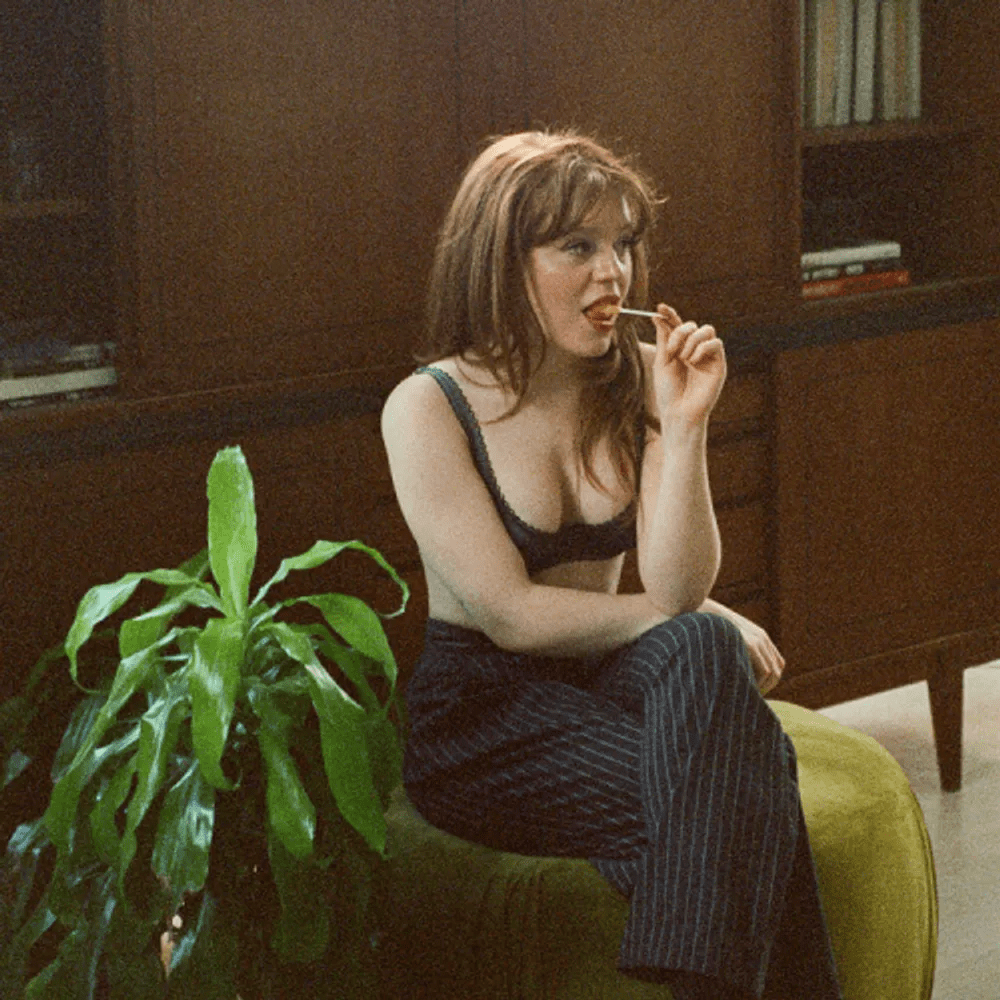
Musically, “Matilda” represents a continued evolution away from the folk leanings of Fry’s earlier work. The production builds a soundscape where indie rock foundations support more experimental pop flourishes—shimmering synth textures and propulsive percussion that mirror the freedom and momentum of cycling itself. This sonic approach has earned Housewife comparisons to artists like Blondshell and Julia Jacklin from publications including Dork, who described her work as “an emphatic introduction to an artist already screaming ‘future favourite.’”
What distinguishes Fry’s writing is her capacity for observational precision without sacrificing emotional impact. The track occupies the intersection between cerebral and visceral responses to loss, neither wallowing in melodrama nor retreating into detachment. This balance reflects the broader thematic concerns of the ‘Girl of the Hour’ EP, which navigates questions of identity, queerness, and perception with remarkable dexterity.
The context surrounding “Matilda” adds further layers. As a founding member of the Canadian chapter of Music Declares Emergency and an advocate for LGBTQ+ rights, Fry’s artistic voice exists in conversation with her activism. Yet rather than creating didactic messaging, she weaves these perspectives into storytelling that feels authentic rather than performative. The result is music that carries weight without becoming ponderous.
Toronto’s music scene has birthed numerous promising voices in recent years, but Housewife stands apart through this combination of intellect and accessibility. “Matilda” functions as both earworm and thought experiment—a rare alchemy that suggests Brighid Fry’s artistic trajectory is just beginning its most interesting phase. Sometimes the most profound statements come wrapped in the most unassuming packages; a song about a stolen bicycle becomes, in these capable hands, a disarmingly effective vehicle for exploring how we process what we’ve lost and what we might still find.


Leave a Reply