
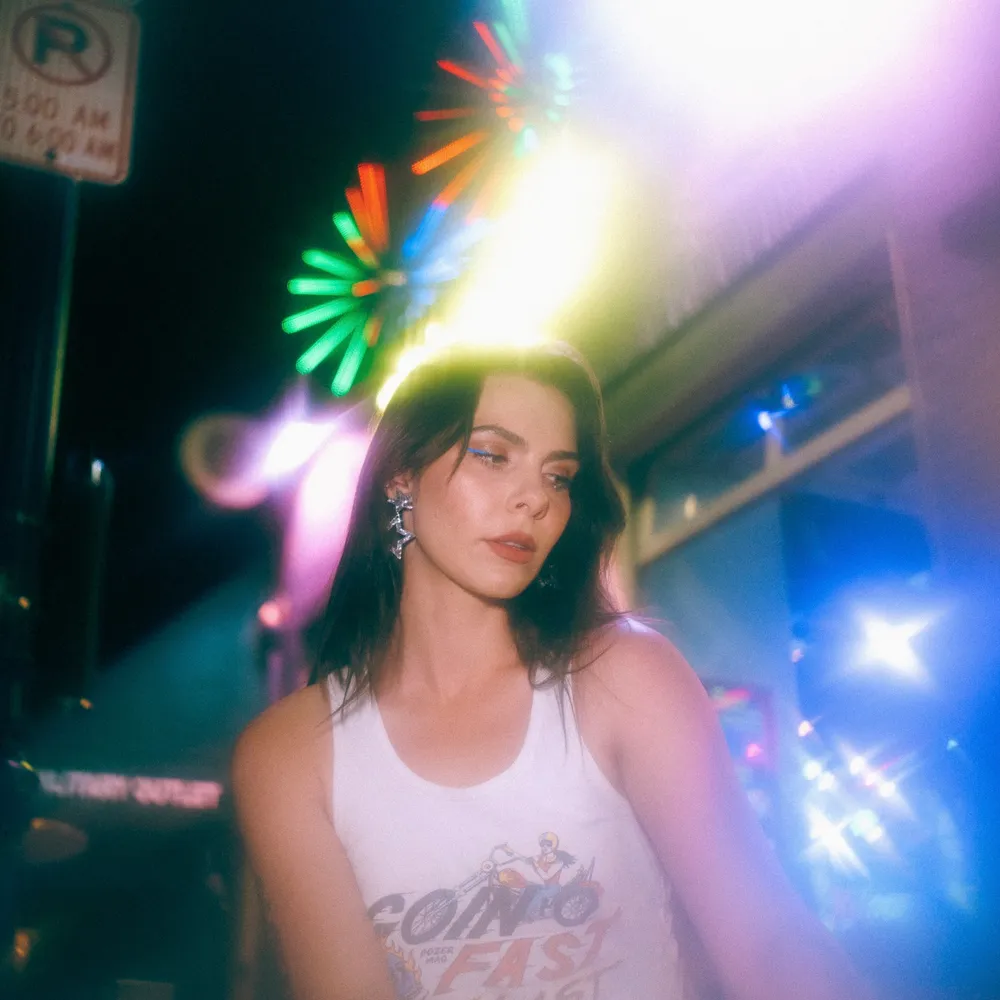
In the shadow of Southern California’s mountains, Estella Dawn’s “Julian” emerges as a masterclass in musical vulnerability, painting an intimate portrait of relationship anxiety through carefully crafted metaphors and atmospheric production. The New Zealand-born, San Diego-based artist’s seventh release of 2024 demonstrates her growing confidence as a songwriter while paradoxically exploring the depths of personal insecurity.
The track’s strength lies in its sophisticated use of photography metaphors, weaving them seamlessly through a narrative of uncertain love. When Dawn sings “I wanna take pictures of us, but I’m scared that you’ll see me in focus,” she captures a universal fear of being truly seen, turning the concept of photographic clarity into an elegant metaphor for emotional transparency. This imagery is reinforced throughout the song, culminating in the raw confession “I’m scared cuz my soul akes in that way/Makes me think that you’re made for me.”
Production-wise, “Julian” showcases a nuanced approach to indie-pop arrangements. The track builds from intimate verses to expansive choruses, with what Dawn describes as a “hollow drum” kick serving as both musical element and lyrical metaphor. This attention to sonic detail creates a landscape as vast as the mountain drive that serves as the song’s setting, while maintaining the intimacy of a personal confession.
The geographical specificity of Julian, California, adds another layer to the narrative, with the mountain setting becoming more than mere backdrop. Dawn uses this physical elevation to mirror emotional heights, while the winding roads serve as a perfect metaphor for the relationship’s uncertainties. Lines like “It’s a moody day out/On the edge of Julian” ground the abstract emotional content in concrete reality.
The track’s bridge section delivers one of its most poignant moments, with Dawn acknowledging “Look at us darling/Playing house as the cards fall.” This clear-eyed assessment of relationship fragility is made more powerful by its placement within the song’s structure, arriving just as the production reaches its peak complexity. The juxtaposition of domestic imagery with impending collapse creates a tension that resonates throughout the piece.
Dawn’s vocal performance deserves particular attention, as she navigates the emotional complexity of the lyrics with remarkable control. Her delivery of lines like “You act like you love me/Then pull right back like a riptide” carries both strength and vulnerability, matching the push-pull dynamic described in the lyrics. The performance never falls into melodrama, instead maintaining a careful balance between power and restraint.
The song’s structure mirrors its thematic content, with verses that pull back and choruses that surge forward like the riptide mentioned in the lyrics. This architectural choice reinforces the narrative of attraction and retreat, creating a musical experience that matches the emotional journey described in the lyrics. The recurring “Oh oh oh” sections serve as emotional release valves, providing necessary space for reflection between the dense narrative verses.
“Julian” represents a significant achievement in Dawn’s catalog, showcasing her ability to craft songs that function both as personal documents and universal experiences. The track’s exploration of vulnerability, fear of intimacy, and the complexity of human connection demonstrates her maturity as a songwriter, while the production choices reveal an artist in full command of her sonic palette.
Through precise imagery, thoughtful production, and emotional honesty, “Julian” establishes itself as a compelling addition to the indie-pop landscape. Dawn has created a song that resonates beyond its specific geographical and emotional origins, speaking to the universal experience of fearing vulnerability while desperately wanting connection. This balance of specificity and universality marks “Julian” as a significant milestone in her artistic journey.
 B-Side Guys
Leave a Reply