
Most genre fusions announce themselves with a press release and deliver something that sounds like two existing things awkwardly sharing a room. Bluegrass House, the micro-genre that EIR is staking a claim to with Wild River, is not that. The four-version EP built around a single track does something rarer: it makes the fusion feel inevitable, as though Appalachian fiddle and driving house rhythms were always going to find each other and just needed the right people in the room.
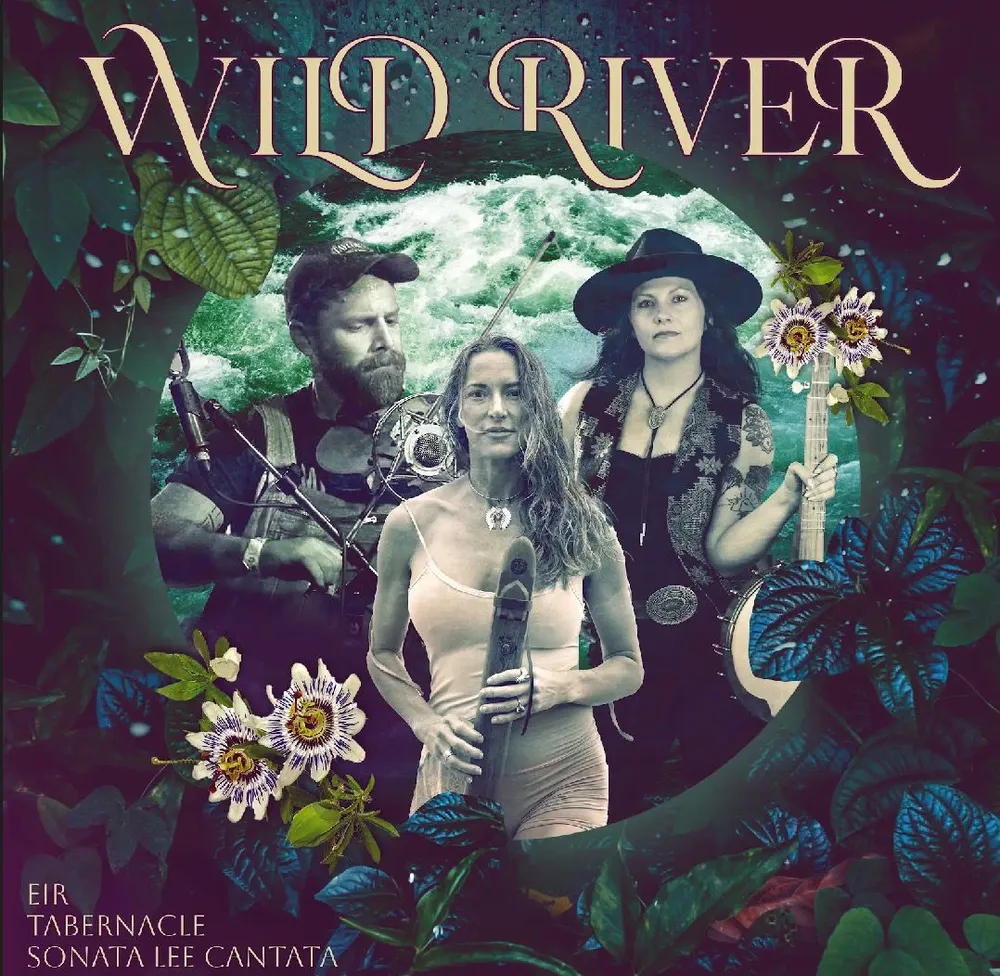
EIR is an ambient sound healer, downtempo and tribal house DJ, and classically trained opera singer whose work moves between ceremonial sound healing and peak-time dance energy. That background is not incidental to what Wild River is. The operatic vocal training gives her voice a presence and control that holds its own against the weight of what’s happening rhythmically, while the sound healing practice shapes the track’s architecture into something patient, intentional, designed to move a body through something rather than just at something. She wrote and produced the song and performed lead and background vocals, flute, piano, keyboards, and synths.
The track was built in collaboration with Ben Townsend, one of Appalachia’s more quietly essential fiddle players, who co-produced, played fiddle, banjo, and live drums, and handled the mixing. Their mutual friend Caitlin Smith contributed banjo and background vocals. The combination of EIR’s electronic and classical instincts with Townsend’s deep fluency in Appalachian instrumentation is what keeps the track from feeling like a gimmick. Neither world is decorating the other. They’re building something together.
The original mix opens with organic string textures, fiddle and banjo holding a groove that feels rooted in the earth rather than generated by software. EIR’s voice moves through the early sections with the kind of restraint that signals confidence rather than hesitation, letting the instrumentation carry the weight before the track makes its move. That move arrives at 2:37, when the house drop hits. It’s a well-constructed moment: the percussion tightens, the bassline takes over, and the fiddle that was doing the work of an acoustic instrument suddenly sounds like it was always meant to be in a club. The drop doesn’t abandon the Appalachian material so much as reveal what it was always capable of at higher pressure. The dancer dissolves into the dance, as intended.
The four versions on the EP reflect the deliberate thinking behind the release. Ecstatic dance spaces often prohibit lyrics, which makes the instrumental mixes a practical necessity rather than an afterthought. Club settings require extended builds and longer outros for DJs to work with. The extended DJ mix and its instrumental counterpart give selectors the flexibility to use the track across different contexts without compromising the emotional arc that makes the original work. This is a producer thinking about the full life of a track rather than just its recorded form, which is the right approach for music designed for physical, communal spaces rather than passive listening.
What makes Wild River interesting beyond its genre fusion is the underlying argument it’s making about two musical traditions that share more than they’re usually given credit for. Appalachian music and house music both emerge from communal, ecstatic roots. Both are built for bodies in motion. Both carry a relationship to ceremony and release that goes deeper than entertainment. EIR and Townsend aren’t forcing a connection that doesn’t exist. They’re tracing one that was already there.
Whether Bluegrass House develops into something beyond this single track depends on whether other artists find the same thread. Wild River makes a compelling case that the thread is worth pulling.
Wild River is now available via Moonbabe Records.
 B-Side Guys
Leave a Reply