
There’s a moment in “Miracle On The Hudson” where Brock Davis’s narrator, plunging toward the river in a powerless aircraft, pulls out a card and writes “I love you” to leave in his pocket to be found. It’s the kind of detail that stops you cold, not because it’s dramatic but because it’s so specifically human: the instinct, in the last few seconds before impact, to make sure someone knows. That lyric alone tells you what kind of songwriter Brock Davis is. He finds the exact moment, the exact gesture, and trusts it to carry more weight than any amount of editorializing could.
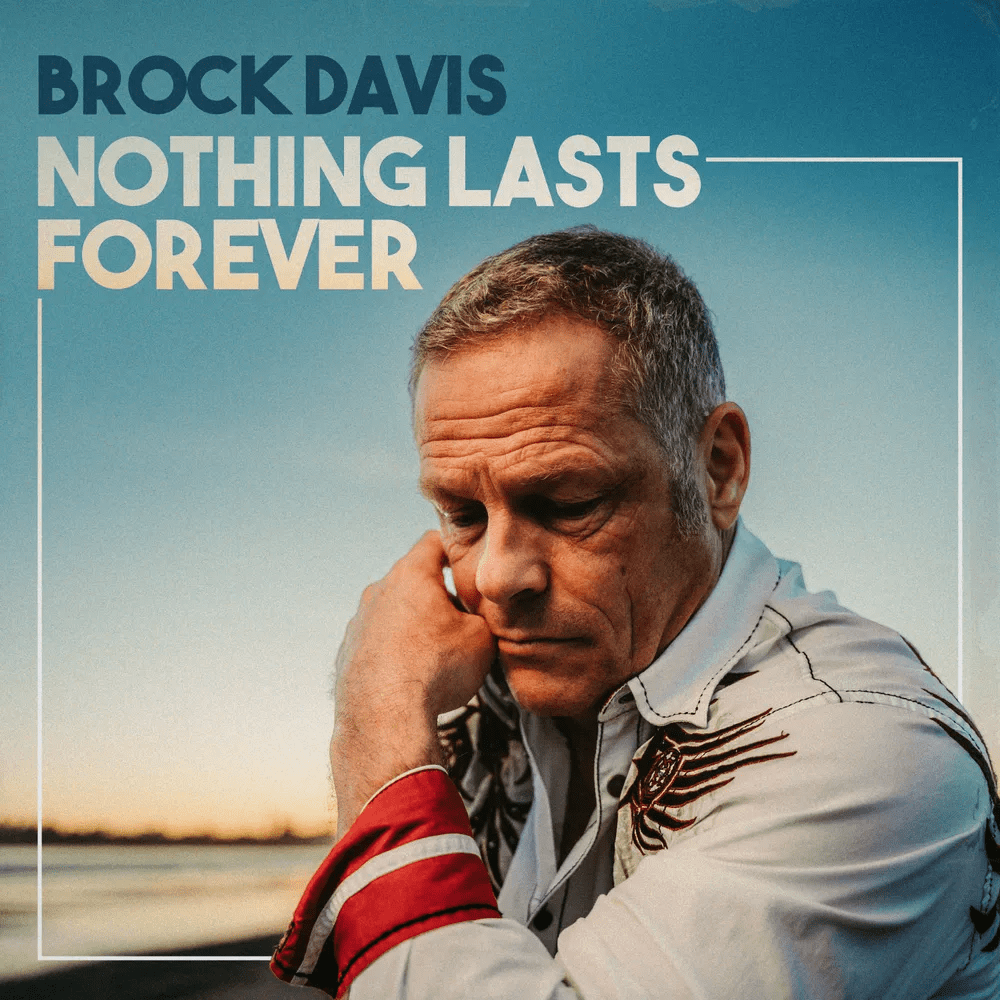
Nothing Lasts Forever, the Santa Cruz-based Americana artist’s fourteenth-song collection, was written as a meditation on impermanence and then became something far more personal. Davis was diagnosed with an aggressive cancer during the mixing process, a health scare that cast the album’s themes in a light he hadn’t anticipated. The diagnosis later turned out to be benign, but the months of uncertainty left their mark. “That experience, without doubt, reinforced the message that nothing lasts forever,” he says. Produced by Davis himself and recorded at Pentavarit in Nashville with Grammy Award-winning engineer Zach Allen, whose credits include work with Keb Mo’ and Christone “Kingfish” Ingram, the album brings together a band of world-class Nashville session musicians including drummer Marcus Finnie, bassist Duncan Mullins, guitarist Justin Ostrander, pedal steel player Russ Pahl, and organist Michael Hicks, alongside acoustic guitarist and mandolinist Pat McGrath. The result is a record that sounds as lived-in as the stories it tells.
The album opens with “All Of You,” a country list song that catalogues intimate knowledge of a long marriage with the kind of specificity that only comes from years of paying attention. Davis knows the way his wife’s blue eyes crinkle when she smiles back at him, the way she presses her lips when he’s pissed her off, the way her hand moves when she wants to fool around. The song earns its tenderness because it earns its detail first. It sets a template that the album largely follows: emotional honesty built from precise observation rather than sentiment.
“Nowhere Near Ready” reaches back to a first love and the particular grief of meeting the right person at the wrong time. “I loved every single thing about you / and I broke your heart, when I let you go” is a simple line, but the third verse complicates it in ways that give the song its real weight. The narrator was twenty, young enough to be afraid, and that fear made the fears come true. By the end, the song has moved from nostalgia into something closer to genuine reckoning.
“I’ll Be Your Alibi” pivots hard into gritty rock territory, its empowering narrative of standing up to workplace sexual harassment driven by a groove that earns the swagger the story requires. The protagonist takes a baseball bat to her harassing boss’s car, and Davis’s narrator provides the alibi without hesitation. It’s the album’s most outward-facing track, and the electric guitar work from Ostrander gives it the right kind of edge.
The title track is built around a conversation between a heartbroken man drinking alone and an older stranger who’s seen enough of life to offer perspective without condescension. “It’s the lows that make the highs so high / you gotta go through the dark to find the light” could read as greeting card wisdom in lesser hands, but Davis roots it in the old man’s own story: two kids who married straight out of school, nearly fell apart under the weight of two jobs and three children, and made it through. The context gives the chorus its credibility.

“I’m Glad You Left Me” is the album’s most quietly devastating track. “I could never, ever fill you up / and you could never believe you were good enough” diagnoses a failed marriage in two lines with a precision that most songwriters spend entire albums reaching for. The song earns its relief through grief first.
“Daddy’s Girl” sits at the album’s emotional center alongside “Til The Morning Comes,” a song Davis wrote about his aunt’s decision to stop chemotherapy and spend her remaining time with the people she loved. That song became frighteningly personal during the making of this record, and the lyric carries that weight: “I believe it ain’t the time we’re given / it’s the choices we make and how we live it.”
The album closes with “A Daughter,” a song Davis describes as a shocking story of a lifelong secret revealed, and the sequencing earns the ending by refusing easy resolution. Nothing Lasts Forever doesn’t wrap things up. It sits with the complexity of lives that keep going, keep changing, keep asking more of the people living them. Davis has always been a storyteller with a knack for the telling detail. This album is his most fully realized case for why that matters.
 B-Side Guys
Leave a Reply