
Jesse Carsten opens “Fruit” with advice received rather than discovered: “this too shall bear fruit / but until then, just as you said / ‘we must all learn to bare the fallow field.’” The wordplay between bear and bare does the heavy lifting, collapsing endurance and exposure into the same act. For thirteen years, Carsten has released music under the name Half Shadow, creating what critics call experimental Pacific Northwest folk that “has the rare distinction of sounding very little like anything else.” The lead track from the new EP, Wind Inside, documents a winter of mental illness, crouching by the “hearth aglow” while waiting for spring to arrive with its “effortlessness.”
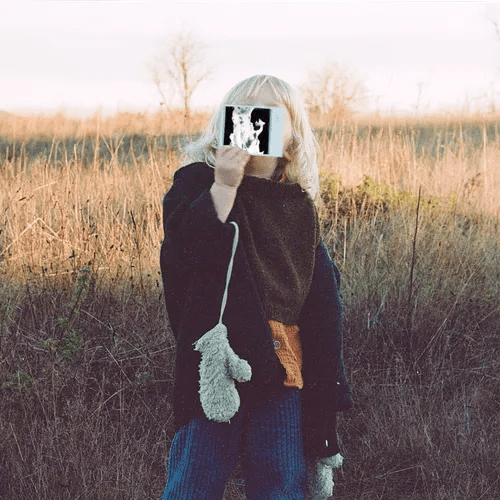
The finger-picked arrangement supports lyrics that move like memory, jumping from fallow fields to lover’s objects on dark dresser wood to peaches rotting in kitchen sunlight. Carsten, also a poet, writes lines like “I eat the image whole / roll it around on my ancient tongue,” treating perception as consumption, visual pleasure as something you can taste. The song’s central tension lives in temporal collapse: “time and years and photographs spilling dust / and the house will be gone” acknowledges impermanence while celebrating “strange idiot empty momentary grace.” That phrase captures Carsten’s entire approach, finding glory in the transient without demanding it become permanent.
Blending influences from Mount Eerie to Sade to Joni Mitchell, Half Shadow occupies territory somewhere between earthen folk and primal pop experiment. The Portland Mercury called Carsten’s live shows “invariably powerful, full of wonder and unlike anything else,” which makes sense for someone who incorporates spoken word and performance art alongside intimate repertory. “Fruit” functions as both personal growth documentation and archetypal poetry of loss, the kind of searching rattling poem that doesn’t resolve cleanly. By the time Carsten reaches “it tastes like effortlessness,” you’ve spent three minutes watching someone learn to bare the fallow field while bearing it, which is probably as close to spring’s warm trance as you can get while winter’s still technically happening.
 B-Side Guys
Leave a Reply