
Markus Sieber walked into Berlin’s Funkhaus on a hot August day carrying a classical octave guitar and a baritone charango, entering a building that had lived in his head since childhood. The Funkhaus—built in the 1950s as East Germany’s largest broadcasting station—was where DT64, the GDR’s youth radio station, transmitted through his teenage years in the Eighties. Decades later, pianist Nils Frahm renovated Saal 3, the hall designed for chamber ensembles, and Sieber returned to record “Las Lluvias” in a space that smelled like memory.
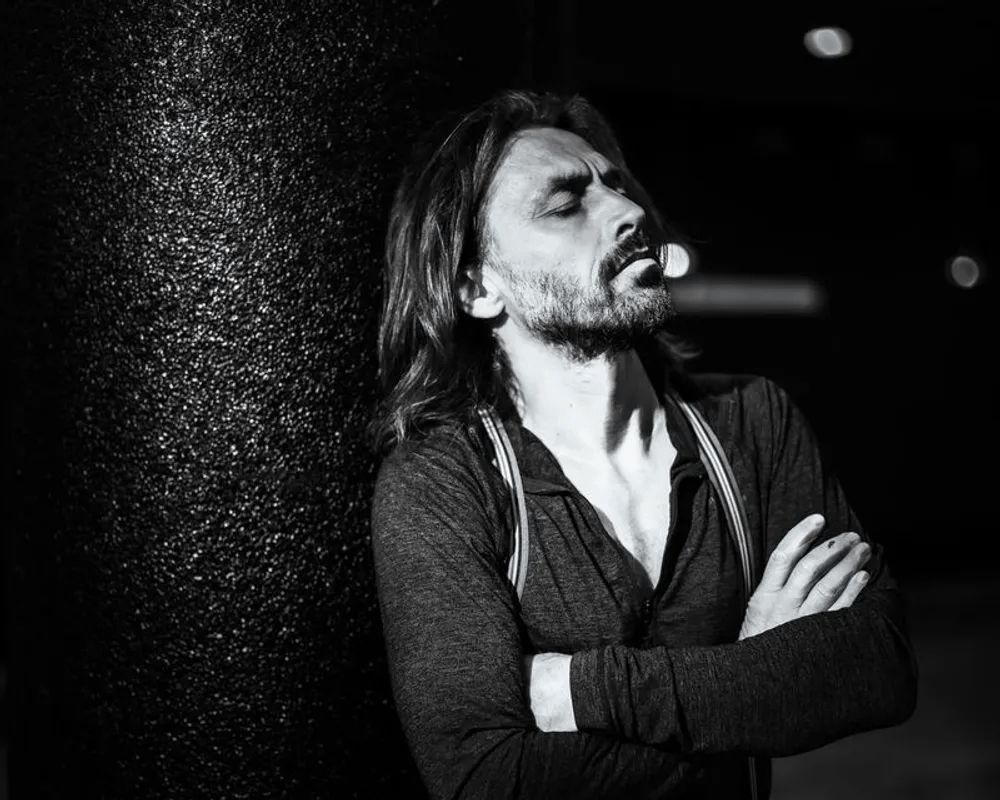
The track is instrumental, which means everything rests on texture and the relationship between Sieber’s Andean plucked strings and the room they’re breathing in. He describes Saal 3 as feeling “contained, like being in an underground cave, protected from an outside world, with a stillness waiting to respond to the quietest, most tender tones.” You can hear that containment in “Las Lluvias”—the way each note has space to decay naturally, how the charango’s gossamer timbres hover in the air before dissolving. This is the first Aukai album where Sieber played every instrument himself, an expansion through self-imposed limitation that forces each sound to justify its existence.
The cinematic quality people keep mentioning isn’t accidental. Neo-classical and ambient acoustic elements don’t just coexist here; they create a beguiling soundscape that feels both comforting and strange, like watching rain through a window in a building you’ve never visited but somehow recognize. The warmth comes partly from the instruments themselves—plucked strings carry an inherent intimacy—but also from the pristine acoustics of a room engineered by audio experts who understood how sound moves through space.
Sieber mixed the entire Chambers album in just a day and a half with no revisions, trusting the initial takes recorded across three non-consecutive days over nearly two years. That confidence shows in “Las Lluvias,” where nothing feels overworked or second-guessed. The rain in the title might refer to the literal March rain falling during one of his Saal 3 sessions, or it might be the sound of plucked strings cascading through a room haunted by radio transmissions from a country that no longer exists.
 B-Side Guys
Leave a Reply