
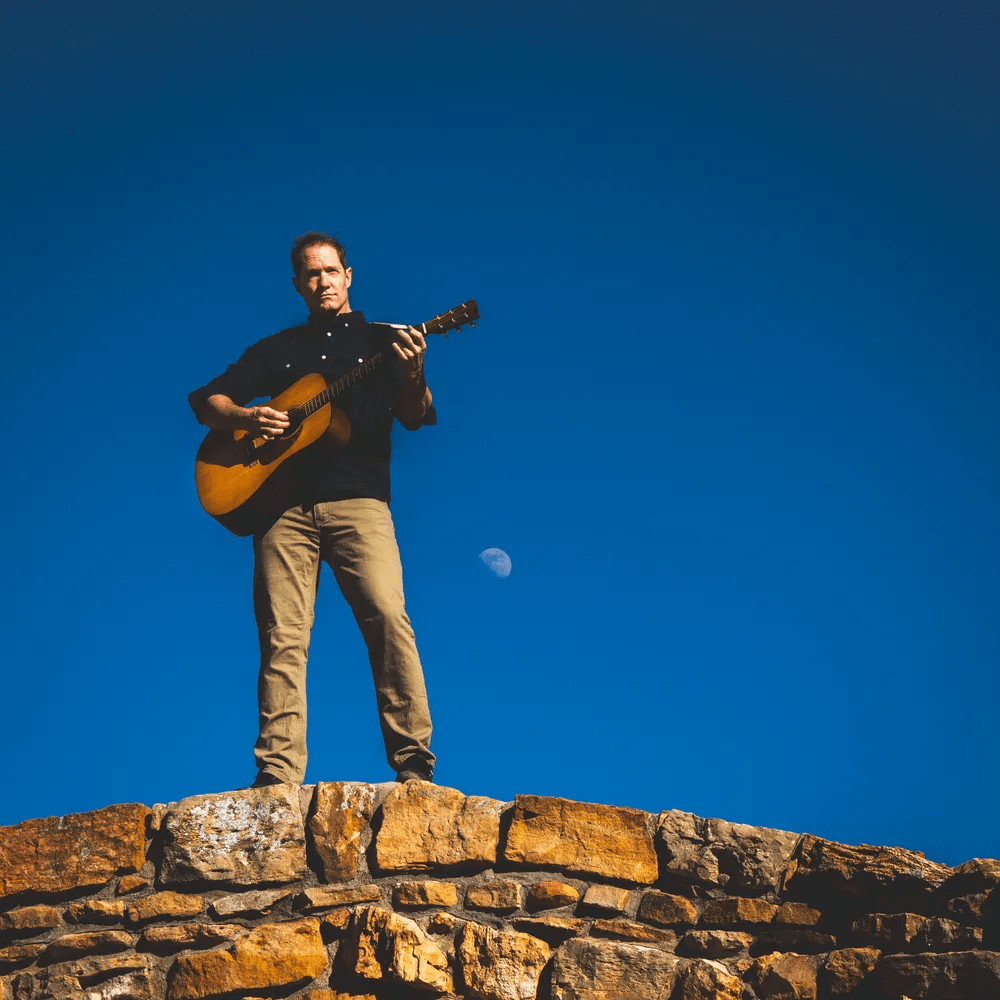
Cancer stole Chris Rusin’s voice temporarily—chemotherapy’s brutal toll on a singer trying to survive. Three years cancer-free, he’s released Songs From A Secret Room, a debut album that justifies the wait and documents the journey that almost never happened. The Newton, Kansas-born, Colorado-based songwriter spent those treatment months reevaluating what mattered most, why he hadn’t recorded the album about coming from nowhere, meeting your partner before figuring out who you are, making mistakes together, seeing the world to know yourself, hopefully emerging with love and grace. Produced by Andrew Berlin (Gregory Alan Isakov) with the Grammy-winning team at Blasting Room Studios in Fort Collins, the album has already generated over 200,000 Spotify streams and 200,000 YouTube views before official release, proving grassroots support for music outlets are calling “touching and well written” with “stunning guitar work” and “lovely harmonies.”
“Cinders” opens with intricate fingerpicking that Rusin admits surprised him—experimenting with slides and hammer-ons until the guitar mirrored the lyrical tension, he listened back wondering “how did I do that?” The rootsy showcase features Katie Wise’s harmonies alongside dobro and banjo, documenting getting through relationship’s hard times when dwelling too long on the past consumes you. The track establishes Rusin’s gift for distilling complex emotional truths into accessible language, what B-Side Guys Denver Music Scene identified as his “voice of quiet authenticity to the Americana landscape.” John Paul Grigsby’s upright bass, Russick Smith’s cello, and Shane Zweygardt’s drums provide foundation throughout the album, Colorado Front Range musicians supporting Berlin’s spare yet lush production.
“The Dark” delivers the album’s first extended metaphor, inspired by Dar Williams’ “February” and its use of figurative language to examine relationships. Built on a Collings mahogany guitar with civil war drum crashes that made Rusin laugh during takes, the track documents couples who seemed perfect but somehow grew apart, leaving friends questioning if that could happen to anyone. The animated music video created with Sri Lankan animator Nadeera took months to complete, Rusin learning how painstaking stop-motion storytelling becomes. The song’s delicate weaving of parts—Wise on vocals, Smith on cello, Grigsby on bass—creates intimacy appropriate for the fire-side listening Rusin intended.
“Flower” explores love when life interferes, the knot that became a tangle, the walk that became work. Rusin spent years writing duets after discovering The Civil Wars, trying to capture how two voices carry emotional weight weaving together then pulling apart. The track features an anonymous duet partner whose identity Rusin won’t reveal, vocals supported by minimalist electric guitar muted with sponge under the bridge—the specific sound the song required after trying everything else. Hammer dulcimer and cello fill out the mood as the arrangement builds from simple opening into expansive chorus, proving Rusin’s instinct to keep instrumentation minimal so vocals could dominate.
“Time To Love” earned Rusin a spot in Pat Pattison’s master class at Planet Bluegrass’ Song School 2024, the track’s pivotal role extending beyond its emotional weight. Written six days post-surgery when he learned the cancer was metastatic, staring at frozen lake from his childhood bedroom window while everyone else slept, the song documents the hardest Christmas of his life. The first vocal takes in the studio—Rusin struggling through them thinking about that frozen lake versus now being cancer-free with Grammy-nominated producer—made it into the finished track. Income from the song goes to cancer research and treatment, dedicated to his treatment team and healthcare providers who do the fighting.
“Leave It In The Snow” addresses renewal and letting go, inspired by Gordon Lightfoot’s “Song For A Winter’s Night” and winters in Northern Minnesota. The track means leaving cancer behind while focusing on living despite two more years of follow-up appointments, abandoning resentments and self-limiting stories. The solo performance—most duets populate the album—reflects the solitary decision to commit to change, someone standing up for the person they’ll be tomorrow rather than who they were yesterday. Rusin filmed much of the video himself at a mountain cabin, images already clear in his head.

“Tossed Aside” captures late summer night feeling from the session when Rusin stayed up recording with the only awake intern on controls. The track explores finding a new partner in your current one, inspired by an old man’s advice at a dive bar about writing an instruction manual for your wife’s future husband, realizing you’re writing it to yourself. Rusin questions whether that was the voice of reason or regret, why the old man drank alone. The chill duet features an anonymous female vocalist alongside Smith’s cello, Grigsby’s bass, Zweygardt’s drums, and Wise’s piano—sweet enough for repeated listening while maintaining emotional complexity.
“What To Leave” delivers the album’s most alt-Americana moment, baritone guitar cranking up the vibe while Rusin plays three different guitars simultaneously through most of the track. The song addresses growing up and forgiveness, choosing what to take from your upbringing and what to leave behind, recognizing that two people reconciling all that complexity represents a kind of miracle. Wise’s vocals were rehearsed in her basement where her cat kept climbing into Rusin’s guitar case, his acoustic remaining furry to this day. The track advocates forgiveness as the only thing needed right now, acknowledging mistakes parents made while choosing consciously what to carry forward.
“Life Is Easy” and the remaining tracks—”The Longest Year,” “Fighting For”—round out the ten-song collection, building on the album’s established themes of navigating love through adversity, finding grace in difficulty, choosing who you become rather than accepting who circumstances made you. The comparisons to The Paper Kites, Gregory Alan Isakov, Iron & Wine, and Watchhouse make sense—Rusin operates in similar territory, crafting cinematic folk that balances refined songwriting with emotional directness.
For someone who grew up fishing Minnesota lakes and exploring woods, started writing at fourteen on a five-string guitar found in his parents’ basement, temporarily lost his voice to chemotherapy, Rusin has created a debut that documents not just survival but the work of building life worth surviving for. The album’s title Songs From A Secret Room suggests both the literal space where music gets made and the interior landscape where difficult truths get examined before being shared. Rusin’s golden harmonies and masterful guitar work across multiple styles create music that, as Fresh Ground Indie noted, achieves “lovely harmonies” while maintaining the touching, well-written substance Indie Folk Central praised. Three years cancer-free and nowhere near Nashville or LA, he’s made something that sounds like it could only come from exactly where and who he is—someone who almost didn’t put this music out there but found reasons to anyway.
 B-Side Guys
Leave a Reply