
Four tracks, twenty-four minutes—Drift City uses the EP format to capture a specific moment rather than attempting comprehensive statement. Spectral Heart Mosaics, released October 23rd, documents the Louisville-based rock band’s psychedelic-tinged approach to nostalgia, heartbreak, and self-growth through powerful vocals, jazzy interludes, and blues-inflected guitars and pianos. Produced over summer 2025 with Kevin Ratterman behind the boards, the EP positions itself within a lineage that includes Lord Huron’s cinematic sweep, The Blue Nile’s sophisticated melancholy, and This Mortal Coil’s ethereal atmosphere—ambitious reference points for a four-song collection, but Drift City earns the comparisons through execution.

Formed in 2017, Drift City centers on Jason Rivers (guitar, vocals, synth) with personnel including Dave Givan, whose credits span Jim James and Ray LaMontagne, and Shelley Anderson of Quiet Hollers. That rotating cast brings depth to arrangements that could feel thin in less capable hands. Rivers’ voice carries what Foxfire Magazine describes as “raw, yet intentional delivery, akin to a person telling a story while embedding their own history into the notes”—an approach that prioritizes emotional authenticity over technical perfection.
“Leave Your Life” opens the EP establishing the project’s sonic vocabulary immediately. The track balances upbeat momentum against contemplative lyrics, demonstrating Drift City’s particular skill at wrapping difficult content in accessible packaging. The band’s psychedelic elements emerge not through excessive effects or self-indulgent jamming but through subtle textural choices that add dimension without overwhelming the songs’ cores.
“The Seeds” arrived as the EP’s advance single, earning attention from multiple outlets for its temporal duality. Zillions Magazine noted the track “seems to be simultaneously of its time and from another era in today’s indie-pop landscape,” capturing how Drift City mines classic rock and folk traditions without sounding like museum piece or retro cosplay. Honk Magazine praised the track’s “organic warmth that draws you in from the very first chord, acoustic textures mixing seamlessly with stirring vocals.” That seamlessness reflects Ratterman’s production sensibility—he understands when to let instruments occupy their own space and when to blend them into unified force.
The folk rock foundation Honk Magazine identifies provides structural stability for Drift City’s more adventurous impulses. The band doesn’t abandon earth for ether; they keep one foot planted while reaching upward. That balance prevents the psychedelic elements from becoming untethered abstraction, maintaining connection to song-centered traditions even when exploring the edges.
“Love is a Lie” addresses heartbreak with the kind of blunt title that could signal either emotional devastation or hard-won clarity. The track’s blues-influenced piano and guitar work reinforces the directness, using familiar musical language to explore painful recognitions. Drift City’s eclectic pop elements show most clearly here, preventing the blues structures from becoming predictable or overly reverent. They’re borrowing vocabulary, not replicating dialect.
“Feel the Sun” closes the EP providing necessary lift after the previous track’s heaviness. The song addresses self-growth through imagery of light and warmth, offering resolution without pretending everything’s fixed. The twenty-four-minute runtime feels appropriate rather than insufficient—these four songs accomplish what they need to without requiring additional material to justify the release. EPs work best when they function as complete statements within compact parameters, and Spectral Heart Mosaics understands that principle.
Ratterman’s production throughout maintains clarity without sacrificing atmosphere. The jazzy interludes the press materials mention integrate naturally rather than announcing themselves as “look, we’re sophisticated now” moments. The band’s psychedelic terrain gets explored through production choices that enhance rather than dominate, serving the songs instead of showcasing technique. That restraint reflects maturity—knowing when less achieves more.
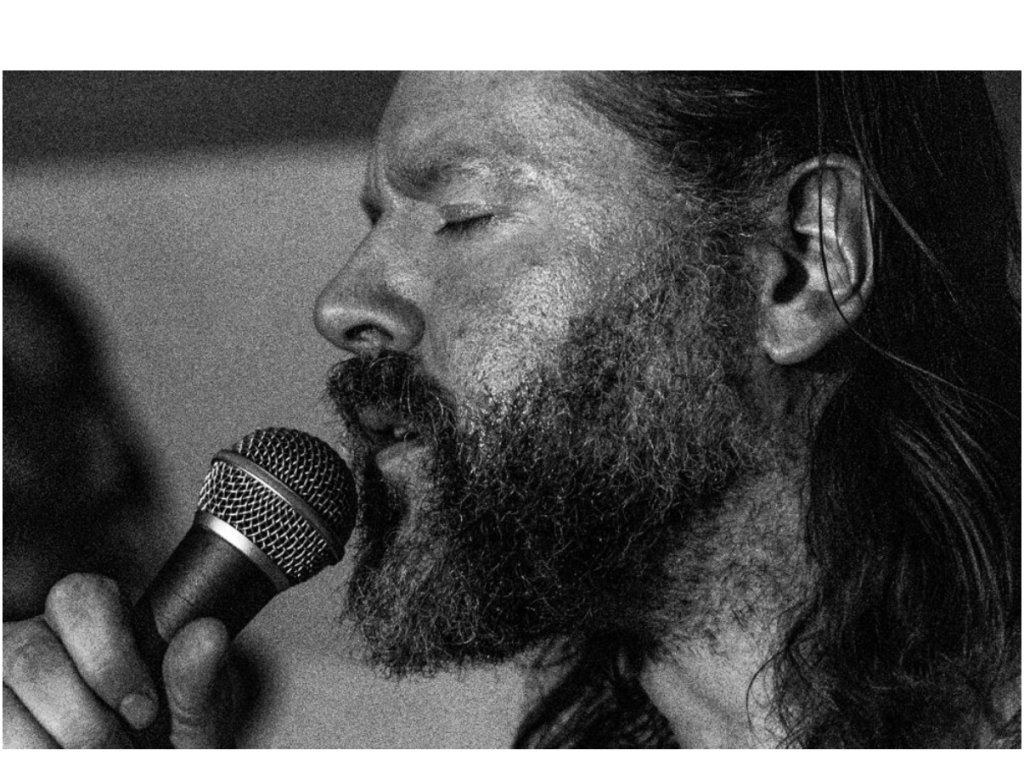
Rivers’ work across guitar, vocals, and synth provides the connective tissue binding these four tracks into cohesive whole. His voice carries the weight Foxfire Magazine identified, embedding personal history into performance without requiring listeners to know specific biographical details. The emotional truth reads clearly regardless of whether you understand the exact circumstances that generated it.
The EP title Spectral Heart Mosaics suggests both ghostliness and fragmentation—hearts that haunt, experiences that shatter into pieces requiring reassembly. That imagery captures the project’s thematic concerns without overwhelming the actual music, which remains grounded even when addressing abstract emotional territory. Drift City traffics in feelings that resist easy articulation, using their eclectic sonic palette to approximate internal states that straightforward rock arrangements couldn’t capture.
For a band that’s been working since 2017, this EP represents distillation of approach rather than tentative first steps. Drift City knows what they do well—balancing accessibility with experimentation, honoring traditions while pushing boundaries, wrapping serious content in engaging presentation. Spectral Heart Mosaics delivers exactly what four-song EPs should: a focused snapshot revealing an artist’s current location while suggesting future directions worth exploring. Twenty-four minutes proves sufficient when every minute matters.
 B-Side Guys
Leave a Reply