
Twenty feels impossibly young to document heartbreak with this much clarity. Sophie Lilah’s debut Busy Being in Love, released October 17th from Boorloo/Perth, maps the lingering kind of heartbreak—not the immediate shattering but the slow reshaping that continues long after the relationship ends. Across ten tracks and thirty-eight minutes, the indie-folk/alt singer-songwriter moves between stripped-back vulnerability and rock-driven force, threading jazz phrasing, classical flourishes, and R&B vocal rhythms into arrangements that feel organic rather than calculated. Her vocals dance and flutter across the production, poised but powerful, carrying what she describes as “the ache of truth” through songs that function as places to set down pain’s weight and make sense of loss’s different shades.
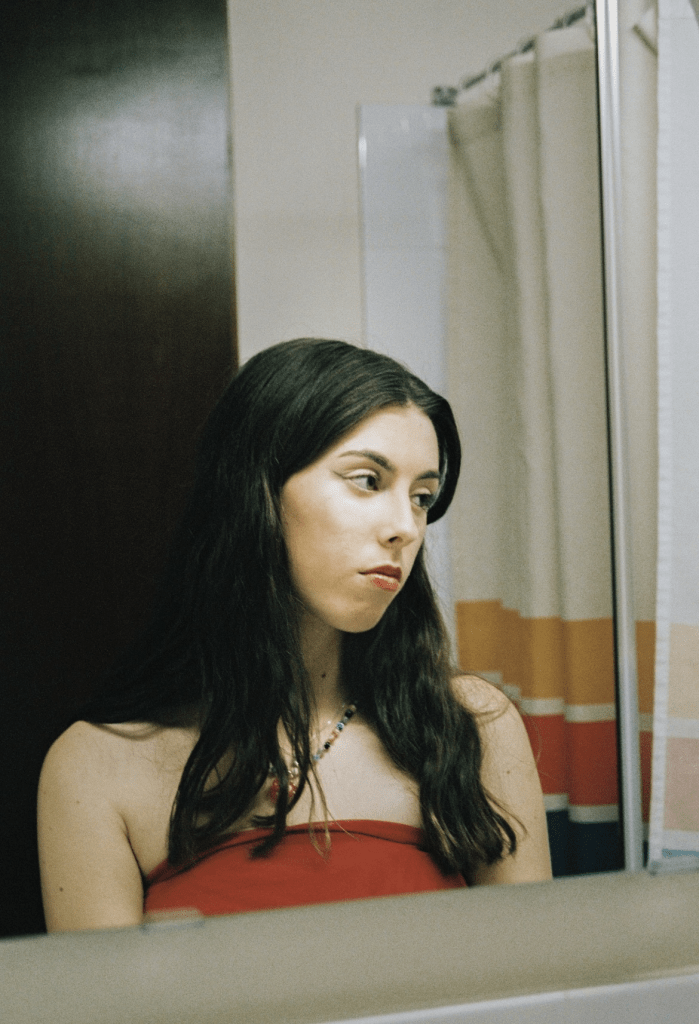
“DHMA” opens the album with overdriven guitars swaying in 3/4 time, immediately establishing the record’s central tension—the pull between self-preservation and the desire to fall back into what hurts. The plea “please don’t hurt me again / I can’t take it like you think I can / I break and I will break again” repeats like a mantra, acknowledging fragility while predicting its recurrence. The line “it would be like self harm to run into your arms like I want to” captures the album’s essential conflict—knowing something damages you while wanting it anyway. The question “how did I love someone / Who hated me?” cuts deeper than more elaborate lyrics could, its simplicity making the confusion more devastating.
“Conversation” shifts into intimate folk territory with brushed drums, double bass, and soaring strings, examining the aftermath when honesty arrives too late or not at all. The repeated refrain “don’t grieve what was” functions as instruction the narrator can’t follow, trying to convince herself to release what remains unresolved. Triple J’s Claire Mooney called the track “really, really precious,” praising Lilah as “ever pretty angel,” and that delicacy shows in the arrangement’s restraint. But the lyrics reveal harder edges—”loose ends untied cos you lied and you lied and you lied”—proving prettiness doesn’t mean weakness.
“BLEACH” leans into laid-back blues swagger, Lilah’s harmonies twirling before bursting into mighty choruses. The title and opening line “I’m not hungry for bleach / Practice what you preach if you love me so much” suggest toxicity turned literal, the relationship’s poison manifesting as physical nausea. The track demonstrates Lilah’s ability to shift registers, moving from the previous song’s vulnerability into something more defiant without losing emotional continuity. The production throughout Busy Being in Love—recorded by Andy Hill, mixed by Ezekiel Padmanabhan, mastered by Dan O’Connor—maintains clarity while allowing each instrument space to contribute meaningfully.
“Leave it alone” introduces moody keys and dissonant strings, sitting in the pain of final acceptance. The repeated instruction to “leave it alone” battles against the admission that “to be loved is controlled,” recognizing how power dynamics corrupt affection. The track showcases Lilah’s willingness to embrace discomfort in both lyrics and arrangements, using musical tension to reinforce emotional content.
“What We’ve Lost” drives forward with overdriven guitars and groove, documenting the specific guilt of moving on while someone else remains stuck. The lines “I hate I hate that I’ve moved on / And you’re still around / I hate I hate that I’ve moved on / Feel like I’ve let you down” capture an underexplored aspect of breakup aftermath—the survivor’s guilt of healing when the other person continues suffering. The observation “I can’t heal you or what we’ve lost” acknowledges the limits of care, recognizing that watching someone fall apart from distance provides no power to prevent it.
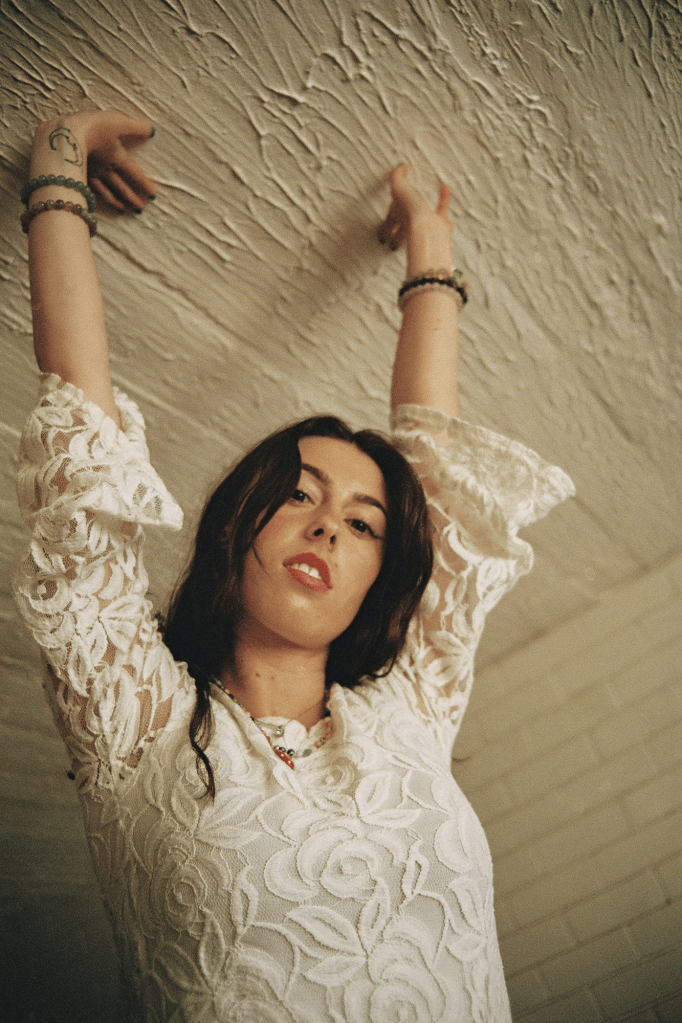
“Cold Water’s Warm” begins in a hush before erupting into tangled guitars and tumbling drums, Lilah’s voice piercing through the storm of unreturned love. The title’s paradox—cold water feeling warm when your hands are colder—establishes the track’s central metaphor about settling for inadequate affection. The devastating repetition “You’ll never, you’ll never, you won’t ever love me like I want you to” builds into mantra, the acknowledgment gaining power through insistence. Triple J Unearthed gave the track first play on TOPS, and it landed on Apple Music’s New Music Daily, Today’s Acoustic, and Antidote playlists, proving its resonance extends beyond Perth’s local scene.
“Pretend” layers piano and horns with R&B-inspired vocal rhythms, capturing the chaos of toxic affection through production choices that mirror lyrical confusion. The observation “real shit don’t last / Plastic’s around forever” presents cynical conclusion about durability and authenticity, suggesting that maybe lasting relationships require some element of performance or deception. The track addresses objectification directly—”it’s my body that you need”—while acknowledging the narrator’s complicity in accepting that dynamic.
“I mean it” shifts into bluesy groove, sax and overdriven guitar underscoring the longing for an ex that won’t release its hold. The mundane detail of being “in the kitchen / At the sink” when memory strikes makes the longing more visceral than abstract declarations could. Daniel Wilson’s saxophone work here adds dimension without overwhelming Lilah’s vocals, while Jade Smith’s drums and piano, Lachlan McKenna’s bass, Mihajlo Vojinovic’s lead guitar, Saskia Henderson’s cello, Shyam Kana’s rhythm guitar, and Sophia Watkinson’s violin create full-band richness that serves the songs rather than showing off.
The title track “Busy Being in Love” opens somber but builds into optimism, functioning as letter to the first heartbreak that ties the record together. The line “you were always supposed to be here / Everyone just leaves / With me, you said you’d take over the world with me” mourns not just the relationship but the future it promised. The refrain “everything’s changing / We’re getting older / but I stay” captures the stubbornness of grief, how it resists time’s movement while everything else transforms. The admission “now I smoke weed sometimes / Alone on those lonely nights / To make sure my memory is fried / Cook it, burn it alive” documents coping mechanisms with dark humor.
“Boy” closes the album as stark piano ballad wrapped in strings and harmonies, Lilah’s voice carrying desperate, lingering plea. The repeated wish “I wish I was a boy” examines how gender complicates desire and rejection, the sense that being male would simplify everything—”wouldn’t be complicated / We would have already dated.” The line “I’m just a reflection / Or the part of yourself you ignore” suggests the narrator became mirror for someone else’s unexamined self rather than person in her own right. The final repetition “I would be yours” acknowledges the willingness to give everything despite knowing it wouldn’t be reciprocated.
For a debut from a twenty-year-old artist, Busy Being in Love demonstrates remarkable command of both craft and emotional terrain. Lilah doesn’t perform heartbreak—she documents it with the kind of specificity that only comes from actually sitting in the pain rather than rushing past it. The album moves with contrasts, shifting between delicacy and force, intimacy and the yearning to be heard and understood. The bittersweet beauty the press materials mention isn’t manufactured through production tricks or lyrical obfuscation—it emerges from Lilah’s willingness to examine heartbreak’s lingering reshaping without flinching or sentimentalizing. The record cries with heartbreak’s sting while singing with the fragile hope of moving forward, proving that sometimes the only way through is to write down every shade of loss until they stop demanding attention.
 B-Side Guys
Leave a Reply