
Eighteen tracks named after your grandmother carries weight. Labit’s sophomore album SOL—honoring Solita, “Grandma Sol”—spans forty-seven minutes of kitchen-table wisdom transformed into widescreen coming-of-age narrative. For Filipino-American singer, songwriter, and storyteller who experienced viral success in Southeast Asia with “Someday Faraway,” this second full-length represents significant artistic step forward. Where viral moments capture attention through isolated songs, albums reveal whether an artist possesses sustained vision. SOL answers that question definitively, blending honeyed vocals, warm analog textures, and diaristic lyrics into collection that feels both intimately personal and broadly accessible.
The album’s title and dedication establish framework immediately—this is music rooted in specific heritage, particular family history, individual gratitude. Labit describes the project as “taking stock of who raised me, what shaped me, and how to move forward with grace.” That clarity of purpose shows across eighteen tracks that could fragment into disconnected collection but instead maintain thematic and sonic cohesion. Recurring motifs—cars, kitchens, seasons—function as anchors, creating continuity even as individual songs explore different emotional territories.

“STAY AWHILE” opens the album with invitation rather than declaration. The gentleness here sets tone that persists throughout—even when Labit addresses difficult material, he maintains conversational intimacy rather than performance distance. His vocal approach prioritizes connection over technical display, understanding that storytelling requires listeners to feel addressed directly rather than impressed from afar. That choice reflects confidence; it takes more courage to be plainly vulnerable than virtuosically clever.
“BREAK!” and “PRETTY” establish the album’s emotional range early, moving from rupture to aesthetic appreciation. Labit’s production choices favor warmth over clinical perfection, embracing analog textures that give songs lived-in quality. In an era when much pop and R&B production emphasizes pristine digital clarity, his preference for warmer tones creates nostalgic atmosphere without resorting to retro pastiche. The sound suggests memory’s softened edges rather than documentary precision.
“CLOUD” and “ALL MY PLANTS ARE DYING” demonstrate Labit’s gift for finding poetry in mundane anxiety. The latter particularly showcases his ability to transform small domestic failures into larger metaphors for struggling to maintain anything—relationships, mental health, creative momentum. The track’s anxious comedy prevents it from becoming heavy-handed, acknowledging the absurdity of equating houseplant care with existential capacity while still mining real feeling from the comparison.
“MANGOES AND RICE” functions as album centerpiece, intimate love letter to Filipino-American experience. Written as conversation with his sister and accompanied by video foregrounding heritage, family, and community, the track makes specific what could remain abstract. Growing up between cultures produces particular dislocations and particular joys that Labit documents without explaining for outsiders. The confidence to write for his community rather than translating for broader audience strengthens rather than limits the song’s impact—specificity creates authenticity that universal platitudes can’t achieve.
“CLEANING OUT THE FRIDGE” featuring Emily Rowed leans into radical honesty, using domestic metaphor for emotional excavation. The collaboration adds dimension without overwhelming Labit’s vision—Rowed’s presence enhances rather than competes. The song addresses tearing down walls and choosing to rebuild, documenting the exhausting necessary work of actually changing rather than just acknowledging need for change. That commitment to process over proclamation distinguishes mature songwriting from adolescent declarations.
“PARALLEL” captures clarity of discovering love beside you rather than far away, the shift from searching distance to recognizing proximity. The hazart-directed video reframes iconic song-in-backseat moment inside family Buick LeSabre—another direct connection to Grandma Sol. That detail matters; Labit consistently grounds emotional experience in physical objects and specific locations, understanding that abstraction often weakens rather than universalizes feeling. The car becomes vessel for memory, intimacy, and inherited history simultaneously.
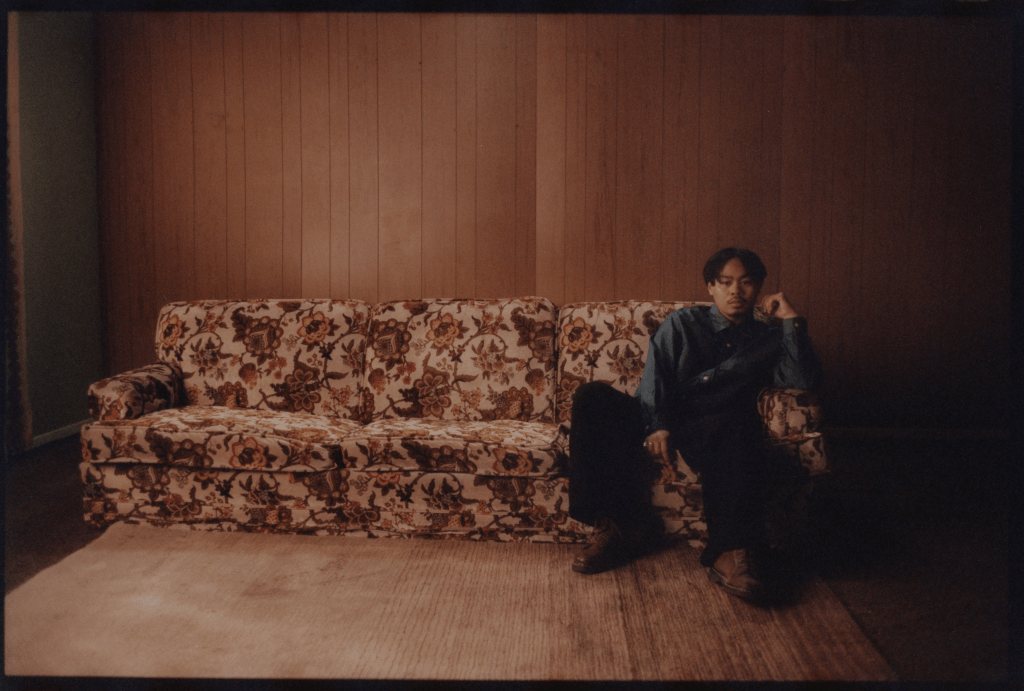
“BETTER” and “FEBRUARY” explore relationship navigation from different angles—choosing right person during chaotic season versus late-night confessions spilling into sunrise. The palette here moves from soft-focus nostalgia to full-color uplift, demonstrating Labit’s range within his established aesthetic parameters. He’s not chasing genre diversity for its own sake; he’s finding variation within consistent vision, proving depth rather than breadth.
“CODEPENDENT” and “ANYBODY’S GUESS” near album’s end address attachment and uncertainty with characteristic directness. Labit’s diaristic approach risks oversharing or self-indulgence, but his editorial sense keeps lyrics focused. He includes enough detail to create vivid scenes without drowning songs in autobiography. That balance—personal without solipsistic—enables listeners to find their own experiences reflected rather than feeling locked out of private reference.
The title track “SOL” closes the album as quiet dedication to the grandmother whose influence permeates the entire project. Placing her name at album’s end rather than beginning creates circular structure—everything leads back to origin, the person who helped shape the storyteller telling these stories. The choice reflects gratitude without sentimentality, acknowledging debt without diminishing Labit’s own artistic agency.
What distinguishes SOL from typical sophomore efforts is how completely it realizes specific vision. Labit isn’t experimenting widely or demonstrating versatility across genres—he’s diving deep into particular aesthetic and emotional territory, trusting that depth beats breadth. The eighteen-track length could indicate inability to edit, but the forty-seven-minute runtime and consistent quality suggest intentional architecture. These songs need each other; removing tracks would damage the whole rather than streamlining it.
For artist who achieved viral success in Southeast Asia with “Someday Faraway,” SOL represents crucial artistic evolution. Viral songs can launch careers but don’t sustain them—that requires demonstrating consistent creative vision and ability to connect beyond single moments. By centering this album on family, heritage, and self-examination rather than chasing another viral hit, Labit positions himself for longevity over flash. He’s building catalog and cultivating audience interested in sustained work rather than temporary attention.
The Filipino-American perspective woven throughout adds dimension that enriches rather than limits the album’s reach. Labit writes from specific cultural location without explaining or justifying that location, treating his experience as worthy subject without requiring validation from outside. That confidence—to center rather than translate his reality—creates work that resonates precisely because it refuses to dilute specificity for supposed broader appeal.
SOL succeeds as both sophomore statement and artistic declaration. Labit emerges as storyteller committed to honesty, craftsmanship, and gratitude—qualities that sustain careers beyond temporary visibility. The album documents finding clarity in love, family, and self while acknowledging that clarity arrives gradually through accumulation rather than sudden revelation. Forty-seven minutes honoring Grandma Sol becomes blueprint for moving forward with grace, proving that the most universal stories often emerge from most personal foundations.
 B-Side Guys
Leave a Reply