
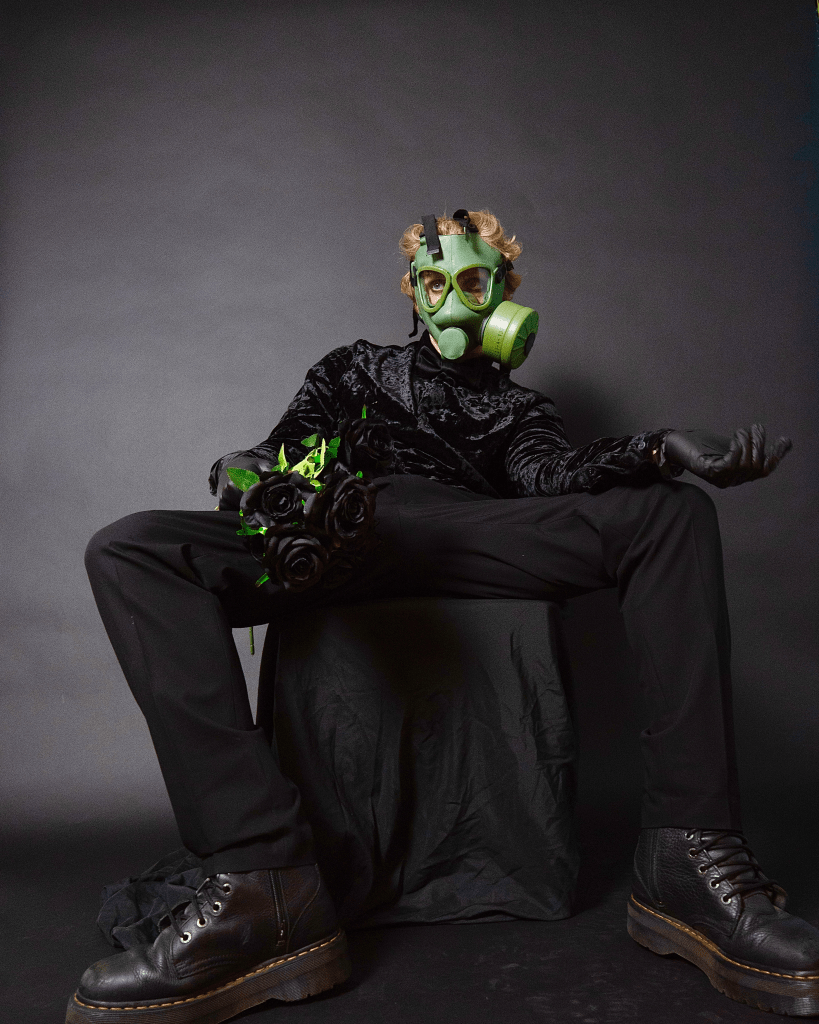
Finnegan Bell’s description of Gas Mask Wedding as “love songs from a dystopian perspective” isn’t marketing speak—it’s architectural blueprint. Across sixteen tracks, Love Ghost constructs intimacy inside apocalypse, documenting what happens when affection and annihilation occupy the same space. This isn’t the band’s first rodeo with heavy themes—their collaboration history includes industrial legend Tim Skold (KMFDM, Marilyn Manson) and a roster of international artists from Rico Nasty to Mexican collaborators like Adan Cruz and Santa RM. But Gas Mask Wedding pushes further into uncomfortable territory, examining how people love when the world burns around them.

The album opens with “Car Crash,” stripping Love Ghost’s usual grunge-meets-emo aesthetic down to piano, vocals, and minimal percussion. The arrangement forces Bell’s lyrics forward, exposing vulnerability the band’s heavier productions sometimes bury. The metaphor functions literally—love as vehicular collision, sudden impact, wreckage aftermath—but the execution avoids melodrama through restraint. When the percussion finally enters, it punctuates rather than overwhelms, understanding that silence carries as much weight as sound.
“Scrapbook,” the second collaboration with The Skinner Brothers, operates as emotional inventory rather than linear narrative. Bell’s description of stories “stuck to my soul like papier-mâché” captures the album’s central tension—experiences that won’t integrate cleanly, just accumulate messily. The production allows both Love Ghost and The Skinner Brothers space to inhabit their own sonic territories while maintaining conversation. This isn’t seamless fusion; it’s productive friction.
“FUCKED UP FEELINGS” ventures into rare ground for Love Ghost, blending R&B with their grunge foundation. The Prince, Lil Peep, and Joji comparisons make sense—all three artists understood how to make desire sound dangerous. The lo-fi aesthetic keeps everything intimate rather than polished, prioritizing emotional immediacy over production shine. When Bell describes navigating a complicated period, the sonic choices mirror that complexity rather than simplifying it.
“Left on Read” attacks modern relationship anxiety through pop-punk acceleration, bringing in Mexico’s Wiplash for a collaboration that spans geographic and genre boundaries. Produced by Mike Summers (whose credits include Kendrick Lamar, Lil Wayne, Tech N9ne), the track channels Machine Gun Kelly and Green Day’s anthemic energy while maintaining Love Ghost’s particular lyrical darkness. Digital-age disrespect gets elevated to existential threat, which might sound overblown until you remember how much of contemporary romance happens through screens.
The “Hair Dye” skit functions as palate cleanser and structural pivot, giving listeners space to process before diving back into heavier material. These brief narrative interludes throughout the album create breathing room in what could otherwise become exhausting emotional onslaught. Bell understands pacing—knowing when to pull back before pushing forward again.
“Scar Tissue” delivers dark trap exploration of trauma and internal voices, demonstrating Love Ghost’s genre flexibility. The band’s ability to move between alternative rock, grunge, metal, pop-punk, and now trap without losing coherent identity reflects either restlessness or ambition, possibly both. The production choices here prioritize atmosphere over clarity, letting the track feel claustrophobic in ways that serve the subject matter.
“Sandcastles” brings in Smash Mouth’s Zach Goode for genuinely unexpected collaboration that works better than it should. The pairing of Love Ghost’s emotional rawness with Goode’s nostalgic vocals creates generational dialogue, youth and experience examining the same ephemeral dreams from different vantage points. The metaphor—sandcastles destroyed by tide—risks cliché but gets rescued through specific execution, blending grunge, pop-punk, and California sunshine into something that feels both timeless and immediate.
“Hallucinations” teams Love Ghost with fellow Los Angeles natives Reverie for West Coast escapism filtered through Sublime’s laid-back grooves and Jean Dawson’s experimental edge. The track captures specific geographic and psychological terrain—that hazy California afternoon where heat distorts perception and reality becomes negotiable. The production emphasizes groove over aggression, showing Love Ghost can dial down intensity without sacrificing substance.
“Angelic” strips back to essentials again, documenting unrequited love through the lens of XXXTentacion’s “Jocelyn Flores” and Smashing Pumpkins’ “Luna.” The ballad format forces vulnerability, refusing production tricks or genre gymnastics as emotional camouflage. Bell’s vocal delivery here showcases the confidence he’s developed—the press materials mention his high school performances and extensive international touring (Japan, Ireland, Mexico, Germany’s Rockpalast festival), and that road experience translates to comfort with exposure.
“Worth It,” the third Skinner Brothers collaboration, tackles self-worth through bone-cutting lyrics and what’s described as an epic guitar solo. The recurrence of this partnership throughout the album creates continuity, suggesting artistic kinship that extends beyond single-track convenience. When Bell asks “Am I enough?”, the production’s raw alternative rock framework prevents the question from sounding rhetorical or performative.
“Spirit Box” uses paranormal communication as metaphor for attempting connection with what’s already gone. The concept—speaking to the afterlife through medium—gets translated into musical terms without requiring literal interpretation. Love Ghost excels at this kind of metaphorical thinking, taking concrete images and stretching them into emotional territory.
The brief “Message from Finn” provides context about the album’s extended creation timeline, acknowledging the years-long journey to completion. These personal interludes humanize the project, reminding listeners that albums don’t materialize fully formed—they accumulate through persistence and revision.
“Falling Down” channels ’90s alternative rock to examine lost love, while “Heartbreak City” (featuring Demario SB and Matt Kali) explores urban environments where romantic possibility has been exhausted. The collaboration choices throughout this album reflect Love Ghost’s established pattern of international artistic engagement—their extensive Mexican touring and partnerships with local artists there have broadened their sonic palette and thematic range.
“Soviet Ghost,” created with producer Seth Bishop, tells stories of forgotten soldiers and Cold War paranoia. The historical scope here expands beyond personal relationship documentation into collective trauma, connecting individual pain to larger societal collapse. When Bell frames the album as finding intimacy in chaos, tracks like this reveal he means both personal and political chaos.
“The Masochist” closes the album examining love of pain itself—the ultimate dystopian relationship. After sixteen tracks documenting various forms of emotional damage, ending here feels inevitable rather than shocking. Love Ghost doesn’t offer redemption or healing because that would contradict everything the album establishes. The gas mask wedding happens because people still need connection even when the air is poison.
Gas Mask Wedding functions as comprehensive document of how Love Ghost operates—genre-fluid, collaboration-heavy, emotionally unguarded, willing to examine uncomfortable intersections of desire and destruction. Bell’s trajectory from ten-year-old playing backyard shows to fronting a band with Rolling Stone coverage and international festival appearances becomes visible in this album’s confidence. The production across different collaborators and genres maintains coherent vision while allowing individual tracks their own identity. This is music made by someone who understands that finding intimacy in chaos isn’t aspirational—it’s just the current requirement for survival.
 B-Side Guys
Leave a Reply