
There’s something profoundly moving about a band that refuses to accept industry timelines as artistic limitations. Senses—the Coventry-born quartet now scattered across continents—have returned with All the Heavens, an album that treats middle-age creativity not as consolation prize but as hard-won opportunity. Their second full-length, arriving via Cedars Recording Company, demonstrates what happens when musicians prioritize authentic expression over commercial expectations, creating work that feels both urgently contemporary and timelessly emotional.
The album’s title, drawn from Joseph Campbell’s observation that “all the gods, all the heavens, all the hells are within you,” provides perfect framework for understanding Senses’ ambitious sonic expansion. Where their acclaimed debut Little Pictures Without Sound established their capacity for crafting gorgeous dream-pop anthems, All the Heavens pushes those foundations toward more experimental territories. Working again with producer Gavin Monaghan at Magic Garden Studios, the band has created something that defies easy categorization while maintaining the emotional directness that made their initial work so compelling.

“Manchurian” opens the collection with expansive synths and layered samples that immediately signal the band’s willingness to stretch beyond previous limitations. The track functions as sonic manifesto, establishing atmospheric framework that will support the album’s exploration of inner landscapes and emotional transformation. Rather than rushing toward familiar hooks, the song allows space for contemplation, suggesting maturity that comes from understanding how silence can enhance rather than diminish impact.
The album’s lead singles, “Accelerate Our Love” and “Already Part of the Problem,” demonstrate Senses’ evolution toward more danceable, unpredictable arrangements. These tracks maintain the band’s gift for memorable melodies while incorporating rhythmic elements that push their sound into new territories. “Accelerate Our Love” particularly benefits from this approach, using propulsive beats to enhance rather than overwhelm its romantic urgency. The production choices here reveal a band confident enough to experiment without losing sight of what makes their songs emotionally effective.
“Already Part of the Problem” emerges as one of the album’s most politically engaged moments, examining contemporary divisiveness without falling into empty rhetoric. The track’s harsh examination of avoidance and apathy feels particularly relevant given current global circumstances, but Senses avoid preaching by focusing on personal responsibility rather than external blame. Their approach to political content demonstrates how effective protest music can emerge from introspection rather than anger.
The album’s middle section showcases the expanded instrumental palette that characterizes this new phase of Senses’ development. “Call Me Out” and “Holes” incorporate gospel vocals, horns, and even tabla and tanpura—instruments the band admits they “never would have experimented with” previously. These additions don’t feel like cultural tourism or desperate attempts at novelty; instead, they serve the songs’ emotional needs while demonstrating how collaboration can enhance rather than dilute artistic vision.
“It’s an Explosion” and “She Burns My Eyes” represent the collection’s most sonically adventurous moments, using dense arrangements to create immersive experiences that reward careful listening. The former builds toward its titular crescendo through careful layering that maintains clarity despite complexity, while the latter employs visual imagery to explore emotional intensity. These tracks demonstrate how the band’s experimental impulses serve rather than replace their fundamental strengths as songwriters.
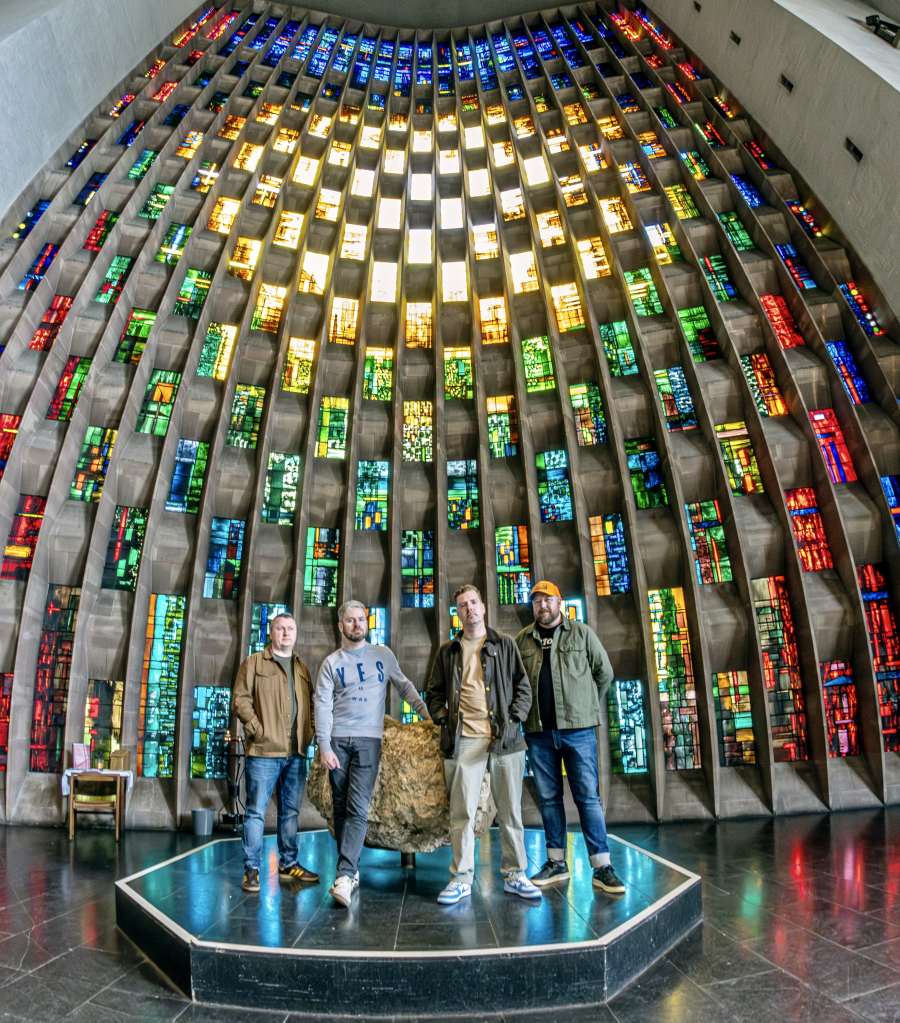
The album’s collaborative spirit extends beyond instrumentation to include contributions from Callum Pickard, Ash Sheehan, and Ange Lloyd. Rather than feeling like guest appearances, these additions integrate seamlessly into Senses’ expanded sonic vision. This approach reflects the band’s understanding that creativity benefits from external perspective while maintaining artistic coherence.
“Remedy” and “Like a Hurricane” provide the album’s most emotionally direct moments, addressing themes of healing and emotional turbulence with characteristic intelligence. The former offers hope without false optimism, while the latter uses meteorological imagery to explore internal chaos. Both tracks benefit from the band’s expanded production vocabulary while maintaining the melodic accessibility that has earned them radio support from Janice Long, Steve Lamacq, and John Kennedy.
The album concludes with “Have You Ever Had a Broken Heart?,” a question that encapsulates Senses’ approach to emotional content throughout the collection. Rather than providing answers or false comfort, the track acknowledges shared vulnerability as foundation for genuine connection. The song’s arrangement creates space for reflection while its melody ensures lasting impact, providing appropriate closure for an album that treats serious subject matter with both gravity and grace.
What makes All the Heavens particularly compelling is how it treats geographical separation as creative opportunity rather than logistical challenge. The band’s process of writing across London, Coventry, and Hamburg—using voice notes and Logic Pro sketches to maintain connection—reflects contemporary realities while demonstrating how technology can serve rather than replace human interaction. Their scattered creation process mirrors the album’s thematic exploration of finding connection despite physical distance.
The album’s dedication “In memory of those loved ones that were lost” provides crucial context for understanding its emotional weight. This isn’t music about abstract loss but specific grief processed through creative expression. Senses have created work that honors difficult experiences without being overwhelmed by them, finding light within darkness while refusing to minimize either experience.
All the Heavens succeeds because it understands that the most effective art often emerges from life’s complexities rather than its simplicities. Senses have created an album that treats middle-age creativity as arrival rather than compromise, demonstrating how persistence and collaboration can produce work that feels both deeply personal and broadly resonant. In exploring the heavens within themselves, they’ve created music that invites listeners to examine their own internal landscapes with similar courage and curiosity.
 B-Side Guys
Leave a Reply