
Adult maintenance requires constant vigilance. Kerry Charles catalogs this exhausting reality with clinical precision on his latest title track, where supplements and antacids become symbols of mortality rather than wellness. His mid-thirties meditation unfolds against production that feels deliberately contradictory—sensual grooves supporting existential dread, elegant arrangements cushioning pharmaceutical dependency.
The Sade comparison proves essential to understanding how Charles operates. Like the British vocalist, he transforms heavy material through understated delivery, allowing the weight of his observations to accumulate gradually rather than hitting listeners immediately. Those Japanese city pop influences add crucial sweetness to the arrangement, creating musical comfort that makes the lyrical discomfort more digestible.
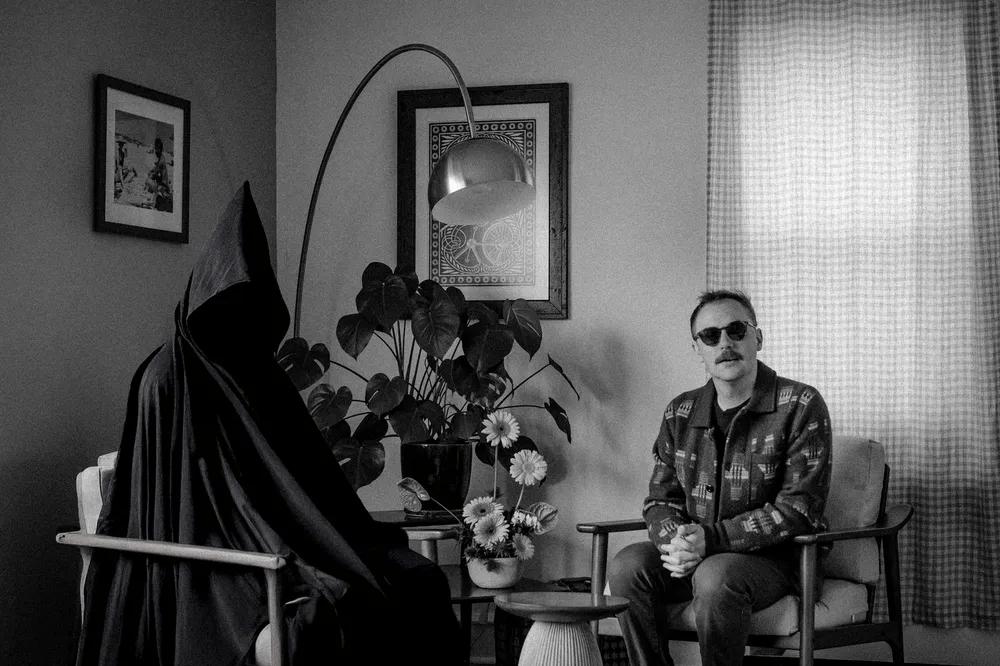
Jake Sherman’s keyboard work provides textural foundation that supports Charles’s vocal approach without competing for attention. The “shimmering depth” mentioned in the credits creates space for introspection while maintaining the track’s hypnotic pull. This production strategy mirrors the song’s thematic concerns—how we create pleasant surfaces to mask underlying decay.
The transition from romantic fumbling to quiet complaint reflects genuine artistic growth. Where debut album “I Think of You” examined external relationships, “It’ll Be Over Soon” turns inward to examine the relationship between mind and aging body. Charles’s itemization of maintenance rituals—”micro-dose of escitalopram,” “proton pump inhibiting your pride”—reveals how modern self-care often resembles elaborate denial systems.
The song’s refrain operates as both comfort and threat, embodying the ambiguity Charles mentions in his album notes. Whether “it’ll be over soon” refers to pain or life itself becomes irrelevant; both interpretations offer the same temporary relief. His backing band understands this duality perfectly, creating music that feels simultaneously celebratory and resigned.
Most impressively, Charles avoids self-pity while examining genuinely depressing subject matter. The track’s “irresistibly light” musical approach prevents the lyrics from becoming wallowing, instead presenting adult exhaustion as shared experience rather than personal failure.
 B-Side Guys
Leave a Reply