
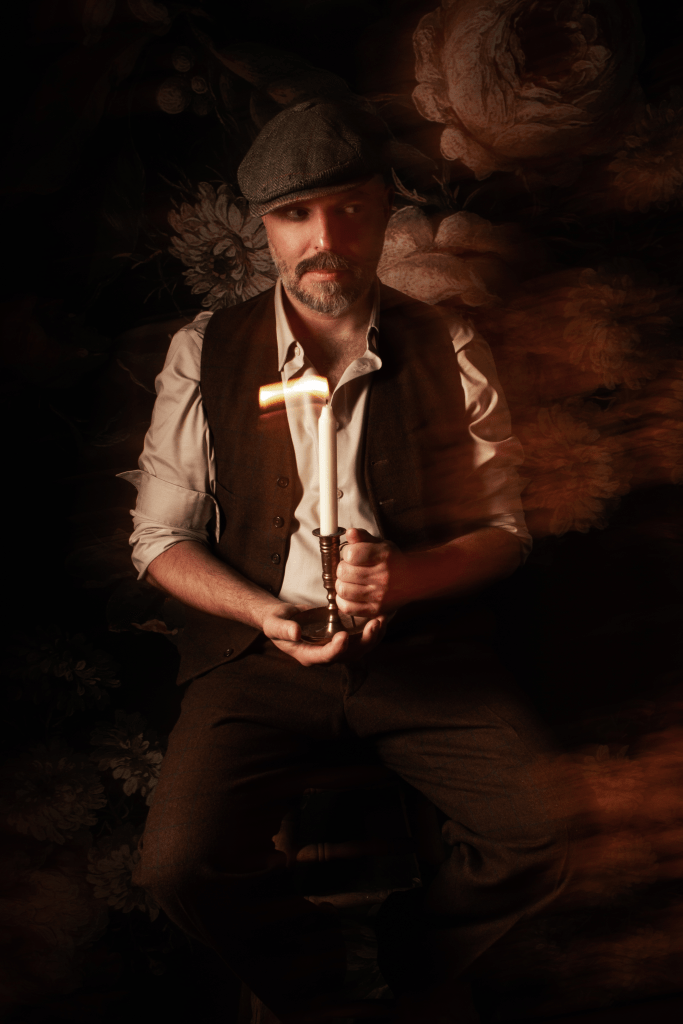
The art of summoning requires equal parts precision and faith—calling forth what exists in potential while trusting it will manifest in recognizable form. On his latest album “Summoning,” New York-based singer-songwriter Shayfer James demonstrates mastery of this delicate process, conjuring ten tracks that blend dark cabaret theatricality with soul-searching vulnerability into something both fantastical and deeply human.
Following his acclaimed “Counterfeit Arcade,” James has evolved as songwriter while maintaining the whimsical darkness that first attracted devoted fans to his live performances. Those familiar with his earlier work, including the “Hope and a Hand Grenade” EP that achieved his highest Spotify streaming numbers, will recognize his gift for creating what he describes as “carefree environment without judgement” where audiences can feel “authentically themselves.”

Opening track “Imagine That” establishes the album’s central tension through bombastic horn arrangements that paint portrait of solitary figure yearning for alternate reality. The production immediately showcases James’ evolution since his days recovering from a childhood accident that nearly cost him two fingers—the same injury that led his mother to help him discover music through piano rehabilitation. This origin story resonates throughout “Summoning,” where physical and emotional healing intertwine through musical expression.
The arrangement demonstrates James’ background as film composer, creating cinematic scope that transforms personal narrative into universal experience. His vocals navigate between intimate confession and theatrical declaration, embodying what he describes as attitude “somewhere between confident and chaos.” This duality becomes essential to the album’s emotional architecture.
“One Foot in the Grave” emerges as the collection’s most immediate offering, its danceable groove and contagious chorus demonstrating James’ ability to balance rebellion, vulnerability, and hope within single composition. The track recalls the raw genius of Sam Cooke’s “Live at the Harlem Square Club, 1963″—one of James’ three most important albums—through its infectious energy and emotional authenticity.
The song’s sharp lyrics explore mortality with characteristic dark humor, transforming existential anxiety into celebration of life’s precarious beauty. James’ vocal delivery channels influences ranging from Nat King Cole’s piano-centered perfection to the collaborative spirit of Robert Plant and Alison Krauss’s “Raising Sand,” creating synthesis that honors tradition while establishing distinct contemporary voice.
“The Moral” provides necessary contrast through haunting piano melody that showcases James’ Motown influences alongside classical training. The track’s mythical imagery creates narrative depth while maintaining emotional accessibility, proving his ability to construct complex stories without sacrificing melodic appeal. This balance between intellectual sophistication and emotional directness distinguishes James from less versatile cabaret artists.
“Make A Wish” arrives as boisterous anthem about personal demons and inner villains, its theatrical arrangement recalling the dark cabaret traditions that informed James’ aesthetic development. The song transforms self-confrontation into empowerment, suggesting that acknowledging our darker impulses represents first step toward transcending them. This psychological sophistication reflects James’ understanding that authentic self-awareness requires examining uncomfortable truths alongside comfortable myths.
Mid-album tracks “Headed Home” and “Lighthouse Keeper” form complementary exploration of direction and guidance, both literal and metaphorical. The former examines return journeys—geographic, emotional, spiritual—while the latter positions the narrator as beacon for others navigating treacherous waters. These songs demonstrate James’ gift for finding universal themes within specific imagery, creating music that functions both as personal expression and communal experience.
“Yellow House” introduces unexpected intimacy through domestic imagery that grounds the album’s more fantastical elements in recognizable emotional territory. The production here benefits from James’ collaborative approach—his acknowledgment that “micromanaging is fucking exhausting” and preference for trusting other artists’ talents creates space for unexpected moments that enhance rather than distract from his vision.
“Hell of a Dream” and “Reverie” form the album’s climactic pairing, exploring different aspects of unconscious experience. The former examines nightmares as necessary counterpoint to hope, while the latter finds beauty within uncertainty. Both tracks showcase James’ cinematic sensibilities, creating musical narratives that reward both casual listening and deeper analysis.
“Winter Hymn” provides appropriate conclusion through seasonal imagery that acknowledges endings while suggesting renewal. The arrangement incorporates elements from throughout the album while pushing toward resolution that feels earned rather than imposed. James’ vocals here demonstrate remarkable range, moving from whispered vulnerability to full-throated declaration with theatrical precision that never feels manipulative.
Throughout “Summoning,” James demonstrates why his live performances have created such devoted following. These songs possess the rare quality of functioning both as recorded documents and blueprints for live interpretation, suggesting material that will evolve through performance while maintaining essential character.
The album’s exploration of “tension between isolation and belonging” proves particularly relevant for contemporary audiences navigating digital connection and physical separation. James’ ability to create musical community through shared experience of complex emotions offers genuine antidote to algorithmic culture that reduces human experience to data points.
For artist who describes his creative process as balancing “truth and rhetoric to tell a story in a way that is truthful but also entertaining,” “Summoning” represents remarkable achievement. James has created collection that honors his cabaret influences while expanding into new territory, proving that theatrical sensibility and authentic emotion can enhance rather than compete with each other.
As James continues monitoring streaming numbers to plan strategic touring in cities like Chicago, Seattle, and Los Angeles, “Summoning” provides compelling evidence that his unique blend of dark humor, classical training, and pop sensibility deserves wider recognition. This is music that creates the kind of accepting community James values while pushing artistic boundaries in ways that serve rather than sacrifice emotional truth.
 B-Side Guys
Leave a Reply