
Zach James delivers Dead Tooth’s debut album’s opening salvo with the bluntness of someone who’s exhausted all diplomatic options. “You Never Do Shit” functions less as song and more as intervention—the moment when passive-aggressive hints transform into direct confrontation, set to music that mirrors the emotional volatility of calling someone out.
The collaboration between James and DIIV guitarist Andrew Bailey creates fascinating tension between indie rock accessibility and post-punk antagonism. Bailey’s counter-melodies provide the kind of melodic sweetness that makes James’ lyrical directness more palatable, while never softening its impact. Their dynamic recalls the best partnerships where contrasting personalities amplify rather than cancel each other out.
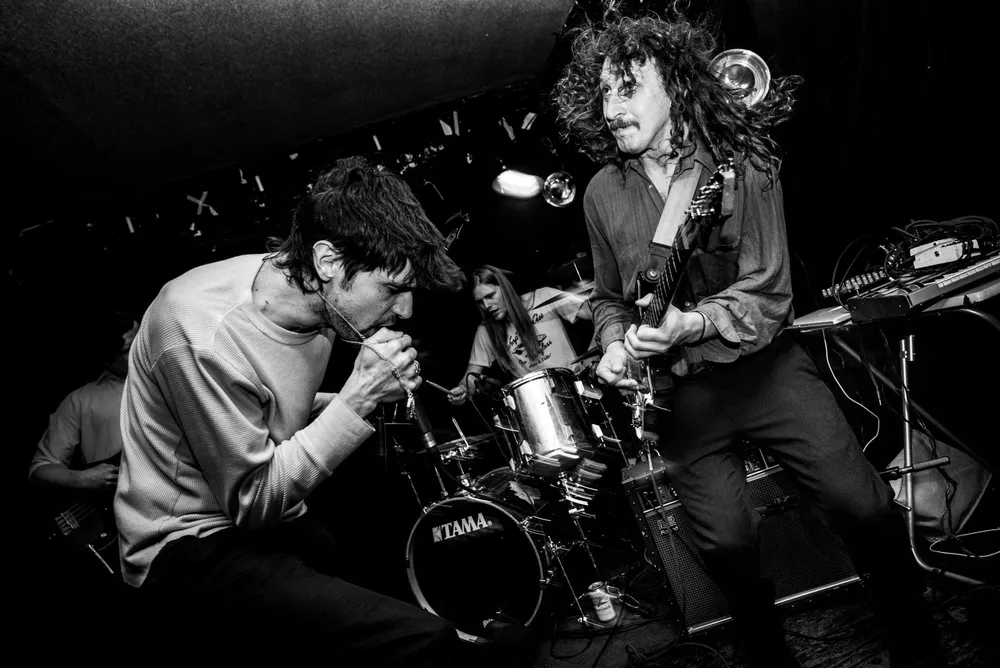
James’ evolution from the Silver Spaceman’s bedroom folk persona to Dead Tooth’s dystopian punk reveals an artist who’s learned the limitations of politeness. His vocal delivery carries the frenetic energy that critics have compared to Nick Cave and Guy Picciotto—performers who understand that sometimes messages require aggressive delivery to penetrate stubborn skulls.
The song’s title operates as both accusation and diagnosis. Rather than exploring why someone avoids action, James simply documents the frustration of dealing with chronic inertia. His approach suggests that some behaviors don’t deserve analysis—they require naming and shaming. The track’s MC5-influenced freak-outs provide sonic representation of the internal chaos that builds when dealing with perpetually passive individuals.
“You Never Do Shit” succeeds because Dead Tooth refuses to intellectualize what amounts to basic accountability. James presents inaction as character flaw rather than psychological complexity, creating space for the kind of brutal honesty that most people think but rarely vocalize. The result feels less like musical therapy and more like necessary confrontation set to driving rhythms.
 B-Side Guys
Leave a Reply