
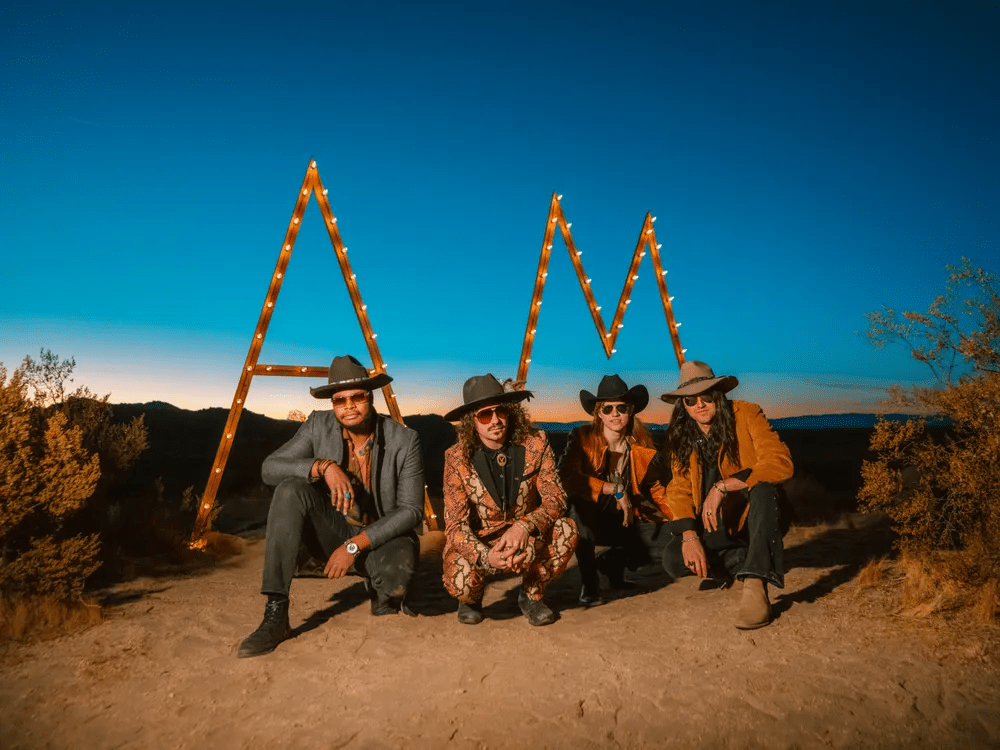
The American highway system wasn’t built for comfort—it was designed for endurance, connecting vast distances through sheer determination and asphalt persistence. American Mile’s second album “American Dream” operates according to similar principles, transforming the grueling reality of life as touring musicians into nine tracks of unyielding country-rock that document what it actually costs to chase musical dreams in contemporary America.
Following their 2020 debut “The Longest Road” (crafted with Grammy-nominated producers Bruce Witkin and Keith Nelson), this collection finds the band refining their approach without sacrificing the raw intensity that’s carried them through over 200 shows annually. Where their debut established musical foundation, “American Dream” builds upon that base with songwriting that reflects hard-earned wisdom about persistence, sacrifice, and the peculiar mathematics of pursuing art within economic systems designed to discourage such pursuits.

Opening track “Get On and Fly” immediately establishes the album’s thematic trajectory while showcasing the band’s evolved musical chemistry. The production demonstrates sophisticated understanding of dynamics—knowing when to push forward with full-throttle energy and when to pull back for maximum emotional impact. The three-part harmonies that have become American Mile’s signature create textural richness that elevates country-rock beyond mere genre exercise, suggesting influences that span from The Black Crowes’ swagger to Brothers Osborne’s melodic sophistication.
“Photograph of You” follows with the kind of relationship exploration that transforms personal experience into universal communication. The song’s examination of love persisting despite separation and conflict demonstrates remarkable emotional maturity, refusing to romanticize difficulty while acknowledging connection’s stubborn persistence. The arrangement builds through driving guitar work and hearty riffs that create momentum matching the lyrics’ emotional urgency, while the production maintains clarity that allows every instrumental voice to contribute meaningfully to the whole.
“Waiting On A Sunday” provides necessary contrast through its more contemplative approach, proving American Mile’s range extends beyond high-energy anthems. The track’s patient development mirrors its thematic content—the endless cycle of anticipation and temporary relief that defines working-class existence. Eugene Rice’s vocals here demonstrate particular growth, navigating between resignation and hope without collapsing into either extreme.
The title track “American Dream” serves as the album’s ideological centerpiece, examining the gap between national mythology and lived reality with unflinching honesty. Rather than defaulting to either cynical dismissal or naive celebration, the song acknowledges complexity inherent in pursuing success within systems that seem designed to prevent it. The musical arrangement mirrors this thematic sophistication, incorporating elements from Aerosmith’s arena-rock ambition and Chris Stapleton’s rootsy authenticity without resorting to mere imitation.
“Wiggle For Me” offers welcome comic relief without undermining the album’s overall seriousness, demonstrating that addressing life’s difficulties doesn’t require abandoning joy. The track’s playful energy recalls early Tom Petty, with production that captures live performance energy while maintaining studio precision. This balance between spontaneity and craftsmanship reflects the band’s extensive touring experience—they understand how songs must function both in recording and on stage.
“Tough Living” returns to more serious territory, its title serving as perfect encapsulation of the album’s central concerns. The song’s exploration of economic anxiety and personal responsibility resonates particularly strongly given contemporary circumstances, while the arrangement creates cathartic release that transforms complaint into empowerment. The production here deserves particular recognition, creating space for each instrument while maintaining unified sound that serves the song’s emotional arc.
“Straight From The Heartland” emerges as perhaps the collection’s most successful synthesis of musical and thematic elements. As Rice explains, the track represents “an embodiment of my feelings towards growing up in a rural town in America,” transforming specific geographic experience into broader meditation on identity and belonging. The John Mellencamp and Tom Petty influences prove particularly audible here, but filtered through contemporary perspective that honors tradition while avoiding nostalgic simplification.
The song’s swaggering energy and soulful delivery create perfect soundtrack for small-town life that acknowledges both limitations and possibilities inherent in such communities. The production captures the kind of stadium-ready energy that has made American Mile compelling live act while maintaining intimacy necessary for emotional connection.
“Hard Working People” provides appropriate penultimate statement, celebrating labor without romanticizing struggle. The track’s anthem-like qualities feel earned rather than manufactured, emerging from band that’s clearly logged significant hours both on stage and off. The arrangement builds toward cathartic chorus that transforms individual experience into collective celebration.
Closing track “Junkies Dream” brings the collection full circle while maintaining hope despite acknowledging addiction’s destructive power. The song’s willingness to address difficult subject matter without offering easy solutions demonstrates artistic maturity that distinguishes American Mile from less adventurous country-rock contemporaries.
Throughout “American Dream,” the band demonstrates why they’ve earned placement alongside acts like 38 Special, Blue Oyster Cult, and Neon Trees on major stages. Their songwriting combines accessibility with substance, creating music that functions equally well in arena settings and intimate listening environments. The production throughout maintains consistent vision while allowing individual songs room to breathe according to their own internal logic.
For second album, “American Dream” represents significant artistic evolution while maintaining the essential qualities that made American Mile compelling initially. They’ve created music that documents contemporary American experience with honesty and craftsmanship, proving that country-rock’s potential for social commentary and personal expression remains vital when executed by artists willing to invest genuine effort rather than chasing trends.
The result stands as compelling argument that persistence and artistic integrity can coexist, even within music industry systems designed to discourage both. American Mile has earned their place within American music’s ongoing conversation.
 B-Side Guys
Leave a Reply