
Frank Zappa once observed that writing about music is like dancing about architecture—a philosophical puzzle that Zach Tabori seems determined to solve through pure sonic audacity. On “Attack of the Clout Chasers,” his most ambitious and unhinged statement yet, the multi-instrumentalist producer doesn’t just blur genre boundaries—he obliterates them entirely, creating a sprawling concept album that functions as equal parts musical thesis, social autopsy, and comedic manifesto.
Opening with “Rotten, Pt. 2,” Tabori establishes immediate intimacy through acoustic guitar and voice alone—a deceptively gentle introduction that conceals the musical and intellectual chaos about to unfold. This minimalist approach demonstrates remarkable confidence from an artist capable of orchestral bombast, proving he understands that the most effective way to prepare audiences for sensory overload is through strategic restraint.
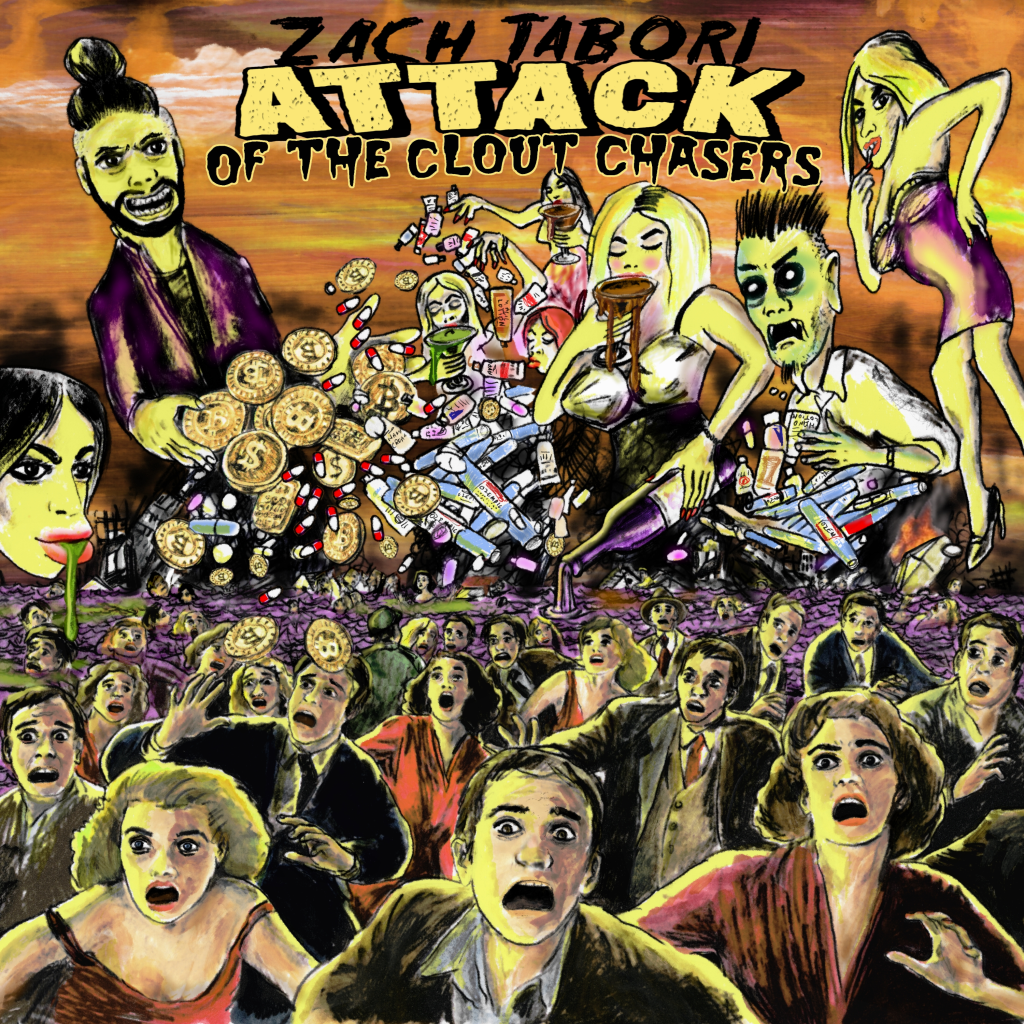
“Nann Ray” explodes this calm with what Tabori describes as a “post-apocalyptic sci-fi epic in sonic collage,” painting vivid musical portrait of “WWIII-type scenario” that spirals into interdimensional invasion. The track showcases Tabori’s gifts as both composer and producer, layering elements from jazz, prog, and musique concrète into coherent narrative that somehow makes musical sense despite its conceptual absurdity. His work with arranger Suzie Katayama (Madonna, Prince, Björk) and orchestral players including violinists Charlie Bisharat and Joel Derouin creates cinematic scope that transforms science fiction into emotional reality.
“…In A Thin White Shirt” demonstrates Tabori’s genius for cultural psychoanalysis disguised as entertainment, skewering “the confused toxic libido of the average heterosexual American male in the age of evolving gender norms.” The track’s art rock absurdism recalls 70s prog pioneers while addressing thoroughly contemporary anxieties, proving that experimental music’s best practitioners have always been society’s most perceptive observers. Tabori’s production work here—handling multiple instruments including guitar, drums, bass, piano, and vocals—creates layered musical argument that supports rather than distracts from his lyrical provocations.
“Jazz To Showcase Our Musicianship” provides necessary palate cleanser, delivering exactly what its tongue-in-cheek title promises. This tightly composed instrumental features Tabori’s core band—including keyboardist Bobby Victor (Fever The Ghost, Dweezil Zappa), guitarist Fahem Erfan (Jaden Smith), and bassist Caleb Buchanan (Still Woozy, Chicano Batman)—demonstrating their technical prowess while offering listeners momentary reprieve from the album’s more challenging conceptual material.
Lead single “JFK” exemplifies Tabori’s approach to historical revisionism through musical lens, examining Joseph Kennedy’s “quiet sympathies for the Third Reich” with surgical precision. “When you examine the scope of Joe Kennedy’s behind-the-scenes wheeling and dealing,” Tabori explains, “it’s kinda ridiculous how much is truly left out in most depictions of his family legacy.” The track transforms political research into compelling musical narrative, proving that progressive rock’s potential for social commentary remains largely untapped by less adventurous practitioners.
“Taliban Boogie” tackles the weapons industrial complex through sardonic groove that makes its critique more digestible without diminishing its impact. Tabori’s ability to address weighty subjects through infectious rhythms demonstrates sophisticated understanding of how music can smuggle difficult ideas past psychological defenses, creating entertainment that educates without preaching.
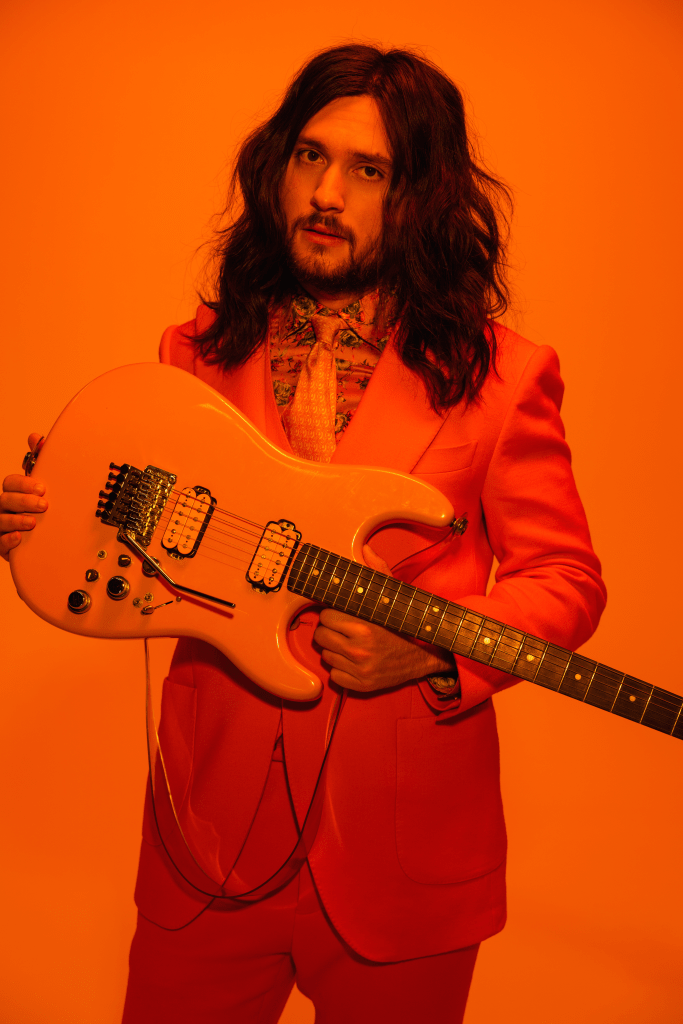
“NYC” offers surprisingly personal perspective on “America’s most mythologized metropolis,” balancing cynicism with genuine affection in ways that avoid both mindless boosterism and reflexive dismissal. The track showcases Tabori’s growth as songwriter, moving beyond clever observation toward nuanced emotional exploration that honors complexity rather than reducing it to punchlines.
Album centerpiece “Vanité ou la Mort” serves as “climactic musical manifestation of the album’s central tensions—a battlefield where ideology, identity, and ego collide in a genre-defying war dance.” The track features searing guest guitar solo from Dweezil Zappa, whose “boundary-pushing fretwork adds both a new element of harmony and pyrotechnics to the overall piece.” This collaboration between torchbearer of his father’s sonic revolution and disciple-turned-collaborator creates perfect metaphor for how musical traditions evolve through creative dialogue rather than mere imitation.
“Let’s Get Sick Together” continues the album’s exploration of collective dysfunction, transforming social pathology into communal celebration through musical arrangements that somehow make nihilism danceable. Tabori’s production techniques—refined through work with Grammy-winning engineer Clark Germain and additional production from Cary Singer (Clairo, Rostam)—create sonic environments that support rather than overwhelm his conceptual ambitions.
Closing track “End of the Fucking World” provides orchestral grandeur and complex rhythmic architecture that transforms apocalyptic anxiety into unexpected beauty. The accompanying ballet music video, co-choreographed by Stephanie Gotch and former American Ballet Theatre soloist Gabe Stone Shayer, features principal dancers from New York City Ballet and American Ballet Theatre, bringing visceral physicality to the song’s meditation on collapse and emotional disintegration. As strings swell and time signatures shift into disorienting 9/4, the visual component creates modern requiem that transcends typical music video conventions.
Throughout “Attack of the Clout Chasers,” Tabori demonstrates why his resume spans co-writing chart-friendly pop for Jaden Smith to performing with Dweezil Zappa’s band. His eclectic experience enables him to synthesize disparate influences into signature style that maintains coherence despite its ambitious scope. The album succeeds as both musical statement and social document, proving that progressive rock’s potential for cultural commentary remains vital when executed by artists willing to risk genuine provocation.
Rather than bending to perceived audience desires, Tabori has created uncompromising artistic vision that rewards listeners willing to engage with its intellectual and musical challenges. In an era when “clout chasing” represents ultimate creative compromise, he’s crafted antidote—music that prioritizes artistic integrity over algorithmic optimization, depth over virality, substance over style. The result stands as one of progressive rock’s most vital contemporary statements.
 B-Side Guys
Leave a Reply