
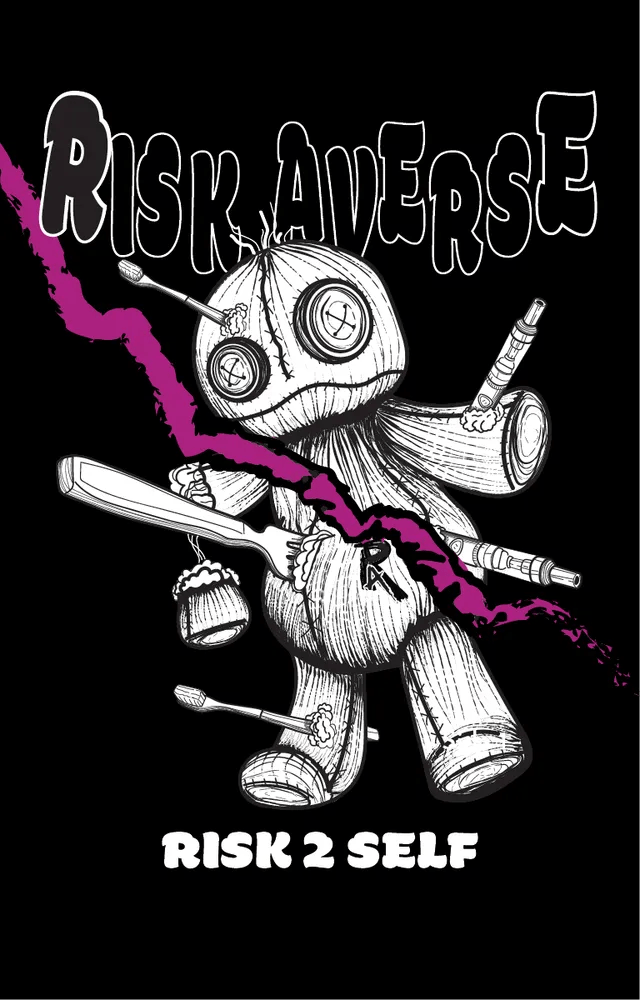
Military deployment has a way of crystallizing perspective—stripping away comfortable illusions while providing unwanted clarity about systemic failures. On their new EP “Risk 2 Self,” Tampa Bay pop-punk outfit Riskaverse channels this disorienting experience into five tracks of what they term “indie-tinged post-affective pop punk,” transforming personal displacement into sharp cultural commentary.
The EP opens with “Live Work Die,” a track that functions as both mission statement and satirical manifesto. Written during vocalist Justin’s deployment to Qatar with the Air Force, immediately after graduating university, the song emerges from accumulated tensions: perceived futility of military conflicts, technology’s increasing dominance over daily life, and deep immersion in philosophical theory. The result is what the band describes as “satire of the final state of modern pop punk: an egocentric and apolitical complaint, expressed with full awareness of its contradiction.”
This self-aware irony elevates “Live Work Die” beyond typical genre exercises. The track’s energetic riffs and tight songwriting provide familiar pop-punk framework while lyrics examine the soul-crushing routine of contemporary existence—work until death, rinse, repeat. Justin’s vocal delivery balances earnest frustration with knowing wink, acknowledging the privileged position of complaining about modern life while simultaneously recognizing the genuine psychological toll of late-stage capitalism.
“AKA” continues this thematic exploration through more personal lens, examining identity fragmentation in digital age. The production maintains DIY aesthetic without sacrificing clarity, allowing each instrumental element space to breathe while creating cohesive wall of sound. Guitar work throughout the EP demonstrates clear influence from both classic pop-punk and indie rock traditions, with hooks that lodge themselves immediately but reveal additional complexity upon repeated listening.
Mid-EP track “Jjkae” provides necessary sonic variety, its title’s cryptic nature matched by lyrics that seem to address technology’s role in reshaping human connection. The arrangement incorporates subtle indie elements that distinguish Riskaverse from more straightforward pop-punk contemporaries, suggesting influences that extend beyond genre boundaries without abandoning core musical identity.
“Soma,” previously released as single, serves as perfect bridge between the EP’s more aggressive moments and its contemplative conclusions. The track’s pharmaceutical reference recalls Aldous Huxley’s “Brave New World” while addressing contemporary anxieties about medication culture and emotional numbing. Justin’s military experience adds weight to these observations—someone who’s witnessed geopolitical machinery firsthand questioning society’s mechanisms for managing psychological distress.
Closing track “Wake” provides appropriate resolution to the EP’s exploration of consciousness and complacency. The song builds from introspective verses toward cathartic chorus that suggests awakening from cultural stupor, though without offering easy solutions or false optimism. This refusal to provide pat answers distinguishes Riskaverse from bands that mistake cynicism for depth or anger for insight.
Throughout “Risk 2 Self,” the St. Petersburg-based band demonstrates remarkable sophistication for what is essentially DIY punk rock. Their ability to balance irreverent youth with deeper critique—both personal and collective—creates productive tension that prevents the material from collapsing into either mindless aggression or pretentious intellectualism.
The EP’s 20-minute runtime proves perfect for its concentrated emotional and intellectual content. These aren’t songs that require extended exploration to make their points; instead, they deliver focused bursts of energy and insight that mirror the attention spans they critique. The production maintains garage-band immediacy while ensuring every instrumental element serves the larger artistic vision.
What makes “Risk 2 Self” particularly compelling is its specific cultural moment—created by someone experiencing military deployment while processing university education and engaging with philosophical theory. This unique perspective allows Riskaverse to examine American culture from both inside and outside positions simultaneously, creating critique that feels earned rather than performative.
The Tampa Bay emo/pop-punk scene has produced its share of noteworthy acts, but Riskaverse’s willingness to engage with larger cultural questions while maintaining genre authenticity suggests they’re capable of transcending regional significance. Their approach to pop-punk as vehicle for social commentary rather than mere emotional outlet positions them alongside bands who understand the genre’s potential for serious artistic statement.
For listeners seeking pop-punk that honors the genre’s energy and accessibility while grappling with contemporary complexities, “Risk 2 Self” offers ideal entry point. The EP succeeds both as immediate emotional release and sustained intellectual engagement—music for moshing and thinking, often simultaneously. In just five tracks, Riskaverse has created something that feels both timely and timeless, suggesting their artistic trajectory points well beyond this promising debut statement.
 B-Side Guys
Leave a Reply