
In a music landscape crowded with performers who seem increasingly interchangeable, Salar Rajabnik’s debut album arrives like a comet—rare, brilliant, and leaving scorched earth in its wake. Released May 2nd under his Darker Lighter moniker, this self-titled collection serves as both artistic declaration and exorcism, transforming Rajabnik from behind-the-scenes technician to formidable frontman.
The transformation feels particularly significant given Rajabnik’s resume. After years as guitar tech for titans like Foo Fighters, Queens of the Stone Age, and Kim Gordon, he could have easily crafted something derivative of his employers’ sound. Instead, “Darker Lighter” carves out territory entirely his own—a sonic universe where post-punk aggression collides with shoegaze textures and indie rock vulnerability.
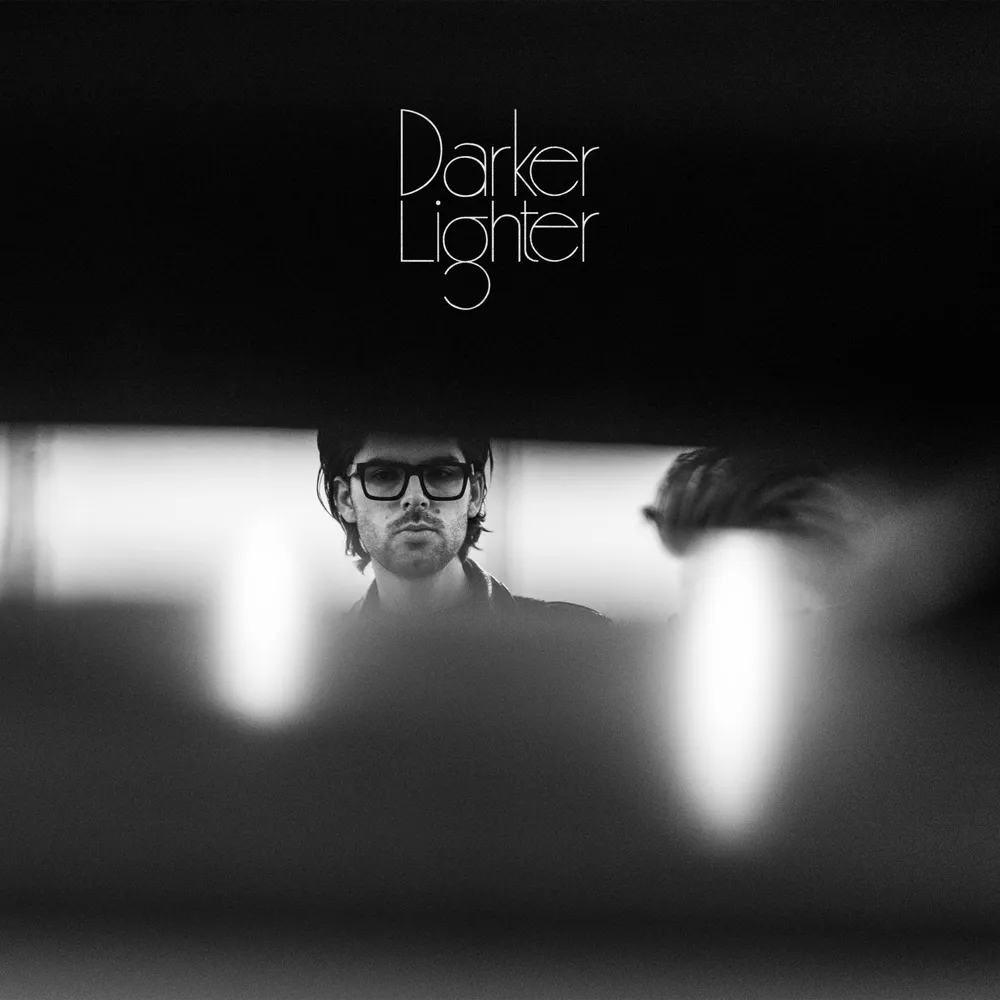
Recorded at Studio 606 with Grammy-nominated producer Robert Adam Stevenson, the album’s production creates perfect vessel for Rajabnik’s multifaceted vision. What’s most remarkable is that every instrument—from the thunderous drums to the shimmering guitars, from the searing bass lines to the atmospheric keyboards—came from Rajabnik himself. This one-man-orchestra approach could have resulted in sterile perfectionism, yet the album pulses with organic vitality that belies its meticulous construction.
Opening track “Hanging On” immediately establishes the collection’s sonic signature: Prince-inspired funk rhythms colliding with post-punk angularity, creating propulsive backdrop for Rajabnik’s exploration of fractured identity. Lines like “Stealing from yourself / For so long you don’t remember when” set the album’s thematic trajectory—an uncompromising examination of self-division that feels particularly potent coming from someone with bicultural roots in both Tehran and Kansas City.
“Someday Soon” follows with deceptive gentleness before exploding into walls of distortion that recall My Bloody Valentine’s controlled chaos. Rajabnik’s vocals float above the maelstrom with surprising grace, demonstrating his gift for creating beauty within sonic brutality. The arrangement showcases his understanding of dynamic contrast, with quiet passages that make the eventual explosion all the more cathartic.
By the time “Be” arrives third in sequence, Rajabnik’s songwriting sophistication becomes undeniable. The track builds from minimalist beginnings into orchestral grandeur, incorporating string arrangements that elevate rather than soften its impact. When he sings “The price you pay is who you have to be,” it lands with the weight of hard-earned wisdom. His candor about feeling perpetually out of place—whether “ideologically, artistically or socially”—transforms specific experience into universal resonance.
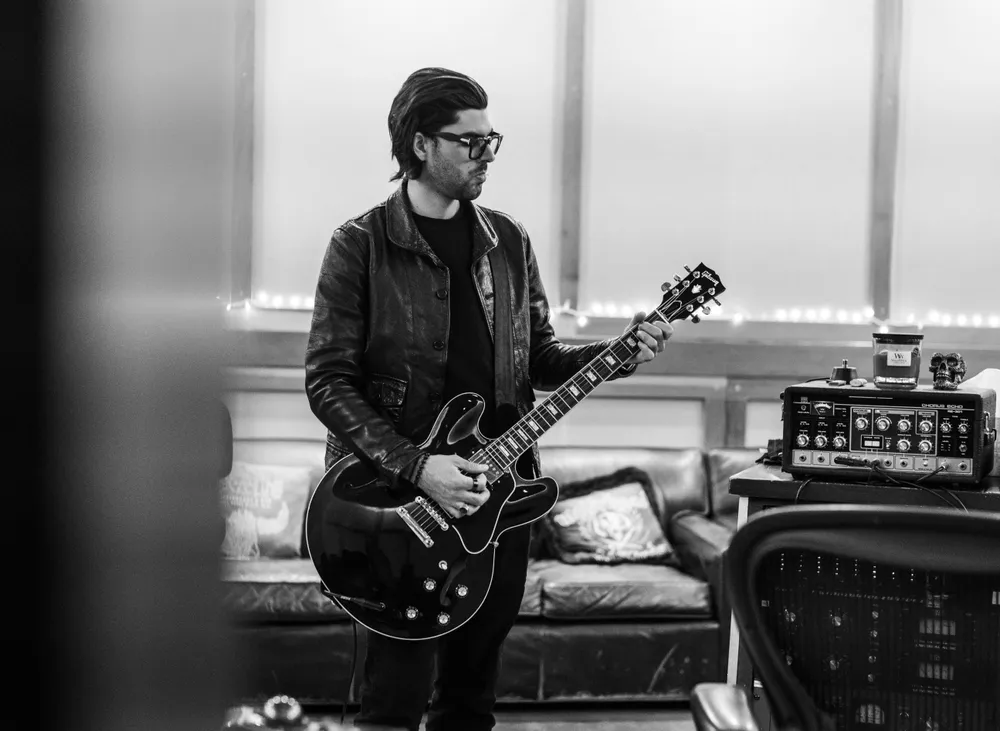
“Nothing’s Ever Gonna Be The Same Again” marks dramatic sonic shift, abandoning shimmering textures for scorched-earth approach where everything pushes into the red. This political manifesto disguised as rock song demonstrates Rajabnik’s willingness to challenge listeners rather than comfort them. The production philosophy seems to be “amplifiers pushed to physical breaking point,” creating harmonics that weren’t meant to exist but somehow form perfect backdrop for lyrics that promise revolution rather than merely suggesting it.
The album’s midsection provides necessary breathing room through “First Time” and “Shadow Of A Doubt,” tracks that showcase Rajabnik’s melodic gifts without sacrificing intensity. The former employs almost cinematic structure, building toward emotional climax that feels earned rather than manufactured, while the latter introduces subtle electronic elements that expand the album’s sonic palette without disrupting its cohesion.
“Open Up, Sunshine” and “Nice To Meet You” form complementary pair, the first addressing external world and the second turning inward. Both demonstrate Rajabnik’s gift for crafting hooks that embed themselves without resorting to obvious pop formulas. The production on “Nice To Meet You” deserves particular mention, creating three-dimensional sonic landscape where individual instruments occupy distinct space while contributing to unified whole.
“Electronic Eye” introduces darker electronic textures, its programmed beats and synthesizers creating dystopian atmosphere that perfectly complements lyrics examining surveillance culture. Rajabnik’s vocals here adopt mechanical precision that serves the narrative while creating productive tension against the organic instrumentation.
As the album approaches conclusion, “Like Birds Fly Away” offers glimpse of possible transcendence through its soaring chorus and expansive arrangement. “Did You See Me Walking?” returns to more intimate scale, its sparse instrumentation creating emotional directness that hits with unexpected force after the album’s more maximalist moments.
Closing track “Take It All In” serves as perfect denouement, synthesizing the album’s disparate elements into cohesive statement that feels like culmination rather than mere conclusion. When Rajabnik repeatedly intones “take it all in,” it functions both as instruction to listeners and personal mantra—an acknowledgment that fully embracing experience, however painful, represents pathway to authenticity.
Throughout these twelve tracks, Rajabnik demonstrates songcraft that feels both meticulously constructed and emotionally immediate. His lyrics explore identity, loss, and political resistance without resorting to didacticism, while his arrangements balance experimental impulses with rock’s visceral power. The fact that he performed every instrument himself never becomes mere technical showcase; instead, this approach creates remarkable cohesion where every element serves larger artistic vision.
“Darker Lighter” stands as rare debut that feels simultaneously fully formed and bristling with future possibilities. In stepping from shadows into spotlight, Rajabnik hasn’t abandoned the knowledge gained from years supporting others—he’s transformed it into something entirely his own. The result isn’t just impressive debut; it’s vital document from artist with something genuine to say and unique way of saying it.
 B-Side Guys
Leave a Reply