
Certain music possesses the peculiar ability to alter our perception of time—not just through nostalgia, but through a deliberate manipulation of sonic textures that creates temporal disorientation. Vinyl Williams’ instrumental opus “Sunshine” achieves this effect with remarkable precision, conjuring what feels like “sun rays one would expect from his music, but perhaps from a summer in 1975 instead of 2025.”
As the opening statement from the lo-fi half of Williams’ ambitious double LP Polyhaven/Portasymphony (due June 13 via Harmony Records), “Sunshine” immediately establishes the conceptual framework of the project. By deliberately sidelining vocals in favor of “layers of deftly-played instrumentation,” Williams creates an immersive environment where listeners must navigate without the directional signposts that lyrics typically provide. This approach aligns perfectly with his broader artistic vision as a creator of “3-D interactive worlds”—the song becomes a space to inhabit rather than merely consume.
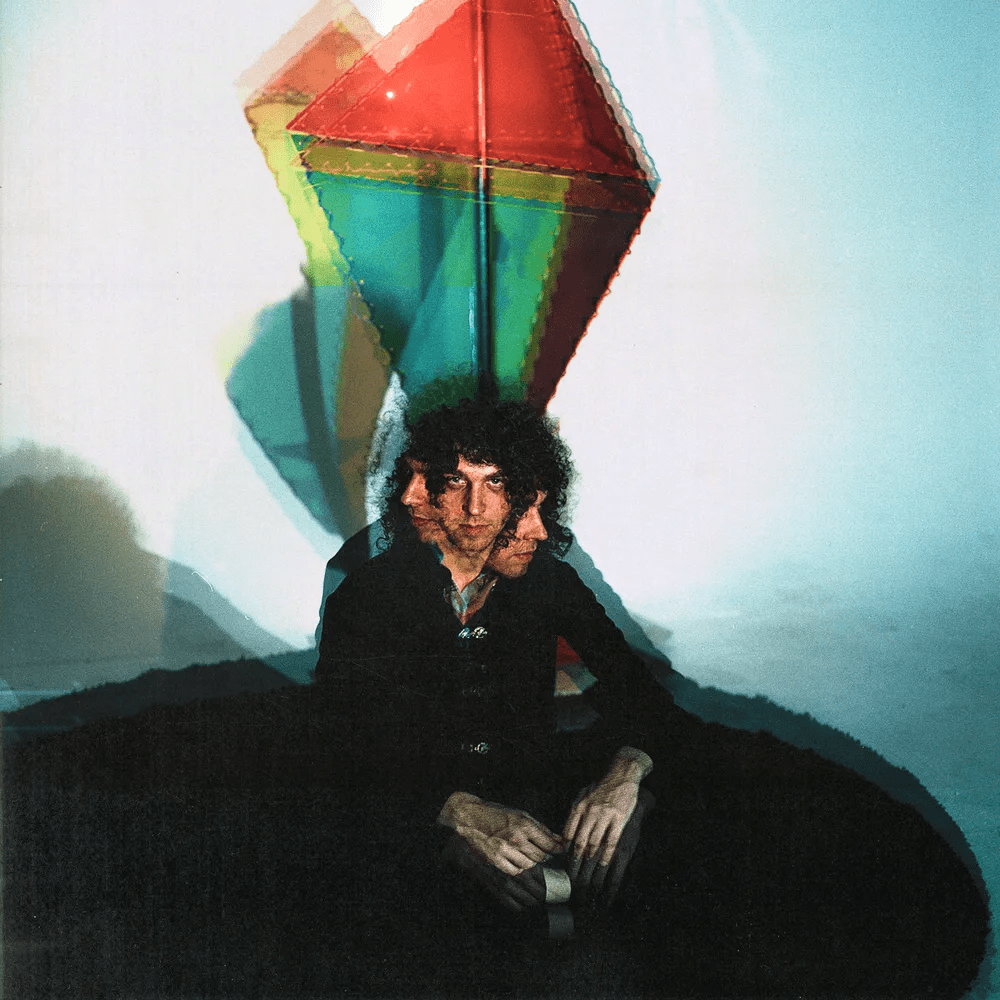
What distinguishes “Sunshine” from countless other retro-leaning psychedelic instrumentals is Williams’ architectural approach to composition. Each instrumental layer functions like a structural element in one of his visual environments, creating depth perception through careful placement within the stereo field. The deliberate lo-fi production choices on this track (contrasting with the hi-fi approach of companion album Polyhaven) function not as limitations but as intentional distortions—similar to how sunlight bends when passing through different mediums.
This multidimensional quality connects directly to Williams’ fascination with “theoretical concepts such as the structure of space-time, the soul’s journey, and reality itself.” Just as his Musical Astrology app allows users to “hear the music of your birthdays” and “the precise musical pitches of the planets,” “Sunshine” attempts to translate cosmic principles into audible frequencies.
For an artist who has collaborated with contemporaries like Toro y Moi and Unknown Mortal Orchestra while drawing inspiration from eclectic sources ranging from Iasos to The Cleaners From Venus, “Sunshine” represents a confident synthesis of influences rather than mere pastiche. The track suggests that Williams isn’t merely recreating the past but creating a continuous present where 1975 and 2025 exist simultaneously—a concept that feels particularly appropriate for an artist whose lenticular hologram album cover literally shifts perspective as it rotates.
 B-Side Guys
Leave a Reply