
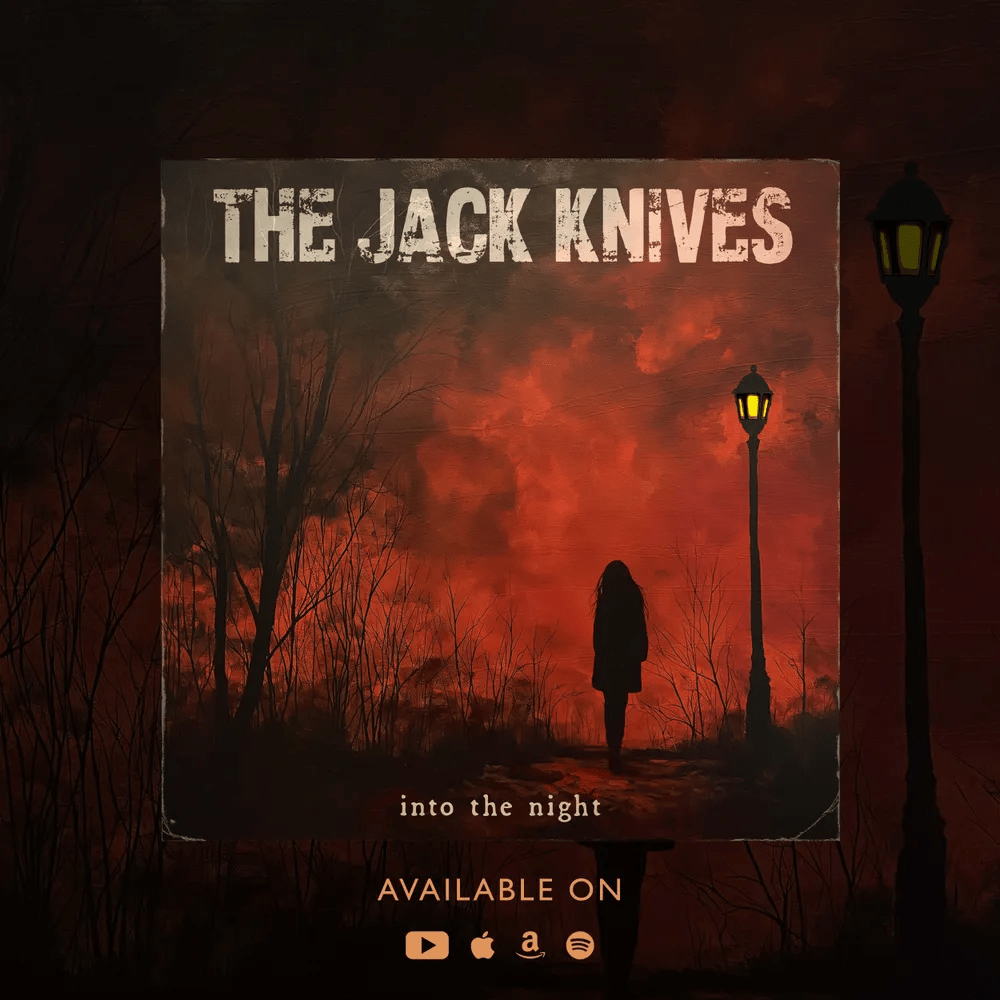
In the mythology of rock and roll, Asbury Park occupies hallowed ground—a coastal New Jersey town whose musical legacy looms larger than its modest geography would suggest. It’s fitting, then, that The Jack Knives chose this sanctified soil to record “Into the Night,” their follow-up to 2024’s breakthrough “Ghost Radio.” Working with Pete Steinkopf of The Bouncing Souls at Little Eden Studios, the California quartet has crafted an album that honors Asbury’s blue-collar rock traditions while establishing their own distinct voice in the contemporary punk landscape.
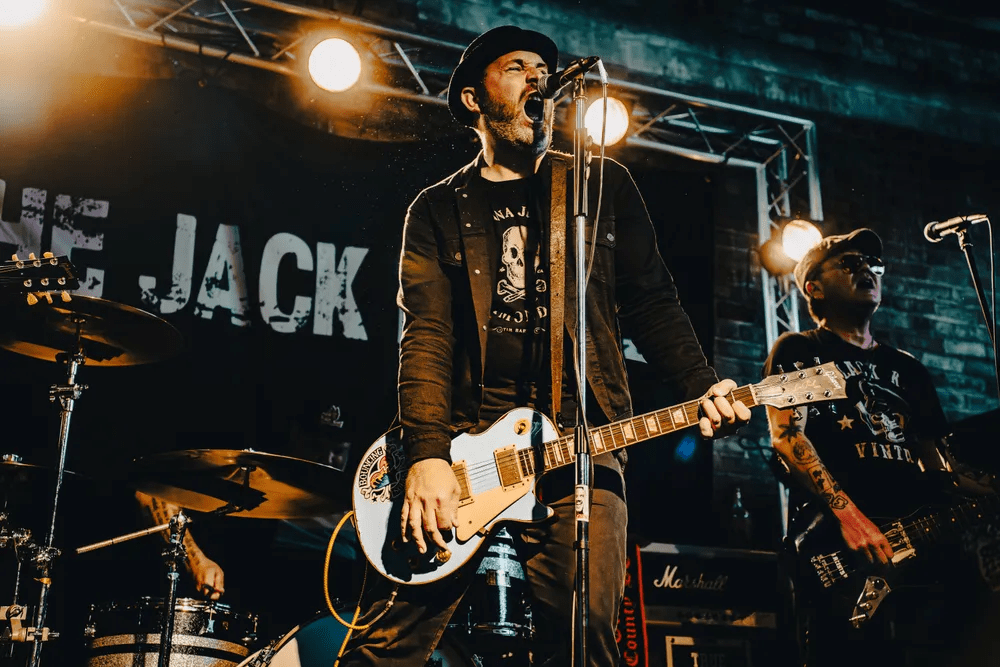
From the opening salvo of “Heartbreak Queen,” The Jack Knives announce their intentions with absolute clarity. British frontman Si Short’s vocals combine gravel and honey in equal measure, delivering lines about romantic devastation with the conviction of someone who’s lived every word. The rhythm section of Bryan “Brooce” Lee (bass) and Drew Baker (drums) creates a foundation both muscular and nimble, while Faris “Dragon” Muhtaseb’s lead guitar work provides melodic counterpoint rather than mere flash. This perfect balance of aggression and accessibility becomes the album’s sonic signature.
“Punk Rock Heart” follows with appropriate fury, its title serving as both description and manifesto. What elevates the track beyond genre exercise is the emotional vulnerability lurking beneath its charging tempo. When Short declares his allegiance to music that saved him, the sentiment avoids cliché through sheer authenticity. Steinkopf’s production deserves particular credit here—the guitars sound massive without overwhelming the vocals, creating space for both power and nuance.
By the time “Limelight” arrives third in sequence, the album’s thematic architecture emerges more clearly. The Jack Knives aren’t merely crafting anthems about rebellion; they’re examining what happens when youthful idealism collides with adult realities. The track’s narrative—following someone navigating the hollow promises of fame—could easily tilt into cynicism, but instead achieves something more complex through musical and lyrical counterpoint. The verses acknowledge disillusionment while the chorus soars with defiant optimism, creating productive tension that remains unresolved.
“Hey Love” offers necessary breathing room, downshifting the tempo without sacrificing intensity. Baker’s backing vocals provide perfect harmony during the chorus, adding emotional texture that enhances rather than distracts from Short’s lead performance. The arrangement demonstrates remarkable restraint, building gradually through verse and chorus before exploding into cathartic release during the bridge. This understanding of dynamic contrast—knowing exactly when to hold back and when to surge forward—distinguishes The Jack Knives from less sophisticated peers.
The album’s midpoint arrives with “The Lovers Who Fell,” a storytelling triumph that showcases Short’s narrative gifts. The track transforms specific details about relationships—meticulously observed and rendered—into universal emotional truth. Muhtaseb’s guitar solo here deserves special mention, serving the song’s emotional arc rather than showcasing technical prowess. The solo arrives precisely when words no longer suffice, creating wordless communication that extends the narrative beyond lyrics.
“Empty Grave” and “Kill Me First” form a complementary pairing that explores mortality from opposing perspectives. The former examines legacy and memory with unexpected tenderness, while the latter confronts fear with defiant gallows humor. Both tracks demonstrate The Jack Knives’ ability to address weighty subjects without sacrificing entertainment value—a delicate balance they maintain throughout the collection.
“New York City” stands as the album’s geographic and emotional counterpoint to its Asbury Park origins. Referencing the storied CBGB scene while acknowledging contemporary realities, the track avoids nostalgic simplification by exploring the tension between mythic past and complicated present. The arrangement mirrors this theme through its blend of classic punk energy and modern production techniques, creating sonic time travel that feels both reverent and forward-looking.
As the album approaches conclusion, “Outlaw Skies” offers cinematic sweep through its Western imagery and expansive arrangement. The track reveals The Jack Knives’ ambition while maintaining their characteristic authenticity—no small feat for a band operating primarily within punk’s traditionally constrained parameters. Baker’s percussion work deserves particular recognition here, providing textural variety that enhances the song’s narrative momentum.
“Dancing in the Dark” arrives as the penultimate track—an obvious nod to Asbury Park’s favorite son, Bruce Springsteen. Rather than merely covering The Boss, The Jack Knives reimagine his spirit through their own musical vocabulary, creating spiritual connection rather than derivative homage. The result feels like honest conversation between musical generations rather than hollow tribute.
The album closes with “The Passenger Side (Heartbreak Queen Reprise),” bringing the collection full circle while suggesting emotional evolution rather than mere repetition. By revisiting thematic elements from the opening track through altered perspective, the band creates narrative closure while acknowledging that real life rarely provides such neat resolution.
Throughout “Into the Night,” The Jack Knives demonstrate remarkable cohesion for a relatively young band (formed in 2018). Their disparate elements—British vocals fronting an American band, punk energy with classic rock storytelling—create distinctive alchemy rather than confused identity. Steinkopf’s production strikes perfect balance between polish and rawness, capturing live energy without sacrificing clarity.
For those who believe rock and roll still matters—not as nostalgia but as vital communication—”Into the Night” offers compelling evidence. The Jack Knives have created something increasingly rare: a working-class rock album that speaks authentically about struggle, resilience, and connection without romanticizing hardship or offering hollow platitudes. Like the best of their influences, they’ve transformed personal experience into universal resonance, and along the way crafted one of 2025’s most compelling rock documents.
 B-Side Guys
Leave a Reply