
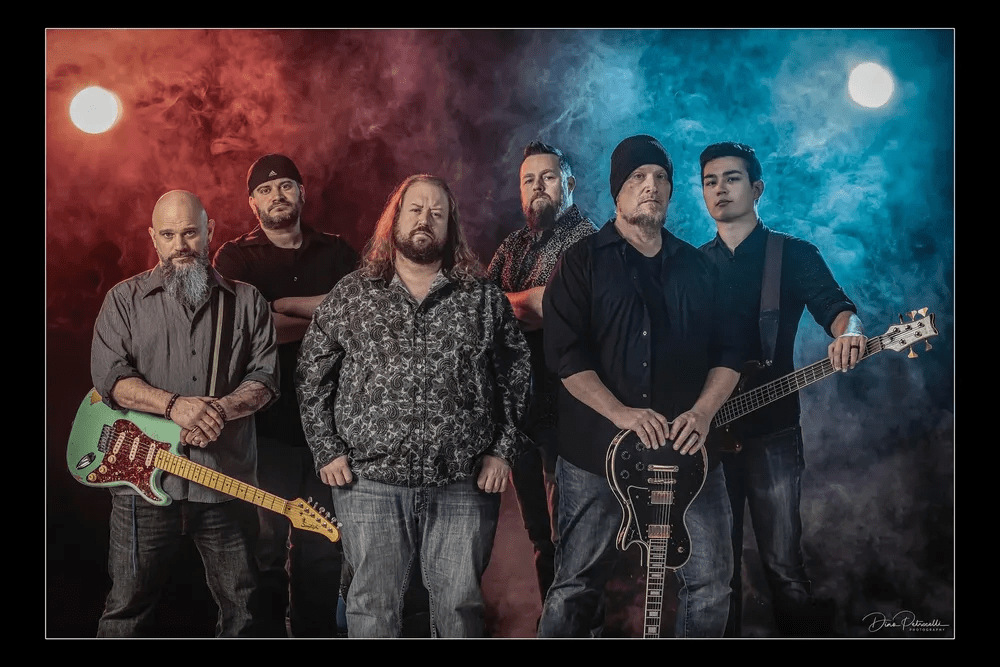
There’s a particular authenticity that emerges when music directly reflects its geographical roots. Decatur, Illinois six-piece Harlem Hayfield embodies this principle on “Titanic,” transforming their rustbelt surroundings into musical DNA that powers their self-described “rustbelt soul”—a genre designation that proves surprisingly accurate for their unique blend of rock, funk, and blues traditions.
The track opens with immediately engaging rhythmic momentum, establishing the “bouncy, groovy” foundation promised in their press materials. This propulsive quality creates productive tension against the song’s nautical disaster metaphor, suggesting forward movement even as relationships threaten to sink. The rhythm section deserves particular credit for this effect, providing muscular foundation that references funk’s precision while incorporating rock’s raw energy.
Lyrically, “Titanic” demonstrates impressive commitment to its extended metaphor. Opening lines “She told me to run a mile so I ran it/Waiting for the band to stop on the Titanic” establish both relationship power dynamics and the song’s central image of musicians playing as disaster unfolds. This reference to the Titanic’s legendary band—continuing to perform as the ship sank—creates powerful parallel to relationship denial, suggesting the human tendency to maintain appearances despite impending catastrophe.
The vocal delivery navigates between bluesy expressiveness and rock directness, creating emotional texture that enhances the lyrical complexity. When the narrator contemplates “Do I swim or sink under this hockey rink,” the unexpected introduction of ice imagery creates fascinating extension of the maritime metaphor while subtly referencing Midwestern cultural touchstones. This regional specificity gives “Titanic” particular authenticity, grounding abstract relationship dynamics in concrete environmental reference.
Most compelling is the song’s unflinching examination of mutual deception in faltering relationships. The repeated refrain “Won’t you lie to me, let me lie to you” captures relationship compromise at its most dysfunctional—parties silently agreeing to maintain comforting fictions rather than confronting uncomfortable truths. The elaboration “And if we can’t agree upon the tales that we both need/We’ll dig our heads down in the sand, and go on living in deceit” demonstrates lyrical sophistication often absent in straightforward rock compositions.
Instrumentally, the band achieves impressive cohesion for a six-piece ensemble. Each musical element occupies distinct sonic territory while contributing to collective forward momentum. This balance reflects the “collaborators, and, perhaps most importantly, friends” designation from their biography—musicians familiar enough with each other’s tendencies to create space for individual expression within tight collective framework.
As lead single from their debut album “Banter, Tells & Tricks,” “Titanic” establishes Harlem Hayfield as band capable of transforming their factory town background into musical asset rather than limitation. Their “groove-centric” approach successfully merges 70s funk influences with southern rock textures while maintaining contemporary relevance—creating music that indeed “makes the listener feel something” beyond mere nostalgia.
 B-Side Guys
Leave a Reply