
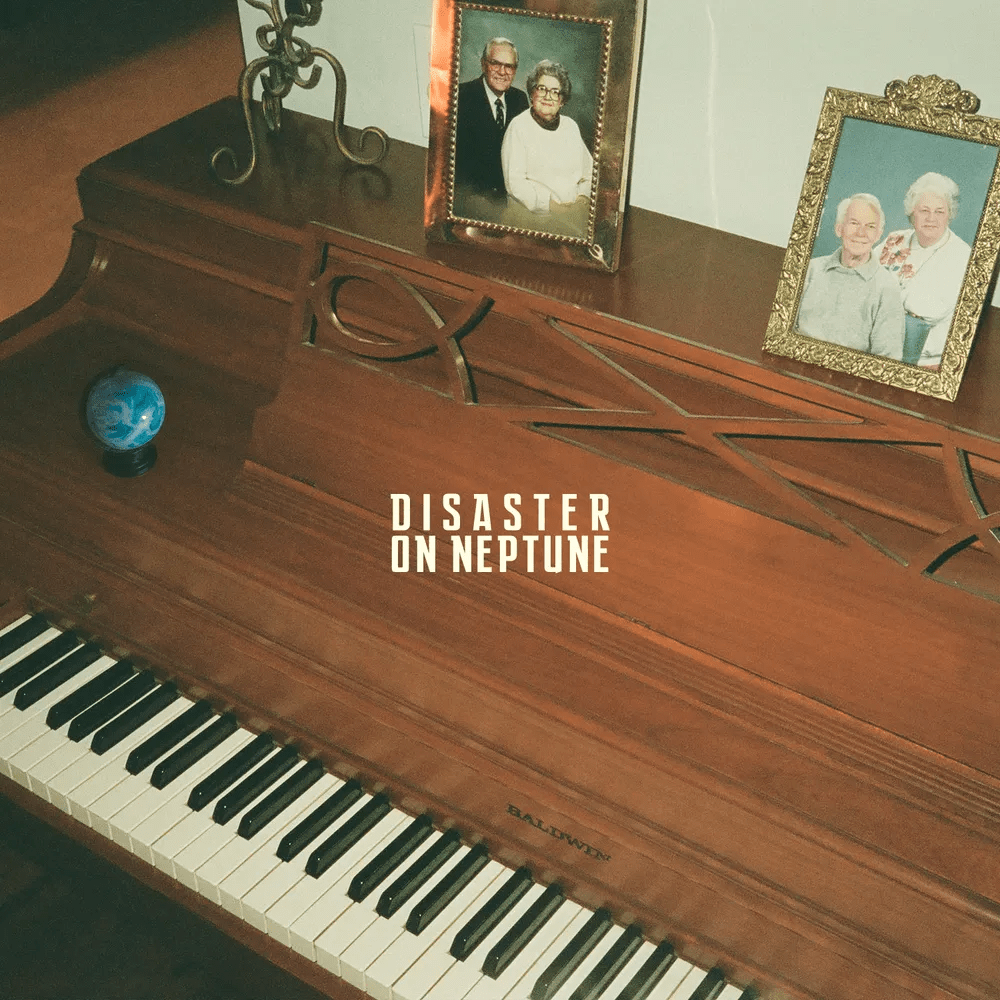
The line between autobiography and art blurs to the point of non-existence on Mang’s debut solo album “Disaster on Neptune,” a 40-minute expedition through psychological terrain so personal it nearly demands hazard signs. Released alongside a striking 16mm film that functions less as companion piece and more as alternate dimensional portal into the creator’s fractured psyche, this 15-track collection represents hip-hop as raw catharsis rather than calculated performance.
From opening track “Mistaken,” Mang establishes the project’s central tension: vulnerability that refuses to present itself as weakness. The production—largely self-handled with occasional collaborative assists—creates sonic architecture that feels simultaneously claustrophobic and expansive, mirroring the psychological states explored throughout. Bass frequencies vibrate at frequencies that suggest structural instability, while percussion elements often seem to actively fight against rather than establish rhythm, creating productive dissonance that demands active rather than passive listening.
“Charlotte’s Web” introduces the album’s literary sensibility, using E.B. White’s classic as metaphorical framework for exploring connection, mortality, and salvation. The track’s looping sample (manipulated to the point of beautiful disfigurement) creates hypnotic backdrop for verses that transition from straightforward narrative to increasingly abstracted imagery. This pattern—concrete reality dissolving into dreamlike perception—recurs throughout the project, suggesting altered consciousness as both escape route and trap door.
The album’s collaborative tracks provide crucial contrast against Mang’s solo explorations. “Hurricane Season” featuring Dishwater Blonde creates weather system of competing energies, voices circling each other like opposing pressure fronts before colliding in thunderous resolution. Meanwhile, “Minute to Kill” with 5 AM (familiar to viewers of the accompanying film) transforms interpersonal tension into propulsive rhythm, creating the collection’s most immediately aggressive offering without sacrificing its underlying vulnerability.
“Foreign Friend” marks significant tonal shift, with William Binderup’s production introducing warmer textures that allow Mang’s delivery to soften without losing intensity. The track’s meditation on connection across boundaries (both geographical and psychological) provides necessary emotional breathing room within the album’s otherwise claustrophobic landscape. This strategic placement—appearing just before the album’s midpoint—demonstrates sophisticated understanding of emotional pacing within extended projects.
“Dead Prez,” featuring YTC with co-production from Mang himself, serves as the album’s ideological centerpiece. Referencing the revolutionary hip-hop duo while creating something distinctly personal, the track examines inheritance—both musical and political—without defaulting to easy nostalgia or performative radicalism. The production balances ethereal melodic elements against concrete percussion, creating aural representation of theory meeting practice.
The album’s middle section (“OMG” through “To the Skye”) functions as sustained exploration of emotional states too complex for simple categorization. “Your Face” particularly stands out for its innovative approach to romantic obsession, using production techniques that deliberately destabilize the listener’s sense of temporal flow. Vocals occasionally phase-shift between channels while percussion elements fight against the underlying tempo, creating disorienting effect that perfectly captures romantic fixation’s mind-altering potential.
By “Things to Change,” the album’s narrative throughline crystallizes—this isn’t merely collection of isolated emotional states but documentation of psychological evolution. The track’s forward momentum, driven by increasingly urgent delivery against relatively sparse production, creates sense of approaching revelation that carries into the album’s final act.
The consecutive appearances of CerVon Campbell on “Wrap Ur Love” and “Lights Flicker” introduce necessary external perspective, transforming what might otherwise become solipsistic journey into dialogue. Campbell’s more melodic approach provides counterbalance to Mang’s intensity without undermining the project’s emotional honesty. The production on these tracks introduces subtle organic elements (particularly live bass) that ground the electronic atmospherics, suggesting integration of disparate elements as path toward wholeness.
Penultimate track “81 (Save My Life)” serves as emotional climax, its title’s numerical reference carrying personal significance that transcends listener’s need for explicit explanation. The production strips back to essential elements, allowing Mang’s vocals unprecedented clarity within the project’s soundscape. The result feels less like performance and more like direct neural transmission from artist to audience.
Closing with “Peggy’s Piano” provides perfect denouement—its sample-based melodic progression suggesting cyclical rather than linear conception of emotional healing. The track’s gradual disintegration into ambient texture creates sense of resolution without artificial closure, acknowledging that psychological exploration remains ongoing process rather than destination reached.
Throughout “Disaster on Neptune,” Mang transforms shadow work—the psychological process of engaging with disowned aspects of self—into art without sacrificing authenticity to accessibility. The 16mm film functions not merely as promotional material but as parallel text, its fragmented imagery and disjointed dialogue providing visual manifestation of the album’s sonic exploration. Together, they create multimedia experience that rewards complete immersion rather than casual engagement.
In era where vulnerability often appears carefully curated for maximum engagement, “Disaster on Neptune” stands as document of genuine excavation—messy, occasionally difficult, but ultimately transformative. This isn’t disaster as spectacle but as necessary destruction preceding rebirth. Neptune may be drowning, but in these waters, Mang has found voice worth surfacing for.
 B-Side Guys
Leave a Reply