
Some recordings resist perfection with such grace that their initial roughness becomes their defining beauty. Such is the case with Mindy Gledhill’s “Stained Glass Heart,” a composition that refused multiple attempts at polished reinterpretation, ultimately finding release in its original, unvarnished form.
The track arrives as part of Gledhill’s ongoing artistic reconciliation with her past selves—a musical conversation between present wisdom and former innocence. Written in 2012 during a period of significant spiritual questioning, the song sat patiently in her archive for over a decade before finding its perfect moment as part of ‘The Phone Booth Sessions,’ her project born from an antique store epiphany involving a decommissioned phone booth that became both recording space and metaphorical connection to her younger self.
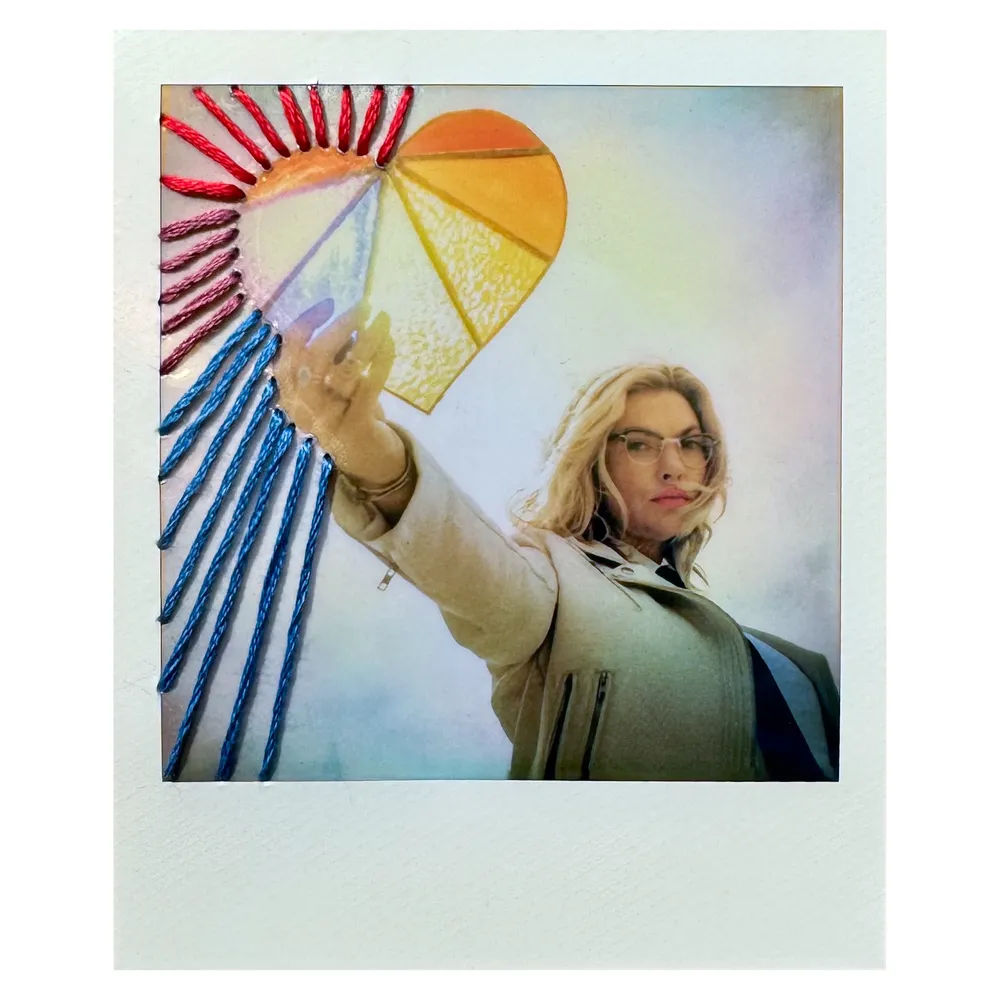
Producer Joe Corcoran’s decision to build around the original demo recording rather than replace it proves inspired. The preserved living room session with co-writer Trent Dabbs captures an unrepeatable intimacy, with Gledhill’s voice conveying both fragility and resilience. Simple guitar work creates an appropriately sparse framework, allowing her vocals to occupy emotional center stage without competition.
The production additions feel respectful and complementary—atmospheric elements that enhance rather than obscure the demo’s core authenticity. This approach creates a compelling time-collapse effect: we hear both the artist who wrote the song in 2012 and the artist who recognized its significance years later, existing simultaneously within the same recording.
Metaphorically rich, the central image of stained glass perfectly embodies the song’s thematic territory. When Gledhill sings of loving “with a stained glass heart/a broken work of art,” she transforms fragmentation into transcendence. Stained glass, after all, achieves its beauty precisely through its assembly of broken pieces—each fragment catching and transforming light differently.
The bridge’s rejection of binary thinking (“It would be so easy to create/in a world of black and white”) provides the philosophical framework for the entire composition. Against simplified “paint by number” existence, Gledhill offers the complex beauty of prismatic experience—where brokenness becomes a vehicle for light rather than an obstacle to it.
For an artist whose journey began in the certainties of a devout Mormon upbringing before evolving through questioning on albums like 2019’s ‘Rabbit Hole,’ “Stained Glass Heart” represents a particularly poignant milestone. The song serves as both artistic statement and personal testimony to the beauty that emerges when we embrace rather than conceal our fragmentation.
 B-Side Guys
Leave a Reply