
That precious moment between inhale and speech—this is where Laila Smith’s “Diorama” begins. The track’s deliberate opening silence serves not as absence but as invitation, a small clearing before Smith’s plucked acoustic guitar introduces itself with the tentative certainty of someone who knows exactly what they want to say but understands its weight.
For an artist whose musical journey began at age six performing jazz festivals and ultimately led to prestigious venues like the Kennedy Center and Blue Note, “Diorama” represents a fascinating pivot. The track’s arrangement feels purposefully contained—a musical terrarium where each element exists in precise, if uncomfortable, harmony. Her jazz background manifests not in obvious improvisational flourishes but in the song’s disciplined emotional transitions and meticulous vocal control.
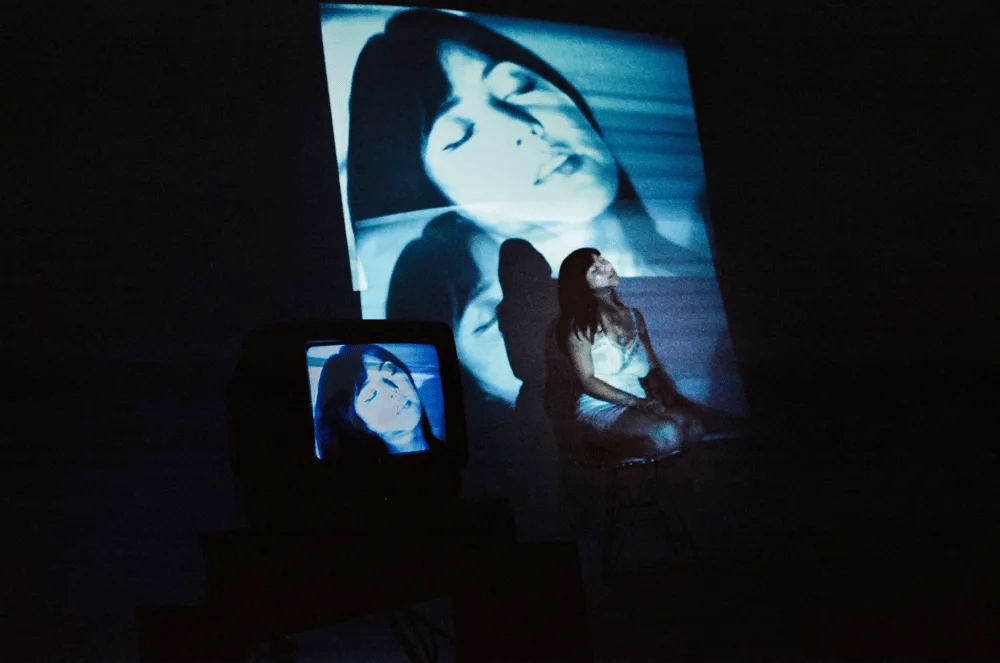
The composition balances precariously between accessibility and unease. Smith’s melody initially presents as deceptively sweet, almost childlike in its directness. Yet this sweetness curdles slightly through lyrical subversion: “I wanna be your favorite girl/Like it’s a diorama/Leaning on little plastic trees.” The singer occupies multiple positions simultaneously—both the curator arranging the miniature landscape and the figurine placed within it.
What elevates the track beyond conventional indie rock is its willingness to interrogate objectification without simplistic moral positioning. When Smith sings “Take me gently in your hands/Place me on synthetic grass,” she explores the paradoxical comfort in surrendering agency—how being rendered precious, though reductive, satisfies a particular hunger for significance. This complex meditation on desire emerges gradually through repetition rather than exposition, creating emotional resonance through accumulation.
Production choices reinforce this thematic terrain. The warm tape saturation Smith references creates sonic boundaries that feel both protective and confining—a musical representation of the paradox at the song’s core. The arrangement breathes in crucial moments, allowing negative space to function as emotional punctuation between lyrical declarations.
While “Diorama” functions beautifully as standalone musical expression, its corresponding interactive experience transforms passive listening into ritualistic participation. Smith’s transmedia approach—creating both song and navigable digital environment—speaks to her understanding that grief and trauma exist not as linear narratives but as spaces to be repeatedly traversed, each journey revealing different emotional contours.
For those seeking musical experiences that function simultaneously as aesthetic pleasure and psychological investigation, Smith’s “Diorama” offers a haunting invitation to examine the dioramas we all construct—and those we allow ourselves to be placed within.
 B-Side Guys
Leave a Reply