
In a musical landscape where vocals often dominate, Sam Miller and Matt Badger have created a wordless conversation of remarkable eloquence. “Shiprock,” their collaborative instrumental album, unfolds like a weather system across nine tracks and twenty minutes—not with thunder and lightning, but with subtle atmospheric shifts that reward attentive listening. Recorded in a single weekend at Seattle’s Psychoacoustics Recreational Lab (formerly Studio A, Avast), the album harnesses the spontaneous chemistry these Pacific Northwest multi-instrumentalists discovered during their first impromptu jam session back in 2010.
The album opens with “Voyage,” establishing the project’s aesthetic territory—a thoughtfully calibrated meeting ground between Miller’s compositional sensibilities and Badger’s rhythmic intuition. The track creates immediate forward momentum while introducing several motifs that will resurface throughout the album, suggesting both geographical journey and the evolution of musical ideas. This approach makes “Shiprock” feel more cohesive than many instrumental collections, where individual tracks often exist as discrete entities rather than conversational participants.

“Horizon Bound” introduces cellist Lori Goldston (known for her work with Nirvana and David Byrne) as the first featured collaborator. Her distinctive playing—simultaneously earthy and ethereal—transforms what might have been a pleasant ambient excursion into something more substantial. The track’s gradual build creates an experience akin to watching distant storm clouds approach over open water, with Goldston’s cello serving as the electrical charge preceding precipitation. Miller’s piano work here demonstrates remarkable restraint, privileging textural contribution over virtuosic display and creating space for Badger’s subtle polyrhythms to emerge.
Lead single “Sunglint” reveals why it has garnered over a million views and significant editorial support. The composition captures its namesake optical phenomenon with uncanny precision—that moment when sunlight reflects off water at just the right angle, creating momentary brilliance. The musical structure mirrors this experience, with deliberate repetition occasionally illuminated by unexpected harmonic shifts. What distinguishes the track from similar post-rock explorations is its economy—no wasted notes, no unnecessary development, just the essential elements required to evoke its subject.
By midpoint track “Blue Hour,” the album’s internal logic has established itself. Each composition maintains individual identity while contributing to a larger narrative arc that suggests natural processes rather than human drama. This approach feels particularly refreshing in an era where even instrumental music often strives for cinematic emotionalism or algorithmic functionality.
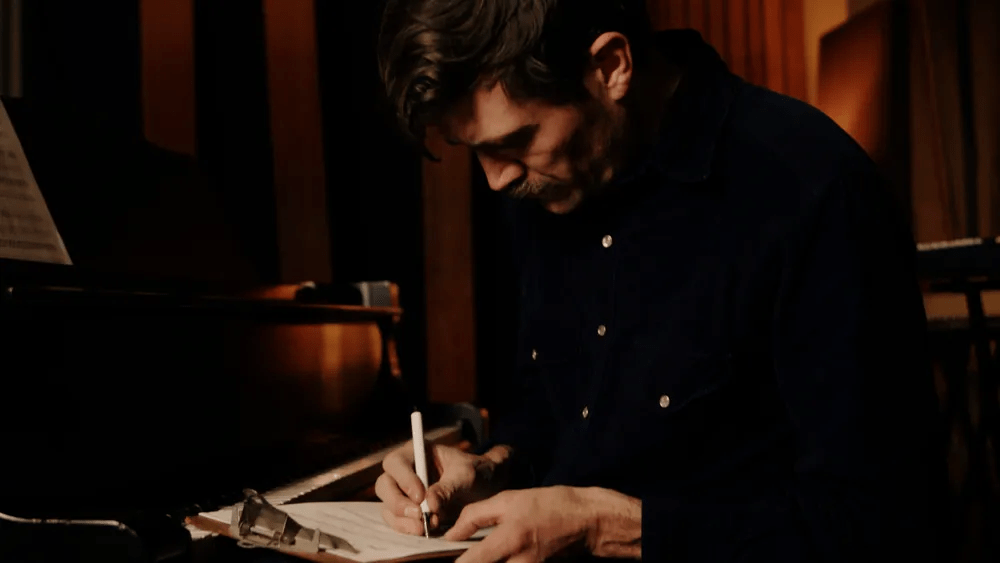
“Hypnagogia” emerges as perhaps the album’s most adventurous moment. Named for that liminal consciousness between wakefulness and sleep, the track employs subtle electronic elements that blur the boundaries between acoustic and synthesized sound. Miller’s background in blending traditional instrumentation with electronic textures (evident from his previous work like “Silver and Gold”) finds its most sophisticated expression here. What begins as seemingly straightforward piano and percussion gradually reveals layers of processing and manipulation that create genuinely hallucinatory effects without sacrificing musical coherence.
“Current” demonstrates Badger’s rhythmic sophistication particularly well. Rather than merely keeping time, his percussion creates fluid patterns that genuinely evoke water in motion—sometimes flowing predictably, other times encountering resistance and forming unexpected eddies. Miller’s keyboard work responds with equal fluidity, creating melodic lines that seem to simultaneously direct and follow the rhythmic foundation. This conversational quality between instruments reflects the collaborative genesis of “Shiprock” itself.
The album’s final third shifts toward more contemplative territory. “Wavering Reflection” employs space as effectively as sound, with carefully placed silences that allow musical phrases to resonate fully before new ideas emerge. “Foghorn” reunites the duo with Goldston while introducing flugelhorn player Eric Padget (who also handled the album’s mixing). The brass and string additions create textural density without cluttering the composition, demonstrating Padget’s dual skills as both performer and engineer. His mixing work throughout the album deserves particular recognition for maintaining clarity despite the complex instrumental interplay.
Closing track “Ease” brings the journey to a fitting conclusion, suggesting arrival rather than mere ending. The composition gradually simplifies toward its conclusion, creating a sense of both completion and continuation—as if the musical conversation will continue beyond what we’re permitted to hear.
Throughout “Shiprock,” what impresses most is how Miller and Badger navigate the particular challenges of instrumental music. Without lyrics to provide narrative signposts, they instead create meaning through meticulous attention to tone, texture, and development. Their compositions respect listeners’ intelligence while remaining accessible, offering multiple entry points for engagement whether through emotional response, intellectual appreciation, or pure sensory enjoyment.
For listeners willing to engage fully, “Shiprock” offers a rare experience—instrumental music that communicates as effectively as lyrical work while accessing emotional and intellectual territories that lyrics often cannot reach. Miller and Badger have created something that functions simultaneously as background enhancement and foreground focus, suggesting that attentive listening and ambient appreciation need not be mutually exclusive categories.
 B-Side Guys
Leave a Reply