
Fire demands attention—not as metaphor but as elemental necessity. Sutras’ “Karma To Burn” harnesses this incendiary urgency, crafting a post-hardcore manifesto where spiritual awakening occurs not through peaceful meditation but through violent conflagration.
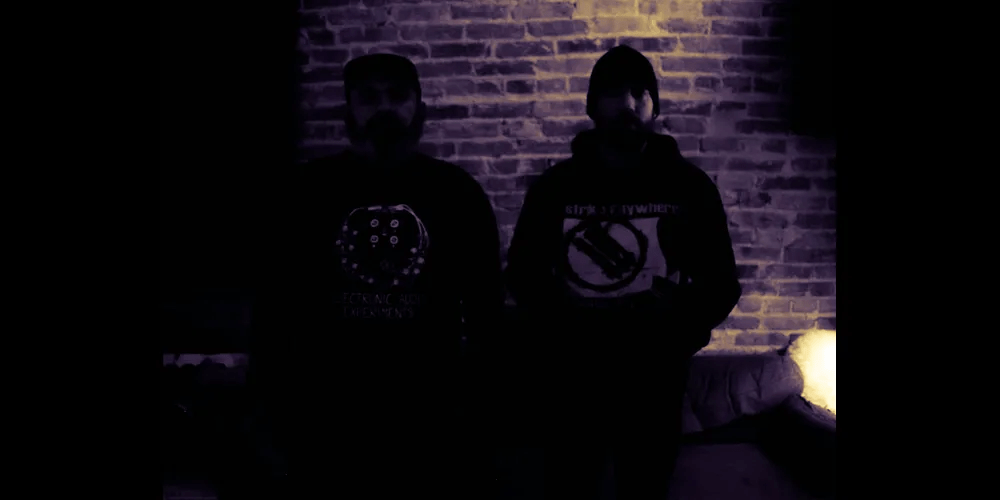
The D.C. outfit’s second single from “The Crisis of Existence” showcases Tristan Welch and Frederick Ashworth’s uncanny ability to fuse seemingly contradictory sonic approaches. The track’s foundation—pummeling rhythms paired with blackened shoegaze textures—creates territorial tension where sludge metal’s gravitational pull battles against post-rock’s atmospheric expanse. When Welch declares “I haven’t gone religious / I’ve grown conscious,” his delivery channels both reverence and rage, suggesting enlightenment as confrontational rather than transcendent.
What elevates “Karma To Burn” beyond genre exercise lies in its structural adventurousness. The composition’s early segments establish primal intensity through group vocals intoning “MY MIND, MY BODY, NO WORDS NO PEACE”—a mantra that functions simultaneously as protest and prayer. This collective expression gives way to Welch’s more personalized declarations, creating rhythmic dialogue between individual and community that mirrors the song’s thematic exploration of spiritual isolation and collective suffering.
The production expertly balances abrasion and immersion, particularly during the track’s midpoint where guitar textures momentarily eclipse vocal elements before receding to highlight the repeated phrase “I’ve got to burn it up.” This dynamic interplay embodies the Buddhist concept of impermanence—nothing remains fixed, everything transforms.
As a treatise on spiritual cleansing through destruction, “Karma To Burn” offers no easy catharsis but rather depicts liberation as ongoing process. The final section’s repeated invocation of “Someday I’ll be in peace” carries both hope and resignation—enlightenment appears simultaneously inevitable and perpetually deferred. In this paradoxical space, Sutras captures contemporary existence’s fundamental contradiction: we seek peace while knowing that conflict remains our primary path toward finding it.
 B-Side Guys
Leave a Reply