
Structure doesn’t contain chaos—it merely gives it shape. On “Lamament,” Hedvig Mollestad Trio demonstrates this principle through composition that appears simultaneously calibrated and unrestrained, like a building designed to sway during earthquakes.
The Norwegian power trio—comprised of Mollestad on guitar, Ellen Brekken on bass, and Ivar Loe Bjørnstad on drums—has spent over a decade refining their approach to instrumental heaviness, yet “Lamament” reveals new dimensions within their established vocabulary. The track’s opening sequence establishes methodical tension through Brekken’s deliberate bass motif before Mollestad’s guitar introduces harmonic complexity that stretches rather than ruptures the composition’s architecture.
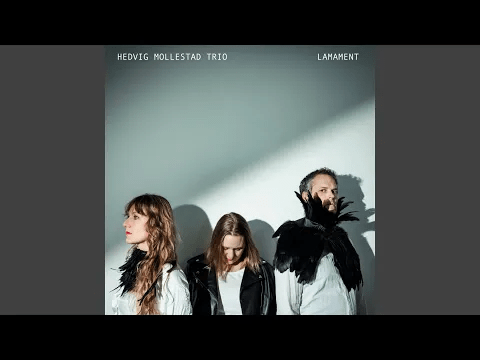
What distinguishes HM3 from typical fusion outfits is their commitment to physical impact alongside technical exploration. Bjørnstad’s drumming doesn’t merely keep time but actively shapes dynamic contours, creating percussion landscapes that respond to Mollestad’s tonal explorations rather than simply accommodating them. This conversational approach transforms standard power trio format into something more democratic—three equal voices navigating shared territory rather than rhythm section supporting lead instrumentalist.
The track’s middle section showcases Mollestad’s distinctive approach to distortion—using it not as blunt force but as textural element that creates dimensional space within the composition. Her note choices suggest jazz lineage while her tonal approach channels psychedelic rock’s experimental spirit, creating productive tension between harmonic sophistication and raw sonic impact.
“Lamament” succeeds because it understands that genuine fusion isn’t about alternating between disparate styles but finding the connective tissue between them. By approaching heavy rock through improvisational sensibility and addressing jazz complexity with rock’s physicality, HM3 creates music that resists categorization not through deliberate obscurity but through authentic integration of seemingly contradictory traditions.
 B-Side Guys
Leave a Reply