
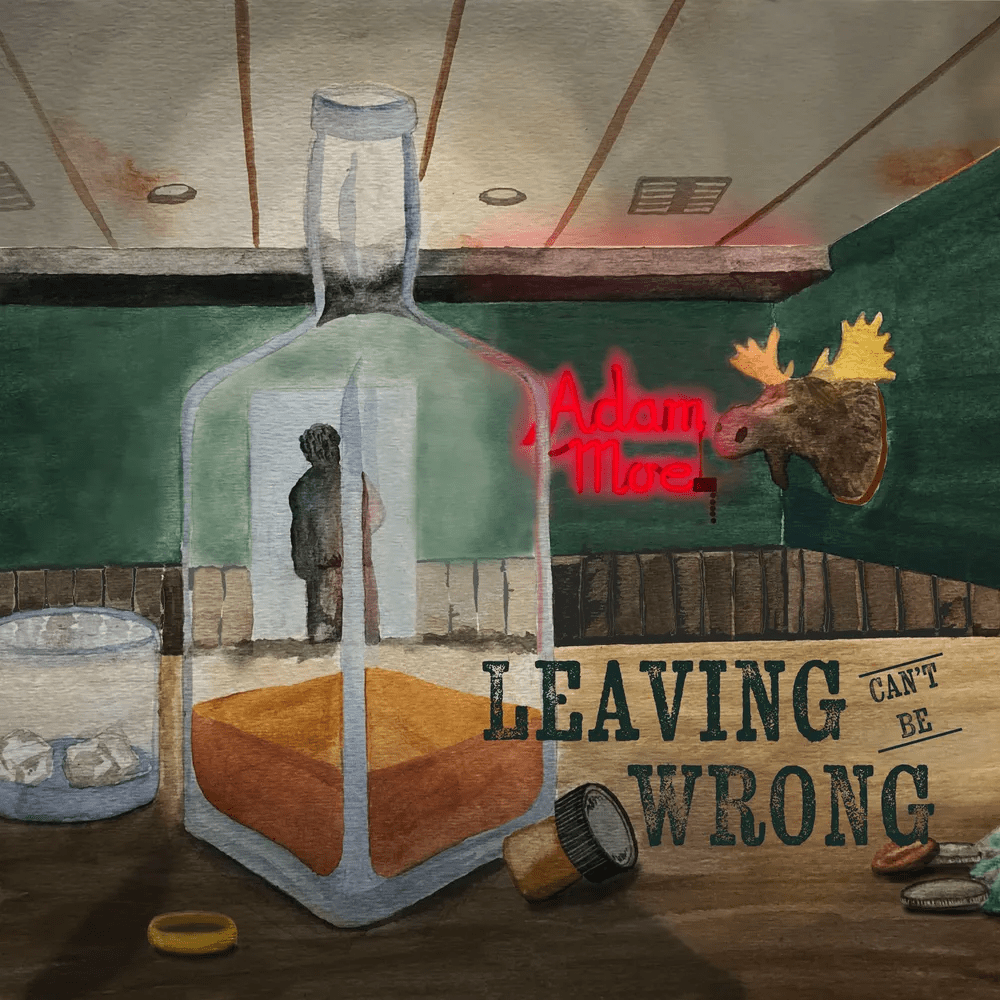
Great artistic transformations often begin with disruption. For Adam Moe, a lifelong sideman and former half of the folk duo Pushing Chain, the forced stillness of 2020’s pandemic pause became fertile ground for reinvention. “Leaving Can’t Be Wrong,” his first solo offering, emerges from that creative chrysalis as a ten-track testament to both tradition and personal vision—thirty-three minutes of classic country sensibilities filtered through a distinctly northern lens.
The album opens with “Some Days,” immediately establishing Moe’s gift for philosophical observation wrapped in accessible melody. His fiddle background informs his songwriting approach—where a less experienced composer might overcomplicate, Moe understands the power of thematic variation and return. The song’s central conceit about the fluctuating nature of certainty and perception builds with each verse, creating a cumulative wisdom that transcends its seemingly simple structure. When Moe sings about counting blessings rather than searching for answers, it lands as earned insight rather than greeting card sentiment.
“Beggars Can’t Be Choosers” shifts the album toward more traditional country territory, with pedal steel accents that would sound at home on a Texas dance hall stage. What distinguishes the track from mere homage is Moe’s vocal approach—unembellished, conversational, yet precisely pitched. This delivery style, maintained throughout the album, creates an intimacy that bridges the gap between performer and listener, as if Moe is sharing these stories from across a small table rather than a stage.
The road song “Blue Skies and Highways” demonstrates Moe’s understanding of country music’s essential themes without falling into cliché. Rather than romanticizing the wandering life, he captures the practical reality of working truckers with the kind of detail that suggests lived experience or careful observation. The arrangement breathes naturally, with instrumental passages that function as necessary space for reflection rather than mere showcases for technical ability.
“That’s Why They Call It Crazy” represents the album’s emotional centerpiece, examining post-breakup psychological unraveling with uncomfortable precision. Moe’s lyrics here achieve a delicate balance between specificity (pouring orange juice into cereal) and universal experience (the disorienting impact of loss). The production choice to gradually layer instruments mirrors the song’s depiction of accumulating dysfunction, creating a sonic landscape as unstable as the narrator’s mental state.
The album’s title track, “Leaving Can’t Be Wrong,” employs classic country wordplay to examine the complex psychology of departure. Moe understands that good country music thrives in ambiguity—is leaving wrong or right?—and the arrangement supports this tension with subtle push-pull dynamics between rhythm section and lead instruments.

“Fool on the Stool Next to You” showcases Moe’s gift for character studies, creating a barstool confession that feels simultaneously archetypal and specific. The song demonstrates his appreciation for Roger Miller’s brand of observational humor, finding humanity in situations that could easily slip into caricature. The arrangement’s honky-tonk piano flourishes and walking bass line create the perfect sonic environment for this slice-of-life narrative.
The album’s most surprising moment arrives with “Limpin’ Home,” where Minnesota musicians convincingly channel Western swing influences. The track’s instrumental breaks allow Moe to display his fiddle prowess, though always in service to the song rather than mere virtuosity. This balance between technical ability and restraint characterizes the entire collection, suggesting an artist more concerned with emotional communication than impression management.
“Never Fool This Fool Again” offers a masterclass in economy, creating a complete emotional narrative with minimal language. The melody’s unexpected intervals and chromatic movements reflect the lyrical subject of disorientation after betrayal, demonstrating how musical choices can reinforce thematic content beyond the literal meaning of words.
Closing track “Where Would I Be Without You” provides perfect resolution to the album’s journey, examining self-sufficiency from the perspective of someone who ultimately values connection above independence. The song’s imagined scenarios of isolation (lighthouse keeper, astronaut, castaway) create effective contrast with its simple, heartfelt chorus. This structural approach—specific verses supporting a universal refrain—demonstrates Moe’s intuitive understanding of songwriting architecture.
Throughout “Leaving Can’t Be Wrong,” producer credits remain unlisted, suggesting Moe’s hands-on involvement in crafting these sonic landscapes. The production maintains consistency without monotony, creating enough variation to sustain interest while preserving the album’s cohesive identity. Particularly effective is the spatial quality of the recordings—instruments occupy distinct positions in the stereo field, creating dimensional depth that compensates for the relatively sparse arrangements.
What ultimately distinguishes “Leaving Can’t Be Wrong” from similar traditionalist offerings is its authenticity without affectation. Moe makes no attempt to disguise his northern origins with exaggerated drawls or forced colloquialisms. Instead, he recognizes that country music’s enduring power lies not in its geographic specificity but in its emotional universality. The result is a debut that feels simultaneously rooted in tradition and freshly imagined—proof that sometimes the most compelling new voices are those that have been quietly developing for decades, waiting for the right moment to step forward and claim the spotlight.
 B-Side Guys
Leave a Reply