
Childhood toys rarely receive credit for their psychological complexity. In Brian Noyes’ hands, however, they become portals to altered states and existential questioning. The Seattle-based multi-instrumentalist’s “Dollhouse Man” transforms playroom paraphernalia into surrealist landscape, creating a psychedelic character study that’s simultaneously whimsical and unsettling.
Musically, Noyes builds his toy universe from vintage keyboard foundations. Wurlitzer 140B electric piano provides the wonky underpinning—deliberately chosen over its more conventional 200A counterpart—while Farfisa organ and Moog synthesizer add layers of retro-futuristic texture. This instrumental palette immediately establishes both time displacement and spatial disorientation, perfectly framing the song’s exploration of identity dissolution.
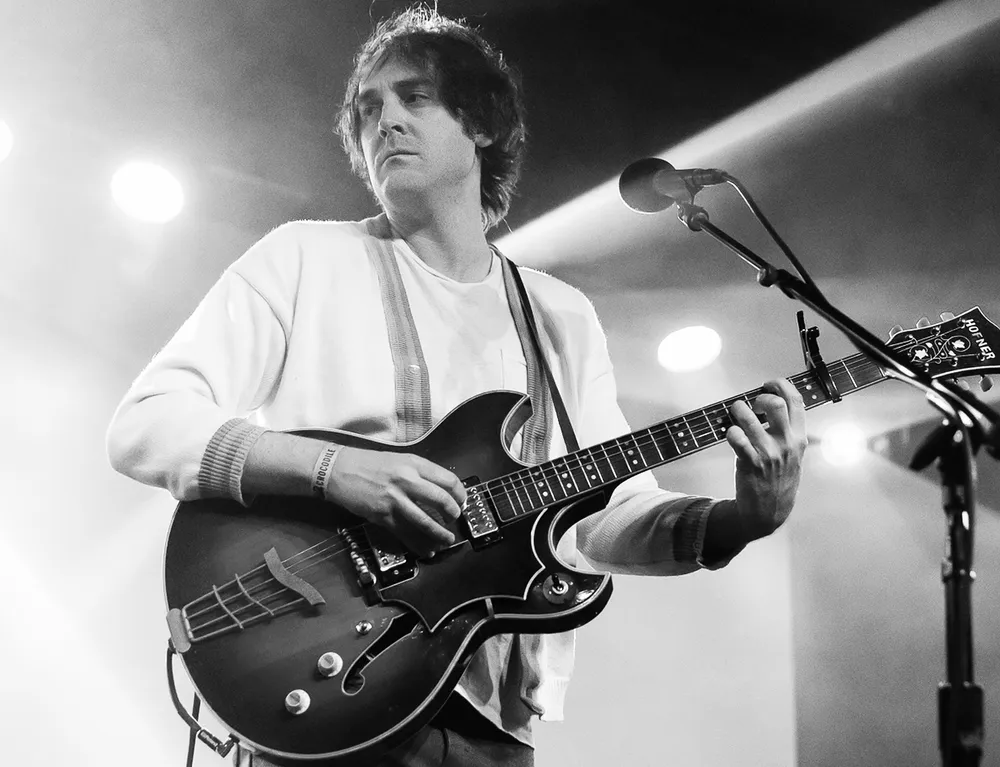
The Kinks influence Noyes acknowledges manifests not through direct imitation but through storytelling approach. Like Ray Davies’ character studies of English eccentrics, “Dollhouse Man” inhabits its protagonist’s perspective completely, observing his plastic reality without judgment. The opening description of a “fisher price face” with “lilywhite grin” and “steely blue eyes” creates immediate visual specificity, establishing this miniature figure as both object and subject.
As the narrative progresses, surrealist elements accumulate with dreamlike logic. The “oija board wife” who “guides his hand and holds the scythe” introduces both supernatural dimension and implied violence, while domestic details like “play doh eggs: florentine” and “tiny tea cup of darjeeling” create uncanny parallel reality where familiar objects appear in unfamiliar scale. This juxtaposition between mundane and bizarre continues with the “slinky dog shake” caused by “the pills he takes,” suggesting psychopharmacological underpinnings to this toy metamorphosis.
Particularly effective is Noyes’ use of children’s product names as linguistic building blocks. “Lincoln log lane” becomes residential address, while “easy bake” transforms from oven brand to psychological state. This repurposing of commercial language creates cognitive dissonance between innocent play and adult disillusionment, suggesting childhood’s end without directly articulating loss.
The final verse’s image of “flipping through his view master/at faces which he thought he knew/places where he once went too” provides poignant conclusion, suggesting identity fragmentation where past self becomes unrecognizable series of stereoscopic slides. The elongated “ooohhhhh” that follows conveys both wonder and horror at this transformation.
For Seattle’s Noyes—known for his work with psych-pop group Tomten and as touring keyboardist for Papercuts—”Dollhouse Man” represents distinct achievement in baroque psychedelia. By channeling playtime inspiration from his daughter into surrealist character study, he’s created something that functions simultaneously as whimsical fantasy and disconcerting commentary on adult identity—a miniature masterpiece where plastic permanence contrasts with human impermanence.
 B-Side Guys
Leave a Reply