
Kentucky-based collective Tiny Tiny has captured something rarely acknowledged in love songs—the delicious, slightly wicked pleasure of knowing your relationship surpasses others. On “Ultra City,” songwriter Boone Williams and his rotating cast of collaborators embrace this taboo satisfaction with refreshing candor, creating an anthem for lovers who secretly revel in their superior connection.
Written during a snowstorm, the track carries that particular insularity unique to weather-imposed isolation. This environmental context enhances the song’s thematic exploration of romantic exclusivity—the world outside reduced to irrelevant observers while the couple remains warmly ensconced in their private universe. The production reinforces this intimate/expansive duality, with instrumentation that feels simultaneously bedroom-close and cinematically spacious.
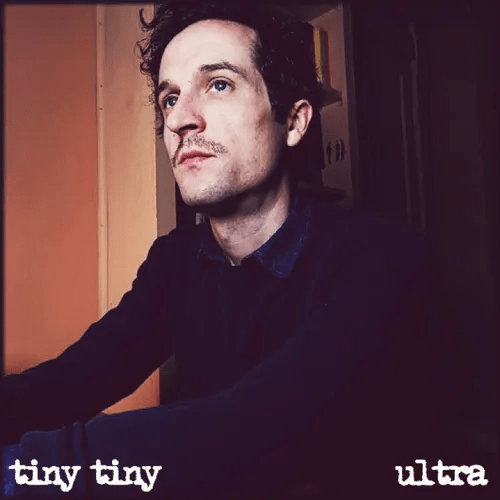
The lyrics immediately establish the narrator’s skeptical relationship with the outside world: “The people downtown/They’ll never have the answers.” This positioning of outsiders as fundamentally clueless continues throughout, creating a clear demarcation between the enlightened lovers and everyone else. When Williams sings “We’ll give them tiny pieces when they ask it like the others,” he establishes information-sharing as an act of condescension rather than connection.
Particularly revealing is the observation “They saw it on our faces when they saw us out at dinner.” This line acknowledges how private satisfaction inevitably manifests publicly, suggesting the couple’s superior connection is visible to observers whether intentionally displayed or not. The subsequent progression from dinner to beach to motel tracks the journey from public performance to private consummation, with the transformation into “an animal” marking complete liberation from social constraints.
The song’s final declaration—”why should we lie it’s the facts that it’s better”—rejects false modesty in favor of honest acknowledgment. This statement positions the couple’s exceptional connection not as subjective opinion but objective reality, one that others might resent but cannot credibly dispute. By framing their superior relationship as factual rather than perceptual, the narrator absolves themselves of arrogance—they’re merely acknowledging truth, not claiming superiority.
What prevents “Ultra City” from collapsing into mere smugness is its underlying vulnerability. The opening confession of being “hopeless lately” suggests dependency rather than dominance, positioning the exceptional relationship as salvation rather than achievement. This creates necessary counterbalance to the triumphalism, suggesting that exceptional connection brings responsibility alongside privilege.
Tiny Tiny has created something uniquely honest—a love song that acknowledges how exceptional intimacy can generate both gratitude and superiority, both shelter and spectacle. For listeners tired of rom-com clichés and saccharine sentimentality, “Ultra City” offers a refreshingly complex portrait of romance that includes the messy, competitive edges we usually pretend don’t exist.
 B-Side Guys
Leave a Reply