
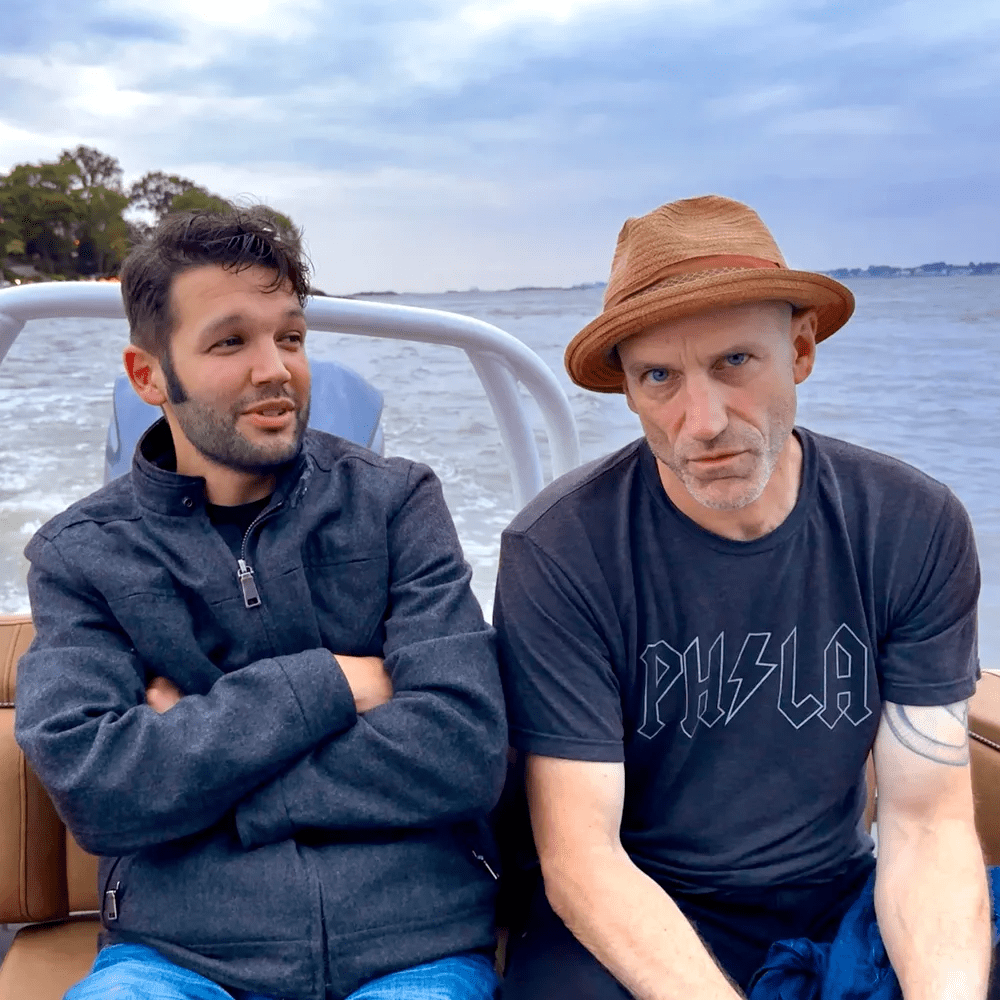
Legacy carries weight. When Blind Melon members Rogers Stevens and Nathan Towne emerge with “Starved in Love,” they arrive bearing both the burden and benefit of their musical history—yet this debut as Towne & Stevens isn’t merely continuation but reconfiguration, constructing something fresh from rock’s well-worn building blocks.
The track opens with defiant disbelief—”I refuse to believe it—this ain’t the life you deserve”—immediately establishing emotional stakes through direct confrontation. This unvarnished directness recalls classic rock’s heyday while avoiding pastiche, creating lineage rather than imitation. What follows is a masterclass in structural tension, with instrumentation that builds and recedes like emotional tides.
What distinguishes “Starved in Love” from similar classic-rock-influenced compositions is its lyrical exploration of modern disconnection. When questioning whether someone keeps “eyes on the screen, when you’re scrolling down a page in your dreams,” the track bridges generational divides, acknowledging how contemporary digital immersion has amplified age-old relationship dysfunctions. This thematic updating prevents nostalgic sounds from becoming mere retromania.
The production balances clarity with grit, allowing instrumental complexities to shine without sacrificing emotional immediacy. Particularly effective is how the arrangement creates space for vocal escalation throughout the track, culminating in the raw declaration “Whoah, I’m bloody! No, I think I’m flooded!” This progression from controlled frustration to explosive release demonstrates veteran musicians’ understanding of dynamic architecture.
Southern rock and Red Dirt influences emerge most prominently in the guitar work’s tonal qualities and melodic sensibilities, yet these regional signatures have been abstracted rather than emphasized, creating accessibility without sacrificing character. This approach reflects musicians who respect tradition without being constrained by it—evolution rather than rebellion.
Most striking is the song’s conclusion, where the narrator realizes a painful truth: what they initially perceived as neglect (“How can you just listen to me lie there and moan?”) was actually complicity (“I think you AGREED to just listen to me lie there and moan until I’m gone”). This narrative twist elevates the composition from simple accusation to more complex self-realization.
“Starved in Love” serves as evidence that sometimes the most compelling musical statements come not from reinvention but recombination—taking familiar elements and arranging them with the wisdom that only experience provides. Towne & Stevens have created not just a track but a testament to rock’s continued vitality when placed in capable, questioning hands.
 B-Side Guys
Leave a Reply