
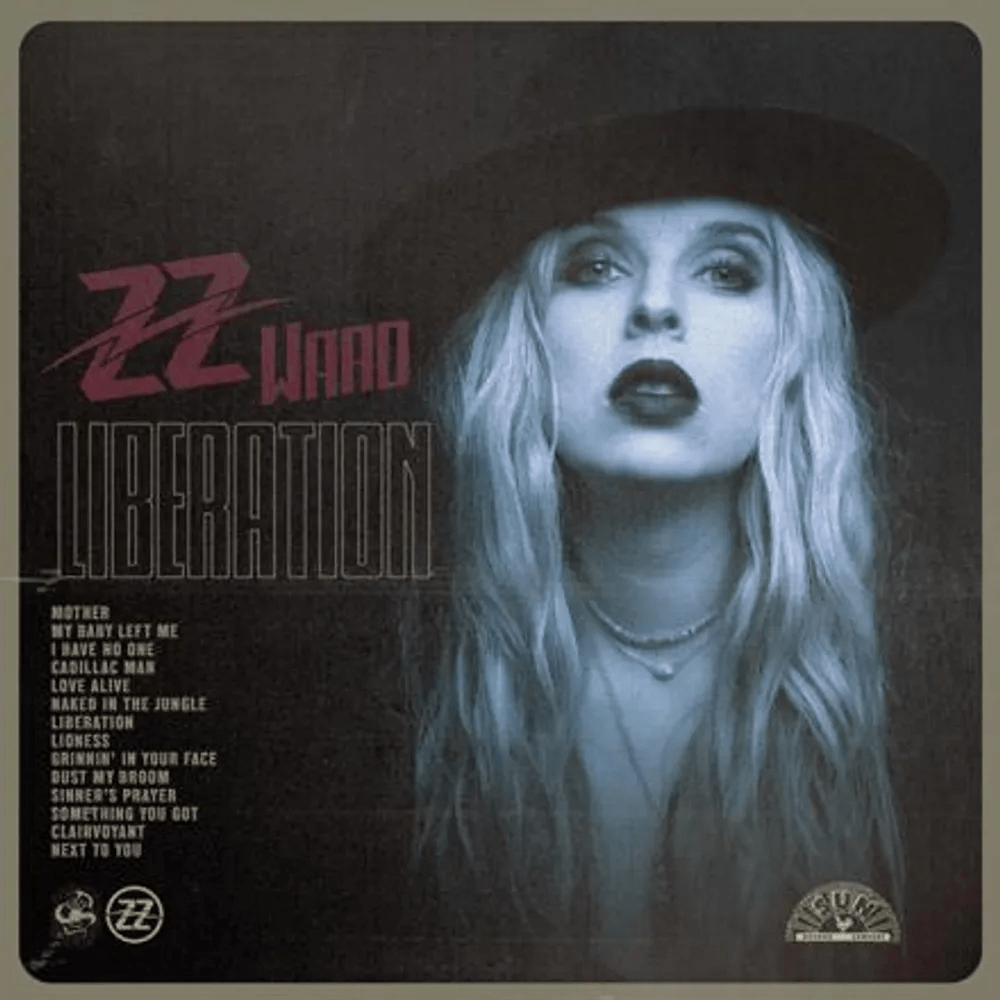
On her fourth studio album, ZZ Ward strips away the commercial veneer that often masked her blues foundations, delivering a raw, uncompromising collection that honors both her earliest musical influences and her recent life-altering journey into motherhood. Liberation, aptly titled, represents precisely that—a freeing of artistic vision after a decade of major label expectations.
From the opening notes of “Mother,” Ward establishes a musical and thematic framework that permeates the entire 42-minute runtime. Her voice—always powerful but now carrying additional layers of weathered experience—commands attention immediately. Producer Ryan Spraker wisely places that voice front and center throughout, surrounding it with arrangements that complement rather than compete with Ward’s emotional delivery.
What makes Liberation particularly compelling is how Ward transmutes the universal challenges of parenthood into the language of blues tradition. On “Love Alive,” handclaps and foot stomps create a Son House-inspired foundation while Ward explores the complexities of maintaining romantic connection amid the sleepless nights and identity shifts of early parenthood. The production captures a live-room intimacy that makes listeners feel as if they’ve stumbled upon a particularly inspired back-porch jam session.
“Naked In The Jungle” employs swampy, Creedence Clearwater Revival-inspired guitar work to frame Ward’s exploration of maternal disorientation. The metaphor proves startlingly effective—motherhood as uncharted wilderness, with each day requiring new strategies for survival. When Ward belts the chorus, there’s a visceral quality to her delivery that transcends mere performance.
Ward’s decision to sign with Sun Records proves inspired throughout Liberation. The label’s storied history with blues pioneers creates perfect context for Ward’s artistic rebirth. This connection becomes explicit on “Cadillac Man,” where she resurrects an obscure Sun Records gem originally recorded by The Jesters in 1966. Ward’s treatment transforms the tune into a breakneck rockabilly workout that showcases her harmonica skills while the band threatens to careen off the rails in the most exhilarating way possible.
The album’s balance between originals and carefully selected covers proves particularly effective. Ward’s take on Robert Johnson’s “Dust My Broom” honors the Delta classic while injecting a feminine perspective that gives the well-worn standard fresh urgency. Similarly, her reading of Son House’s “Grinnin’ In Your Face” strips the arrangement to stark essentials—minimal percussion, spectral guitar, and Ward’s haunted vocal—creating three minutes of spine-tingling intensity.

The title track emerges as the album’s emotional centerpiece, stepping away from the more overt blues forms to explore 1960s soul territory. Ward’s vocal here channels the controlled power of Etta James, building from intimate verses to a soaring chorus that directly addresses her artistic emancipation. The liberation in question isn’t just from industry expectations but from her own internalized doubts about pursuing her authentic musical path.
“Sinner’s Prayer,” originally recorded by Lowell Fulson, provides Ward with the perfect vehicle to explore spiritual dimensions of her recent life changes. Her reading finds the perfect balance between reverence for the original and personal interpretation. Where Fulson’s version carried a certain resignation, Ward’s take imbues the lyrics with determination and hard-won wisdom.
Throughout Liberation, Ward’s band deserves special mention. While Spraker handles multiple instruments with impressive versatility, the entire ensemble displays remarkable sensitivity to the material. The rhythm section knows precisely when to push and when to pull back, creating a dynamic foundation that keeps even the most traditional blues forms feeling vibrant and contemporary.
“Lionness” stands as perhaps the album’s most direct examination of maternal identity. The extended metaphor comparing motherhood to predatory protectiveness avoids cliché through Ward’s vivid imagery and the arrangement’s haunting minor-key progression. When she growls about defending her cubs, the menace in her voice suggests this isn’t artistic posturing but deeply felt reality.
The record concludes with “Next To You,” featuring distortion-soaked guitars that wouldn’t sound out of place on a White Stripes album. This sonic choice perfectly complements the song’s exploration of how partnership evolves under the pressures of parenthood. Ward’s harmonica trading phrases with overdriven guitar creates a tension that mirrors the lyrical content—the struggle to maintain individual identity while building a family unit.
What’s most impressive about Liberation is how it coheres as both personal statement and musical evolution. Where some artists might approach a “back to basics” album with academic sterility, Ward inhabits these blues forms with authentic passion. The album never feels like an exercise but rather a necessary artistic expression—music made not to satisfy market demands but to process lived experience.
For longtime fans, Liberation will feel like the album Ward has been building toward her entire career. For newcomers, it serves as a perfect introduction to an artist who has found her truest voice precisely by honoring her earliest influences. The album stands as proof that authentic artistic expression remains the most direct path to creating music of lasting value—a lesson Ward clearly internalized from those blues records her father shared so many years ago.
 B-Side Guys
Leave a reply to ZZ Ward’s Liberation: A Blues, Rock, & Soul Journey Cancel reply