
Stories within stories unfold across the eleven tracks of Chris Bullinger’s “Waitin’ to be Seen – Part 2,” the concluding chapter in his ambitiously conceived double album. The former renewable energy executive turned troubadour builds upon the narrative framework established in Part 1, deepening the emotional landscape of his central characters while refining his distinctive blend of Midwestern roots authenticity and California coastal luminescence.
Where the first installment introduced listeners to Bullinger’s wandering musician protagonist and the object of his complicated affections, Part 2 delves into the nuanced emotional terrain of sustaining connection across distance and time. Bullinger approaches these themes with the practiced eye of both poet and observer, offering snapshots of intimacy that feel simultaneously personal and universal.
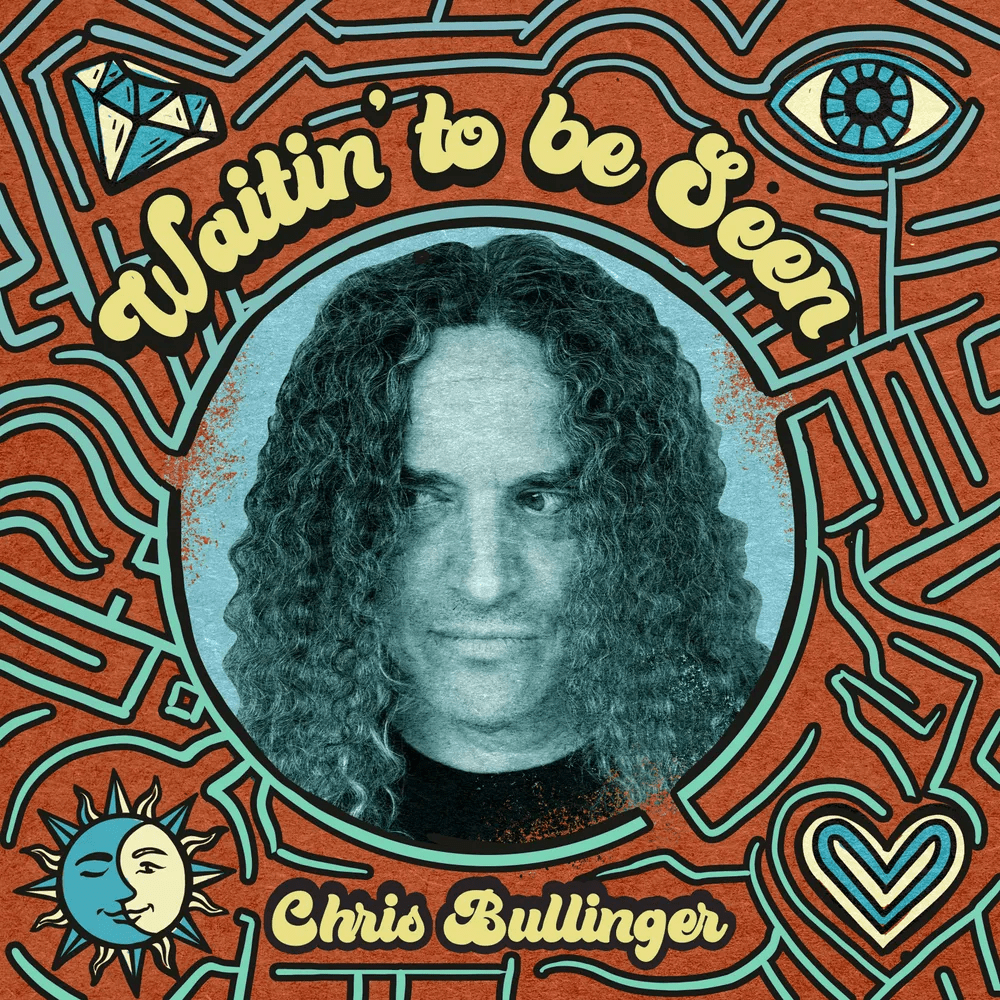
The album opens with “Crawlin’ My Way Back to You,” a track that immediately establishes the project’s emotional stakes. Bullinger’s voice—weathered yet surprisingly tender—conveys weary determination over sparse instrumentation that gradually builds to encompass the full band. The production throughout the album benefits from the Nashville pedigree of the legendary Bomb Shelter Studios, where Bullinger recorded alongside musicians whose contributions never overshadow the narratives at the core of each composition.
“Meet You Down the Line” follows, offering one of the record’s most immediate melodies. The track’s gentle sway creates a sense of inevitability that mirrors its lyrical promise of eventual reunion. Bullinger excels at crafting these moments where musical and narrative elements align to create something greater than their constituent parts.
But it’s on “Salvation As I Know It,” the album’s lead single, where Bullinger’s artistic vision crystallizes most effectively. The song unfolds with dreamlike warmth, piano keys dancing playfully above a bed of soft harmonies. What makes the track particularly compelling is the tension between its gentle sonic palette and the weight of its inspiration—a chance overseas encounter in a bar that would later become the target of an act of war. Bullinger transforms this heavy backdrop into a meditation on human connection as refuge, distilling complex geopolitical reality into the intimate contact of skin against skin. The arrangement breathes beautifully, allowing space for the listener to inhabit the narrative while never sacrificing melodic impact.

The album’s middle section navigates more introspective waters. “Better Half” and “Remember Me” form a thematic pair, examining how romantic partners simultaneously complete and challenge each other. Bullinger’s literary background emerges in his careful attention to image and metaphor, elevating what might otherwise be standard relationship fare into something more nuanced and affecting.
“Through the Dark” serves as a pivotal moment in the album’s narrative arc, with Bullinger’s protagonist navigating periods of separation and doubt. The production here is particularly noteworthy, with spectral guitar lines and subtly layered vocals creating a sense of psychological interiority that pulls the listener deeper into the character’s experience.
The album reaches its emotional apex with “Shine,” perhaps the most fully realized track in Bullinger’s catalog to date. Opening with an almost hymn-like simplicity, the song builds with patient determination toward a chorus that feels simultaneously earned and inevitable. What distinguishes “Shine” is how it balances restraint and release—Bullinger and his band know precisely when to pull back and when to surge forward. The track’s bridge section introduces unexpected harmonic turns that mirror its lyrical exploration of how we illuminate each other’s darkest corners. By the song’s conclusion, Bullinger has crafted a moment of transcendence that lingers long after the final notes fade.
The album’s final movement begins with “Lazy Green Dream,” a pastoral interlude that provides necessary breathing room before the emotional complexity of “To Glow” and “Where We Were.” These tracks find Bullinger’s characters looking both backward and forward, assessing what remains after passion’s initial flames have tempered into something more sustainable.
“Offerin’ Acceptance” closes the album with quiet grace, finding resolution without resorting to facile conclusions. The song—and by extension, the entire double-album project—acknowledges that the most profound relationships never truly conclude but rather continue evolving through memory and impact.
Throughout “Waitin’ to be Seen – Part 2,” Bullinger demonstrates remarkable growth as both songwriter and bandleader. The performances throughout feel lived-in and authentic, with each musical decision serving the larger narrative. This is the work of an artist comfortable enough in his own skin to prioritize storytelling over showmanship, though there are certainly moments of instrumental brilliance scattered throughout the album.
What ultimately distinguishes Bullinger’s work is his commitment to emotional truth. Having left behind a successful career in the renewable energy sector to pursue his musical vision, Bullinger approaches songwriting with the perspective of someone who understands that true sustainability applies as much to the human heart as it does to environmental resources. “Waitin’ to be Seen – Part 2” stands as testament to the power of that perspective, offering listeners a refuge of connection in an increasingly fragmented world.
 B-Side Guys
Leave a Reply