
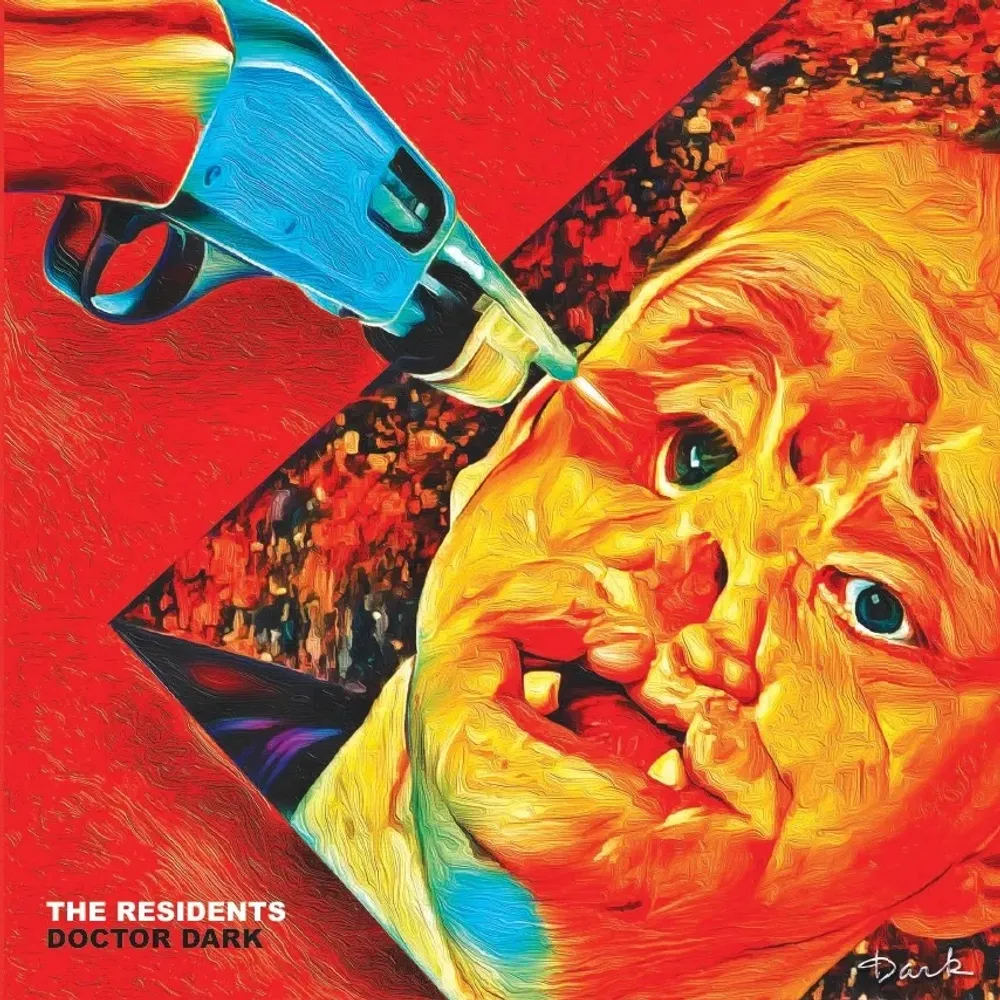
Silent figures in eyeball masks and top hats have spent five decades confounding audiences, yet “Doctor Dark” stands as The Residents’ most unflinching confrontation with human existence. This 76-minute operatic descent into existential horror transforms a real-life tragedy—two metal-obsessed teenagers’ suicide pact in 1980s Reno—into a three-act meditation on mortality, autonomy, and America’s appetite for finding someone to blame.
Conducted and orchestrated by Edwin Outwater (San Francisco Conservatory of Music), “Doctor Dark” is no mere concept album but a meticulously constructed narrative arc realized through seamless transitions between heavy metal brutality, orchestral grandeur, and trademark Residents dissonance. The work’s ambition matches its subject matter’s gravity—a dark operatic journey where neither questions nor answers provide comfort.
Opening with “Prelude/Mental Madness,” The Residents immediately establish disorientation through instrumental chaos that evokes teenage psychological turmoil. The heaviness intensifies in “White Guys With Guns,” where distorted guitars and industrial percussion create sonic landscape mirroring America’s fascination with both firearms and scapegoating. Rather than mere shock value, this cacophony serves the narrative—a musical representation of minds collapsing under societal pressure.
“Maggot Remembers” and “Tension” anchor the first act’s exploration of teenage alienation, with production choices that deliberately blur distinctions between diegetic sound (what characters hear) and non-diegetic accompaniment. This blurring reflects how heavy metal became both salvation and damnation for the real-life teenagers, creating a world where music wasn’t just entertainment but existential framework.
The album’s center shifts dramatically with “She Was Never Lovelier” and “The Gift,” marking Doctor Dark’s introduction as character. Here, Outwater’s orchestral arrangements create unsettling grandeur that transforms death from tragedy to transcendence. The vocals shift from adolescent rage to philosophical resignation, suggesting Doctor Dark represents not just assisted suicide advocate Jack Kevorkian (who inspired the character) but death personified—a compassionate monster offering terrible gift.
“Remembering Mother” delivers the album’s most emotionally devastating moment through deceptive simplicity. Against minimal instrumentation, the survivor’s perspective emerges with striking clarity, examining how familial failure catalyzed catastrophe. The subsequent “Contemplation” and “Survived” build this thread through orchestral arrangements that create negative space for reflection rather than easy resolution.

The final act, beginning with “Calm Before,” represents The Residents at their most ambitiously experimental. As Doctor Dark and the survivor confront each other, the music collapses into dissonance that rejects both resolution and continuation. “Circle of Horns” and “Unchanged” employ sonic techniques recalling Krzysztof Penderecki’s textural experiments, creating atmosphere where relief remains perpetually out of reach.
Penultimate track “Ol’ Man River” repurposes the show tune classic as nihilistic hymn, demonstrating The Residents’ gift for transforming familiar cultural touchstones into something unrecognizable and disturbing. This leads to closing track “Take Me to The River”—not the Al Green standard but an original composition that serves as the opera’s unsettling denouement, leaving listeners suspended between catharsis and dread.
Throughout these sixteen tracks, The Residents maintain remarkable narrative discipline while indulging their most experimental impulses. The production creates distinct sonic environments for each act while maintaining thematic cohesion across the album’s considerable runtime. Even when the music reaches extremes of abstraction, the conceptual framework prevents it from becoming merely academic exercise.
What makes “Doctor Dark” particularly fascinating is how it refuses simple moral positioning. Neither condemning nor celebrating its titular character, the opera instead examines how American culture processes tragedy through blame rather than understanding. The parents blamed the music; society blamed the parents; the survivors blamed themselves. The Residents acknowledge these perspectives without endorsing any, creating work that asks questions without promising answers.
For a group defined by anonymity, “Doctor Dark” feels shockingly personal. Through five decades of experimental music, The Residents have often hidden behind masks both literal and figurative. Here, they remove at least one layer of ironic distance, creating art that engages sincerely with human suffering while maintaining their signature surrealism. The result is simultaneously their most accessible narrative and most challenging listen—a contradiction fitting for artists who have made career from embracing paradox.
“Doctor Dark” stands as remarkable achievement not just within The Residents’ extensive catalog but within contemporary experimental music. By transforming real-world horror into operatic experience, they demonstrate how avant-garde approaches can illuminate emotional truths that conventional forms often miss. Fifty years into their career, The Residents prove they remain vital cultural force—faceless figures still capable of creating art that forces us to examine our own expressions.
 B-Side Guys
Leave a Reply