
Memory operates in unexpected units. On “10 + 2,” released February 11th, Salt Ashes (Veiga Sanchez) temporarily abandons her Giorgio Moroder-inspired synth landscapes to explore grief’s quieter dimensions through acoustic vulnerability.
The track opens with disarming directness: “I dreamt of you last night/We were laughing and talking/I made fun of you like old-times.” These simple, unadorned lines establish both setting and emotional framework—the liminal space where the deceased momentarily return through dreams. When Sanchez continues with “You said the coffee Mom made/Was better than mine,” she captures how grief often hinges on mundane details rather than grand declarations.
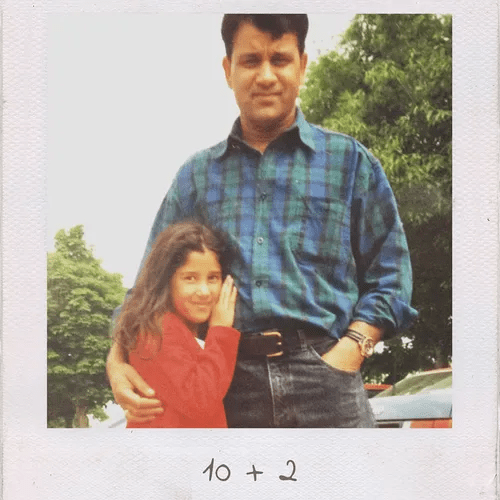
Most striking is the titular reference, revealed in the chorus: “Remember the little monsters/Oh I’d lay in your arms ’till I was 10 + 2/Pretending to sleep so you would carry me/All the way to bed.” This childish mathematical expression (“10 + 2” instead of simply “12”) functions as emotional time machine, transporting listeners to that precise developmental moment—old enough to add but young enough to need carrying.
The production mirrors this emotional regression through deliberate restraint. After building a career on pulsing club rhythms that earned Billboard Dance Chart success, Sanchez strips everything back to acoustic guitar and strings. This instrumental sparseness creates space for lyrical details to resonate, particularly sensory memories like “I smell your old cologne/Like I was inside the bottle.”
When Sanchez acknowledges “Working harder than I could ever appreciate/But I see it now,” she captures grief’s cruelest aspect—clarity that arrives too late. The arrangement echoes this belated understanding, building gradually throughout without ever reaching the cathartic release her dance tracks typically provide.
While fans of Salt Ashes’ collaborations with artists like Goldfrapp and Tove Styrke might be surprised by this sonic departure, “10 + 2” reveals emotional depth previously obscured beneath club-ready production. Through this unadorned elegy, Sanchez demonstrates that sometimes the most powerful tribute requires nothing more than a guitar and the courage to remember.
 B-Side Guys
Leave a Reply