
Reference points can become traps. Tasmanian songwriter Jethro Pickett seems acutely aware of this paradox on his latest single, where he simultaneously pays homage to and disentangles himself from one of country music’s most iconic figures. Recorded in a 120-year-old boat shed along the Huon River, “Jolene (not a cover)” doesn’t just acknowledge its inspiration—it interrogates the very nature of artistic influence and romantic possession.
The track opens with disarming directness: “You could be my Jolene/Inspiration may strike/At any time/Throughout your night.” Immediately, Pickett establishes a meta-narrative, positioning his subject not as the feared romantic rival of Parton’s original but as a creative muse. This subversion continues as he confesses “Another song I should write/But I won’t, instead I will try/With invisible ink/To avoid a fight.” The invisible ink metaphor brilliantly captures the tension between expression and restraint that pulses throughout the composition.
Production-wise, Pickett earns his self-described “prince of freak folk” title, employing 24-track instrumentation that feels both expansive and intimately handcrafted. The arrangement supports rather than overwhelms his lyrical contradictions, particularly evident when he critiques his own writing: “Yes I know that’s a bad rhyme/You should ban me too.”
The chorus represents the song’s philosophical center, deliberately problematizing the possessive implication in the phrase “my Jolene”: “You could be my Jolene/Not your name and not my scene/My Jolene/Except for without the ownership that that implies.” This self-conscious correction captures contemporary anxieties about autonomy in relationships without sacrificing melodic momentum.
Perhaps most revealing is Pickett’s admission: “Am I ten steps ahead and I think I’m behind/Jolene/No it’s the other way around I’m not that fuckin blind.” The line cuts through pretension, acknowledging the songwriter’s tendency toward self-delusion while refusing to fully inhabit it. His comparison to “a fennec in the sand who doesn’t see with his eyes” creates a striking visual metaphor for intuitive understanding beyond surface perception.
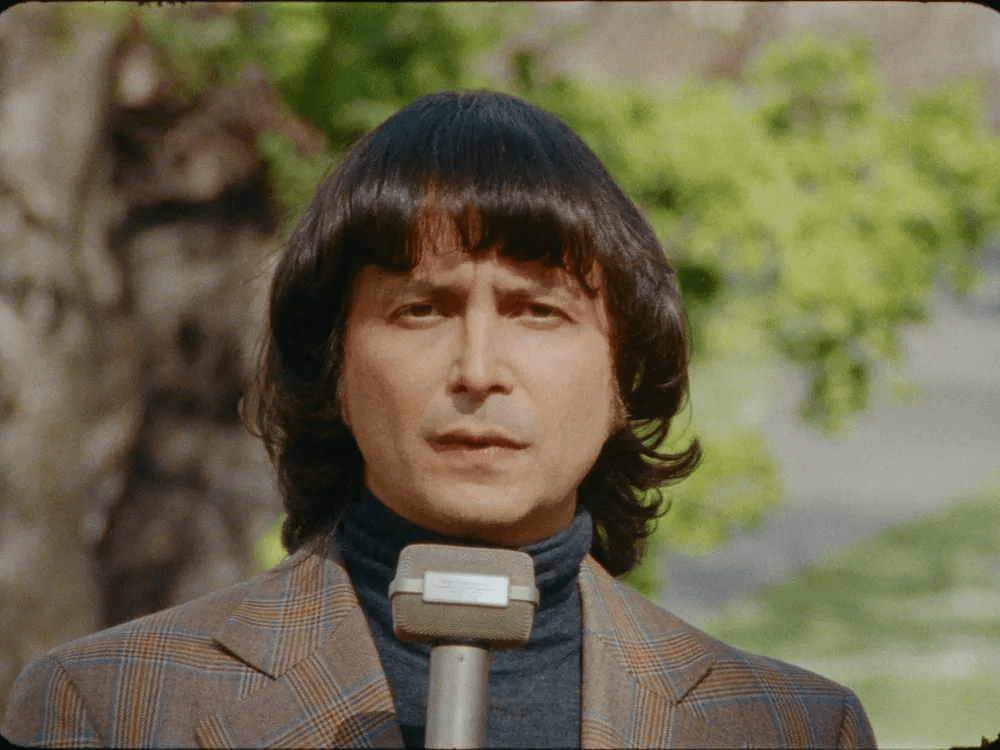
Despite his self-deprecating description of the song as “a typical linear tale from the depths of self despair,” Pickett has crafted something far more nuanced—a composition that uses its namesake as a launchpad rather than a destination. The collaboration with filmmaker Ursula Woods on 16mm film featuring “Deadloch” actress Astrid Wells suggests this narrative complexity extends beyond the audio.
In “Jolene (not a cover),” Pickett hasn’t just looked through the telescope at Dolly’s star—he’s mapped an entirely different constellation while acknowledging the shared sky above.
 B-Side Guys
Leave a Reply