
Death leaves a permanent shadow. Not one that obscures, but one that follows—faithfully, persistently, without judgment. This understanding permeates B. Hamilton’s latest single “Wherever I Go,” released February 21st and serving as a raw, unflinching meditation on grief’s permanence.
Ryan Christopher Parks, the Oakland-based musician behind B. Hamilton, doesn’t dance around the track’s genesis. This song emerged from a collection he calls “the grief record,” written partially during the toilet-paper-hoarding days of early pandemic isolation, and partially from the aftermath of his father’s 2017 death from brain cancer. What results is a composition that feels both intensely personal and grimly universal.
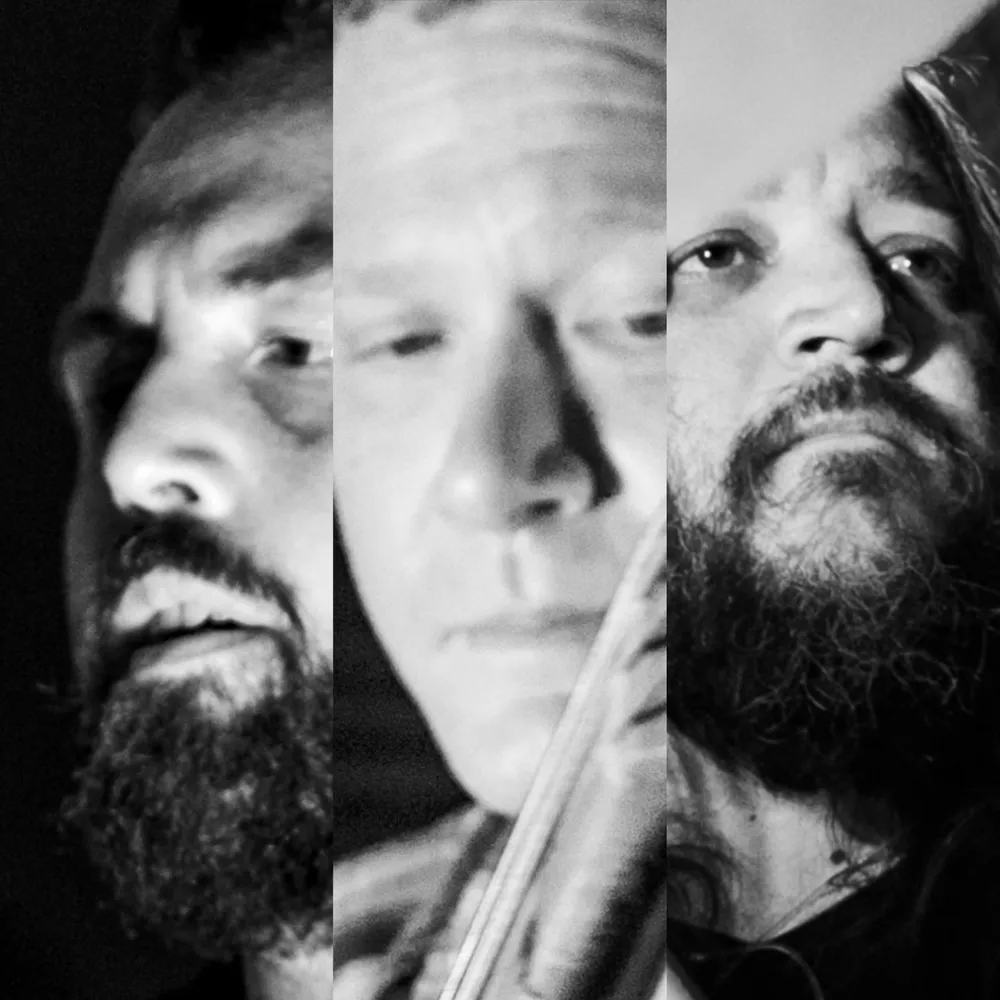
The track’s strength lies in its deceptive simplicity. The repetitive mantra “Wherever I go/You come with me” creates a hypnotic quality that mimics grief’s persistent nature. When Parks expands this thought with “Through the roses/Through the Salton Sea,” he’s mapping grief’s geography—it traverses both beauty and desolation with equal determination.
Production choices reflect this duality. The instrumentation, which underwent numerous transformations during recording (described by Parks as a vertigo-inducing back-and-forth with drummer Raj), establishes a foundation for the emotional weight carried by the lyrics. Contributions from woodwind player Nelson Ny-Devereaux, vocalist Grace Cooper, and multi-instrumentalist Joel Robinow add textural elements that prevent the track from collapsing under its thematic weight.
When Parks writes “However I change/You come with me/Through the chaos/Through the in-between,” he’s acknowledging grief’s adaptability—how it morphs alongside personal evolution rather than diminishing. The final verse confirms grief’s permanence: “Down the line/Or for eternity/You come with me.” There’s resignation here, but also a peculiar comfort in acknowledging this companion’s constancy.
What makes “Wherever I Go” particularly affecting is how it embodies Parks’ own description of the recording process: “It sounds like someone trying to find a door in a human centrifuge.” That disorientation and desperate seeking pervades both composition and lyrics, creating an authentic document of grief’s cyclical nature.
Like Nick Cave (whom Parks cites as a grief resource), B. Hamilton has created something that transcends simple catharsis—it’s a map for navigating what cannot be escaped, only carried.
 B-Side Guys
Leave a Reply