
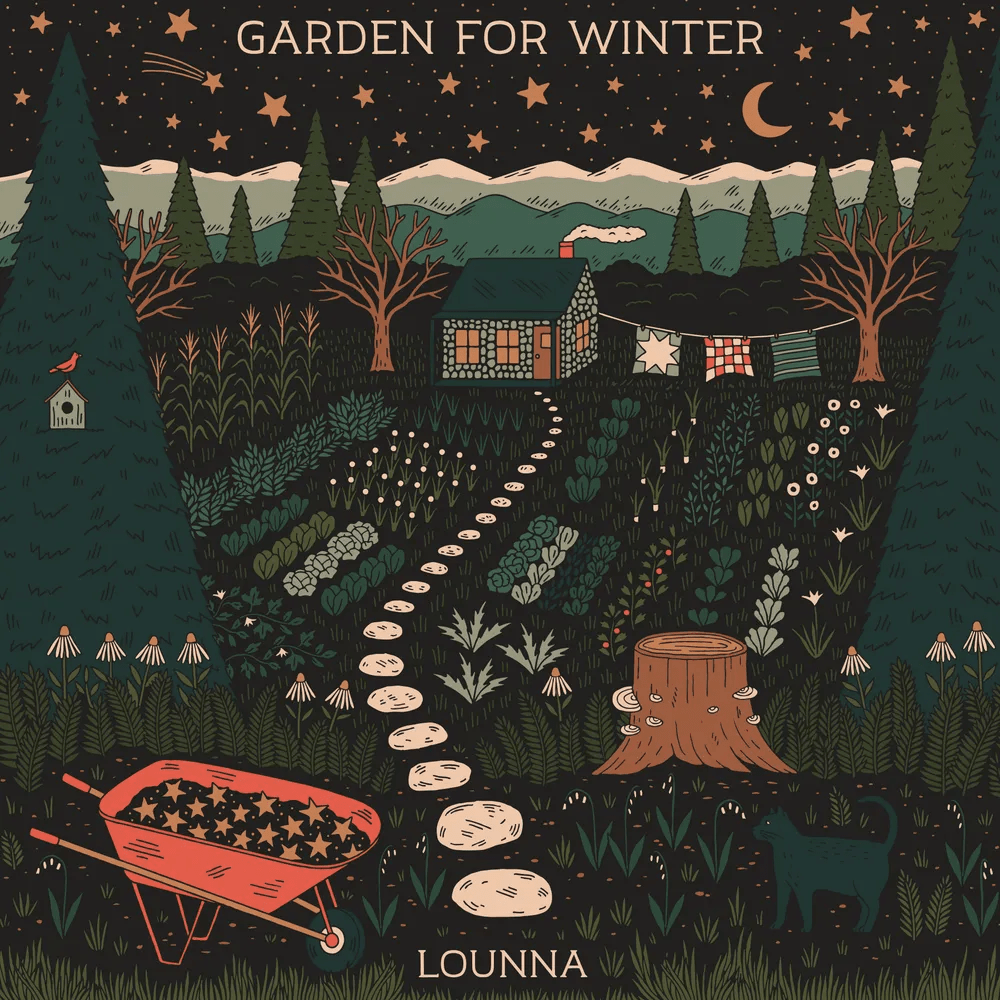
The delicate interplay between hope and hardship weaves through every moment of Lounna’s “Garden For Winter,” a sophomore album that transforms personal struggle into intricate musical passages. From the opening notes of “Sassafras,” Brenna Slate crafts soundscapes that mirror the complexities of navigating life’s darkest seasons while searching for light.
Producer Daniel Blake’s deft touch elevates the album’s fourteen tracks beyond simple folk arrangements. The production maintains an organic warmth while introducing subtle electronic elements that add depth without overwhelming the intimate nature of the songs. This is particularly evident in “Alpenglow,” where layered vocals float above a carefully constructed bed of acoustic guitar and ambient textures. The song’s gradual build mirrors the alpenglow phenomenon itself – a moment of profound beauty emerging from darkness.
The album’s emotional core reveals itself in “This Love Is Like An Avalanche,” where Slate’s voice carries both vulnerability and resilience. The song builds from sparse finger-picking to a full-band crescendo that perfectly captures the overwhelming nature of its subject matter. The careful attention to dynamics throughout the record serves as a powerful metaphor for life’s ebbs and flows, particularly evident in the song’s bridge where strings sweep in like sudden gusts of winter wind.
“Peak Season” stands as one of the album’s most striking moments, with its exploration of seasonal depression rendered in sharp musical detail. The arrangement breathes with purpose – sparse verses give way to harmony-rich choruses that suggest dawn breaking after a long night. Blake’s production choices here are particularly notable, with reverb-washed backing vocals creating a sense of space that mirrors the song’s themes of isolation and emergence. The track’s steady build culminates in a moment of cathartic release that feels both earned and essential.
The middle section of the album delves deeper into personal territory with “Buried Bones” and “Always Wished I Knew Better.” These tracks showcase Slate’s gift for converting specific experiences into universal emotions, supported by arrangements that blend Americana-tinged guitars with subtle percussion work that propels the narratives forward. “Wildwoods” serves as a perfect centerpiece, its intricate fingerpicking patterns creating a meditative space for reflection before the album’s emotional peaks.
“Morning Coffee” provides a necessary moment of lightness, though even here Slate finds depth in daily ritual. The song’s gentle sway and warm acoustic tones create a sense of comfort without sacrificing the album’s overall emotional authenticity. This leads naturally into “In The Sunlight,” where bright guitar work and uplifting melodic choices suggest the first signs of spring after a harsh winter. The production here is particularly noteworthy, with Blake capturing the warmth of analog equipment while maintaining modern clarity.
“Under The Same Stars” marks a turning point in the album’s narrative, its sweeping arrangement suggesting both vastness and intimacy. The interplay between acoustic and electric elements creates a sonic landscape that perfectly matches the song’s themes of connection across distance. The careful layering of instruments demonstrates Blake’s expertise in creating depth without sacrificing clarity, each element perfectly placed in the mix to serve the song’s emotional journey.
The album’s final trilogy – “Lily Of The Valley,” “Orchard (All We Worked For),” and “Bigger Than Us” – forms a powerful conclusion that ties together the record’s themes of perseverance and growth. The production grows more expansive here, with “Orchard” in particular featuring some of the album’s most ambitious arrangements. Multiple guitar lines interweave with subtle keyboard textures, creating a rich sonic foundation that supports rather than overwhelms Slate’s intimate vocals. The decision to let these final songs breathe and expand feels both intentional and earned.
“Garden For Winter” succeeds not just as a collection of songs but as a complete artistic statement about finding beauty in life’s challenging seasons. The album’s sonic palette expands and contracts with purpose, mirroring its themes of growth and resilience. Each arrangement choice serves the emotional core of its song, whether through sparse acoustic moments or full-band swells. The attention to detail in the production allows each instrument to occupy its own space while contributing to a cohesive whole.
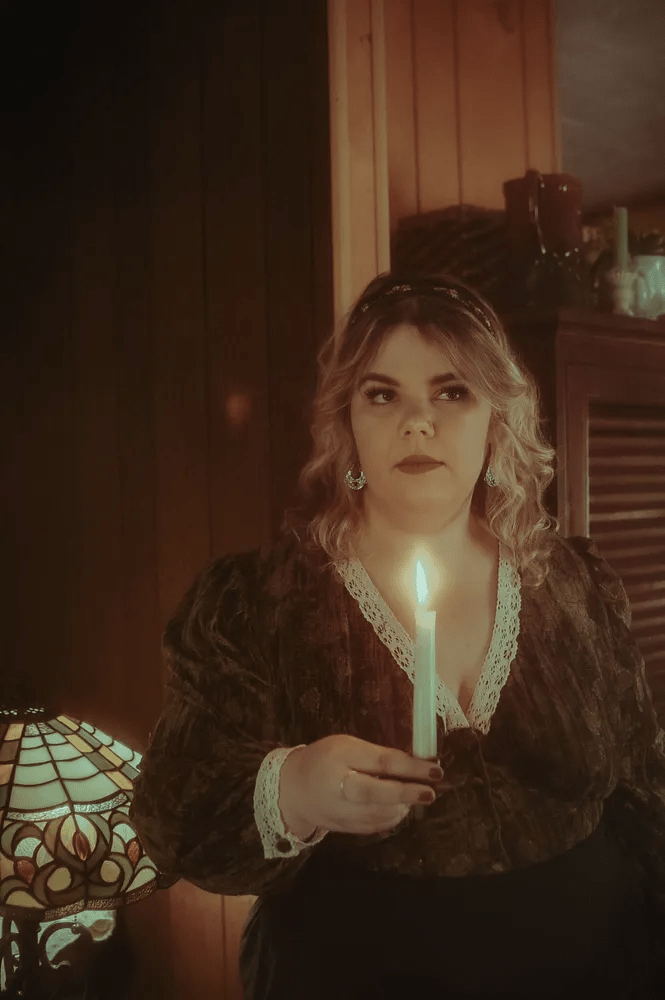
Slate’s evolution as a songwriter shines through in her ability to balance personal narrative with universal experience. The album’s exploration of grief and hope never feels forced or precious, instead emerging naturally through carefully crafted melodies and thoughtful production choices. This is an album that acknowledges winter’s harsh realities while never losing sight of spring’s promise, crafted with both technical skill and emotional intelligence.
“Garden For Winter” stands as a remarkable achievement in its ability to transform personal struggle into art that speaks to universal human experiences. Through fourteen carefully crafted tracks, Lounna creates a musical space where darkness and light coexist, each giving meaning to the other. The result is an album that feels both timely and timeless, rooted in specific experiences while reaching for universal truths.
 B-Side Guys
Leave a Reply