
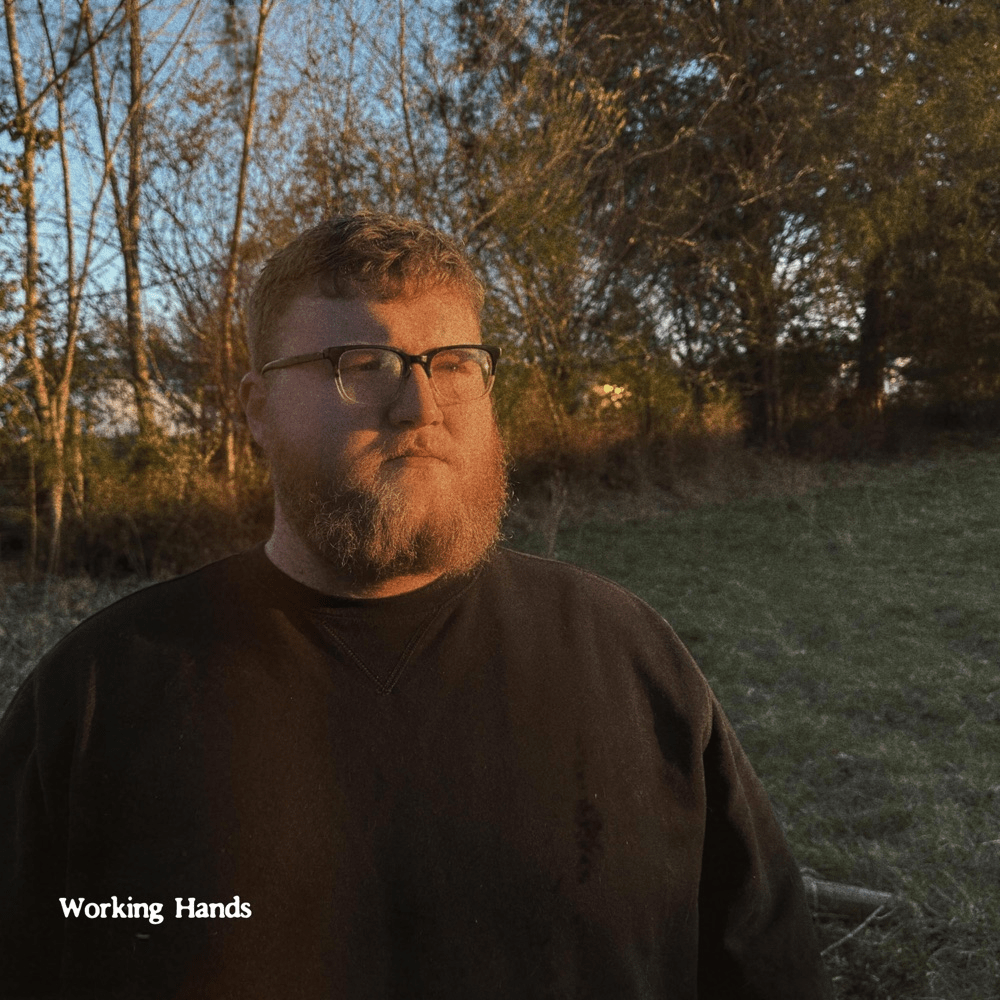
North Carolina’s Gage Doster may only be 19, but his debut single “Working Hands” carries the weathered wisdom of someone who’s spent decades clocking in at dawn. The young songwriter transforms the mundane rhythm of the workday into a meditation on purpose, faith, and the true cost of earning your daily bread.
Opening with the jarring reality of a 6 AM alarm, Doster immediately establishes the song’s core tension between necessity and despair. “Am I late to work again?” he asks twice, not out of genuine confusion but with the weary recognition that tomorrow will bring the same question. His delivery walks a careful line between resignation and resilience, particularly evident in the chorus’s reference to “the good book” – a nod to both his Christian upbringing and the biblical mandate to work that shapes the narrator’s worldview.
The production is deliberately sparse, letting Doster’s earnest vocals carry the emotional weight. The gentle folk arrangement, influenced by his childhood exposure to ’70s rock and gospel music, provides just enough framework to support his storytelling without overwhelming it. Each verse builds with the steady persistence of a workday, while the chorus offers moments of reflection rather than release.
Most striking is Doster’s clear-eyed assessment of workplace disposability: “When I die you won’t thank me / in a second you’ll replace me.” It’s a startlingly mature observation from someone who’s barely entered the workforce, delivered without bitterness but with profound understanding. The repeated question “Is that my prize?” transforms from accusation to acceptance across multiple refrains, suggesting that dignity might be found in the simple ability to provide.
For a debut release, “Working Hands” shows remarkable restraint and depth. Doster has crafted something rare – a working-class narrative that neither romanticizes nor despairs, instead finding grace in the simple dedication of showing up day after day. In an age of quiet quitting and career manifestos, his unflinching look at labor’s fundamental role in human experience feels both timeless and urgently relevant.
 B-Side Guys
Leave a Reply