
When Tokyo’s mozu crafts songs, they create temporal puzzles rather than straightforward narratives. “Ophelia,” released in February 2024, presents itself as a meditation on time’s passage filtered through the mechanical precision of modern Japanese rock, where guilt and beauty collide in unexpected arrangements.
The band’s choice of instrumentation serves as both foundation and metaphor. A fretless bass weaves melodic lines that refuse to be pinned down, while the Telecaster’s repetitive phrases mirror the cyclical nature of the song’s themes. The drums, described by the band as “monotonous and circular,” don’t simply keep time – they seem to interrogate it.
Lyrically, “Ophelia” operates in fragments that gain power through their juxtaposition. The opening lines “the flowers withered/It changes, and ends” establish decay as a central motif, but the song quickly pivots to more mechanical imagery with “listen and turn the gears.” This intersection of natural and artificial elements creates a tension that runs throughout the track.
The production approach emphasizes spaces between sounds as much as the sounds themselves. When the band sings of “Neutral colors blurred and exploded,” the sonic palette matches the imagery, creating moments where individual instruments seem to dissolve into one another before re-emerging with renewed clarity.
mozu’s handling of cultural synthesis deserves particular attention. While their Tokyo origins inform the song’s aesthetic, “Ophelia” resists easy categorization as either Eastern or Western. The reference to Shakespeare’s tragic figure in the title contrasts with distinctly Japanese approaches to space and timing in the arrangement, creating something that exists in its own cultural pocket universe.
The song’s emotional core reveals itself in the line “A heart different from theirs is quietly scary,” suggesting alienation while avoiding melodrama. This restraint carries through to the instrumentation, where the fretless bass acts as an emotional narrator, speaking most clearly in the spaces between lyrics.
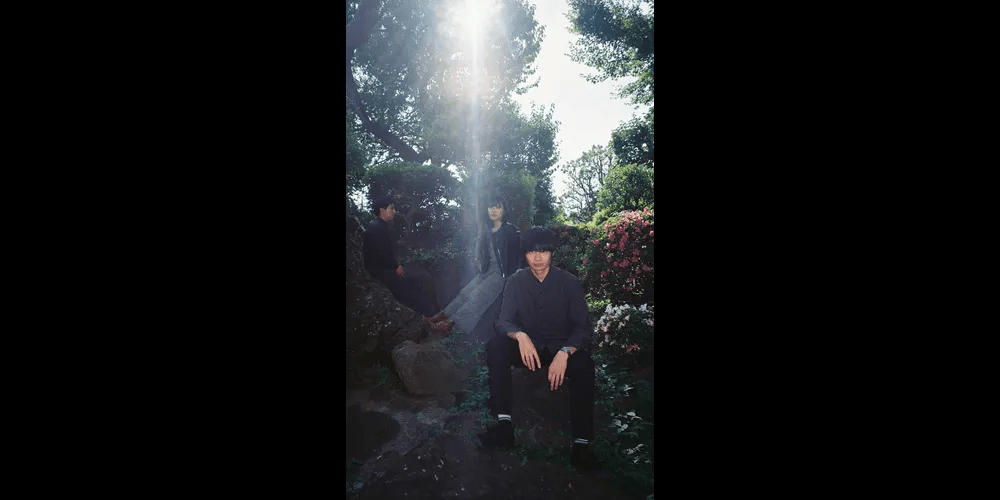
The closing imagery of a “beautiful world” that’s “broken” gains particular resonance through the band’s instrumental choices. The circular drums begin to feel like gears in a broken machine, while the refraining Telecaster patterns suggest attempts at repair that never quite succeed. It’s a sophisticated use of arrangement to reinforce lyrical themes.
Technical proficiency serves emotion rather than overshadowing it. The band’s description of their sound as revealing “guilt over the passing of time” manifests in how each instrument seems to mark time differently – the bass flowing, the guitar repeating, the drums circling – creating a complex relationship with temporal movement that mirrors the song’s themes.
This is not a track that offers resolution or easy answers. Instead, mozu has created a space where mechanical precision and emotional uncertainty coexist, each strengthening the other. “Ophelia” stands as a testament to how modern Japanese indie rock can speak to universal experiences while maintaining its distinct cultural voice.
 B-Side Guys
Leave a Reply